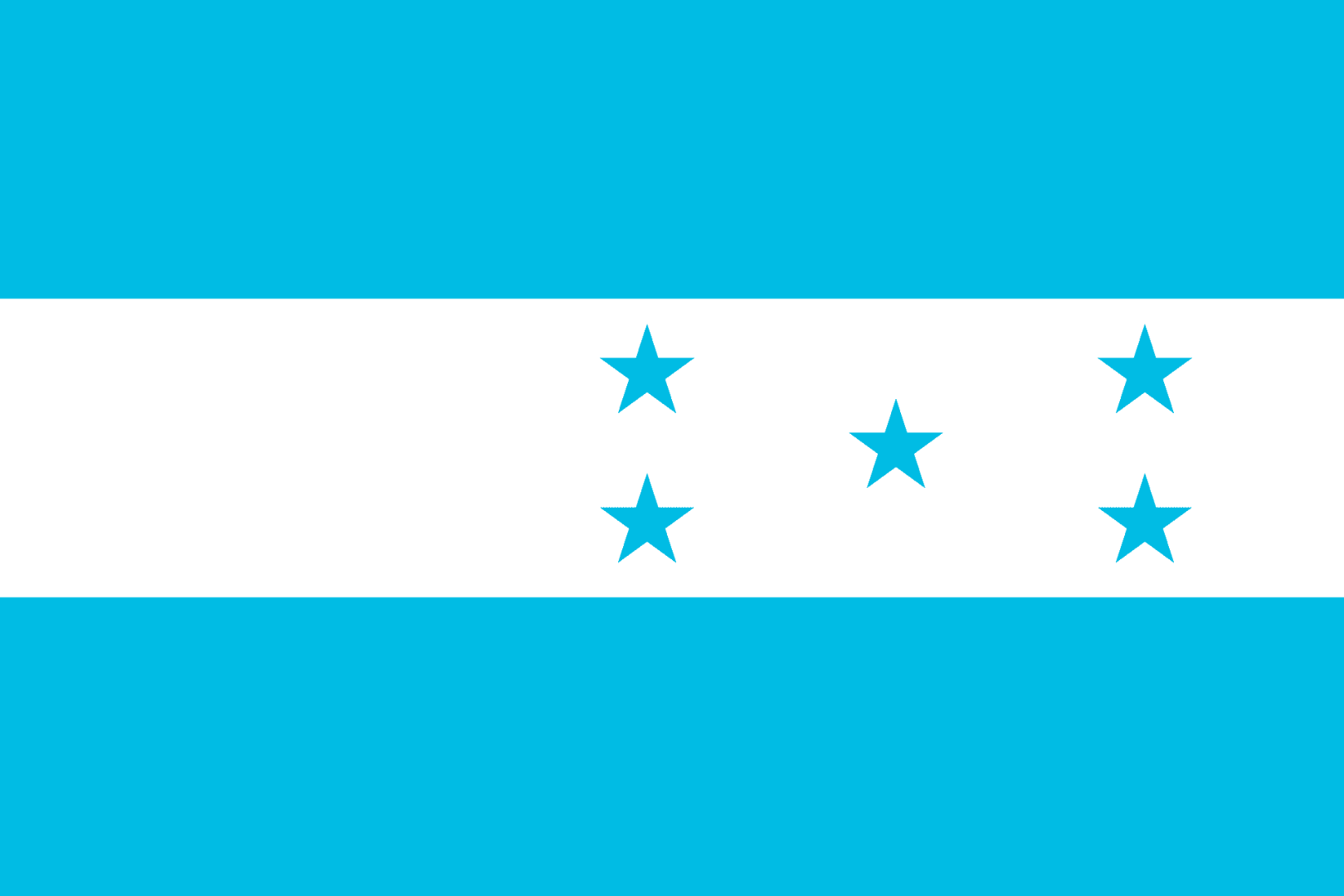
HRF classifies Honduras as ruled by a hybrid authoritarian regime.
After two decades of military rule, Honduras initiated a transition to democracy in the early 1980s that was at first characterized by a period of bipartisan consolidation in which power alternated between the right-wing National Party (PN) and the left-wing Liberal Party (PL). In 2009, however, a constitutional crisis broke out after President Manuel Zelaya declared that a referendum to reform the Constitution’s single-term limit would take place, in defiance of the Supreme Court’s ruling that blocked the government from hosting the referendum. The crisis resulted in a military coup that ousted Zelaya, then a PL member, from power. Following the coup, the PN rose to power and went on to rule Honduras for 12 years, between 2009 and 2022. In particular, PN rule under former president Juan Orlando Hernández (2014 – 2022) was characterized by electoral fraud and the undermining of the country’s already-flawed democratic institutions. Under pressure from international allies, electoral conditions improved somewhat under the PN after the 2017 elections, permitting the then-opposition Liberty and Refoundation Party (Libre) to achieve an electoral upset victory in 2020 under President Xiomara Castro. However, the transfer of power between the PN and Libre did not significantly improve Honduras’ electoral and institutional framework. Since 2022, the Castro administration has declared an extended state of exception to combat gang-related crime. While the activity of organized crime groups is a serious and pervasive public security issue in Honduras, the extended state of exception has been linked to human rights abuses and violations of due process. The general elections of 2025 also illustrate the continually skewed electoral conditions as well as institutional malfunctioning and interference from the ruling party, which delayed the official announcement of the new president-elect, PN party member Nasry Asfura.
Key Highlights
Electoral competition in Honduras has been significantly skewed in favor of the regime, to the point where the political opposition has a highly unlikely, although realistic chance to win. The country’s electoral oversight bodies, the National Electoral Council (CNE) and the Tribunal of Electoral Justice (TJE), lack the full independence and capacity to effectively manage elections and resolve electoral disputes. In particular, the CNE is a politicized institution that is subject to interference from the country’s political parties, including the party in power. Moreover, the incumbent typically enjoys campaign advantages that derive from the misuse of public resources, which also distorts the electoral playing field. While this misuse of public resources violates Honduran law, the CNE and TJE lack the powers to hold incumbents accountable for electoral crimes. Notwithstanding the skewed electoral conditions, electoral fraud and widespread voting irregularities have not been detected in Honduran national elections during the last two electoral cycles.
Independent media, political leaders, civil society leaders, organizations, and regular people in Honduras are generally able to openly criticize or challenge the government. However, Honduras remains one of the region’s most dangerous countries for journalists, civil society leaders, and activists. Failures in the justice system allow perpetrators to commit crimes against civil society under anonymity and with impunity. Nonetheless, independent dissenting organizations are able to operate in the country. There is no evidence that the government systematically targets and obstructs the work of critics. The right to peacefully assemble and protest is guaranteed by the Honduran Constitution and generally upheld by the government. However, incidents of disproportionate use of force and police violence against protesters do occur.
Honduran institutions are somewhat independent but frequently constrained by the party in power. The country’s institutions suffer from longstanding weaknesses and are vulnerable to interference. Oversight institutions, such as the electoral management bodies, have faced undue pressure from the executive. Within the executive, some institutions have been weaponized to target government officials who do not adhere to the party line. Moreover, the independence of the National Congress has also been tested.