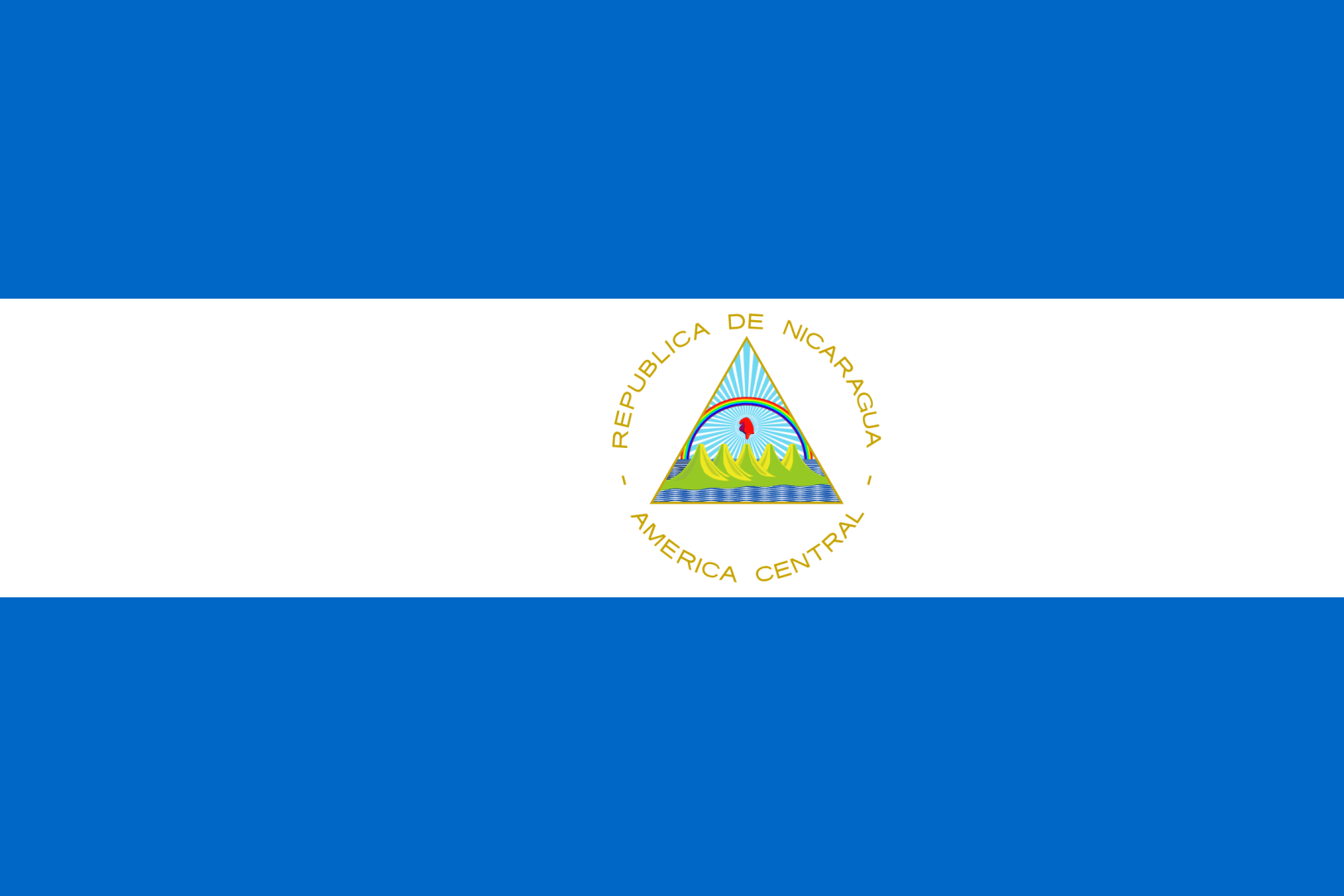
HRF classifies Nicaragua as ruled by a fully authoritarian regime.
Nicaragua’s modern political history has been shaped by long periods of authoritarian rule. In 1937, the Somoza family established a hereditary dictatorship that lasted until 1979, when the Sandinista National Liberation Front (FSLN) overthrew Anastasio Somoza after years of armed insurgency. Following the Sandinista takeover, Nicaragua descended into a prolonged civil war t between the left-wing FSLN led by Daniel Ortega and the right-wing US-backed Contras, turning the country into a major Cold War proxy conflict. In 1990, Nicaragua initiated a transition to democracy after a series of regional peace talks and treaties, most notably the Treaty of Esquipulas. This brief period of democratic experimentation came to an end in 2006 when Daniel Ortega was elected to the presidency. Throughout their rule, Ortega and his wife Rosario Murillo, along with the FSLN party, have progressively undermined democratic institutions and consolidated power, effectively setting up their own family-led authoritarian system. Furthermore, the regime has also armed paramilitary forces to repress dissent in coordination with police forces. During the nationwide anti-regime protests of 2018, paramilitary groups were implicated in the widespread assault and murder of protestors—a repressive campaign that initiated a period of rapid authoritarian consolidation. Between November 2024 and January 2025, the FSLN-controlled National Assembly adopted and promulgated constitutional reform that significantly restructured the Nicaraguan government. Under the reformed Constitution, the regime has institutionalized informal paramilitary groups with the creation of a volunteer police force. Moreover, Ortega and Murillo have been designated as co-presidents who wield control over all three branches of government, thereby eliminating constitutional guarantees of separation of powers and institutionalizing authoritarian rule in Nicaragua.
Key Highlights
In Nicaragua, national elections are a sham, to the point where the real, mainstream political opposition does not have a realistic chance to meaningfully compete and possibly win. Co-presidents Daniel Ortega and Rosario Murillo, as well as the FSLN, have engaged in widespread electoral fraud so as to unfairly remain in power. Non-state actors with ties to the regime have regularly intimidated and coerced individuals into voting for the regime. Regime officials have also unfairly barred prominent opposition candidates and political parties from competing in elections. Prominent opposition leaders have been unfairly imprisoned, forcibly expelled from the country, and stripped of their citizenship.
Independent media, political leaders, civil society leaders, organizations, and members of the general public face overt and systematic retaliation if they openly criticize or challenge the Ortega-Murillo regime and the FSLN. The regime has systematically persecuted independent dissenting civil society organizations (CSOs), forcing the closure of thousands of organizations. Dissidents regularly face arbitrary detentions, imprisonment, physical aggression, and judicial and administrative harassment from regime officials. Protests have also been violently repressed by state security forces and regime-allied paramilitary groups. Furthermore, the regime has forcibly expatriated hundreds of dissidents and stripped them of their citizenship. Exiled dissidents continue to face significant risks abroad due to the regime’s transnational repression.
Institutions largely fail to serve as independent checks on the regime. The judiciary, as well as regulatory bodies and oversight institutions, are subservient to Ortega and Murillo and the ruling FSLN party. Nicaragua’s institutions largely fail to uphold electoral integrity and do not protect the rights of dissidents. In effect, the courts regularly facilitate regime action that undermines the political opposition and silences critical voices. At the same time that critics and political leaders are unfairly criminalized, regime officials are able to commit serious crimes with impunity; they are not held accountable by the country’s institutions.