
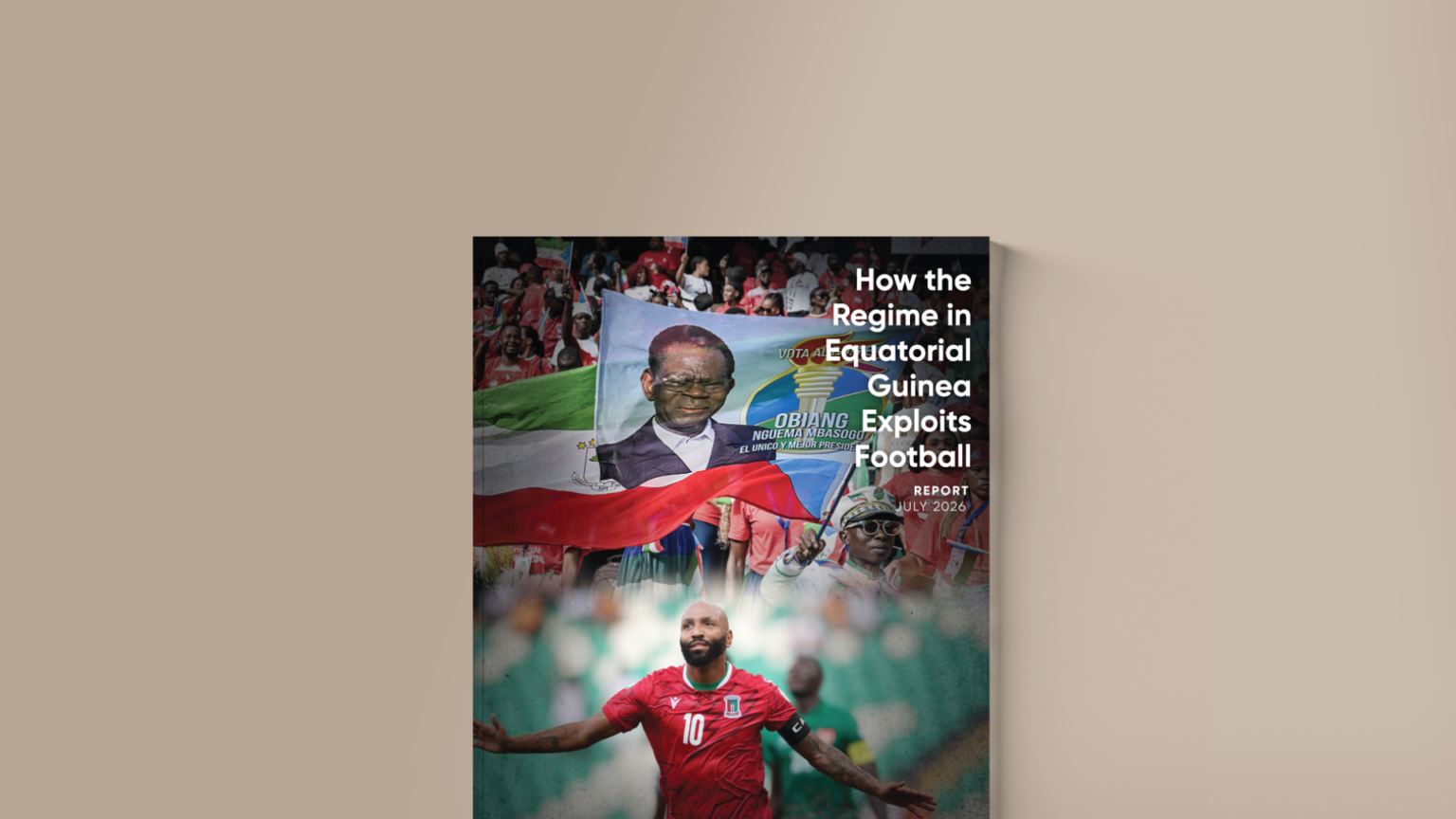
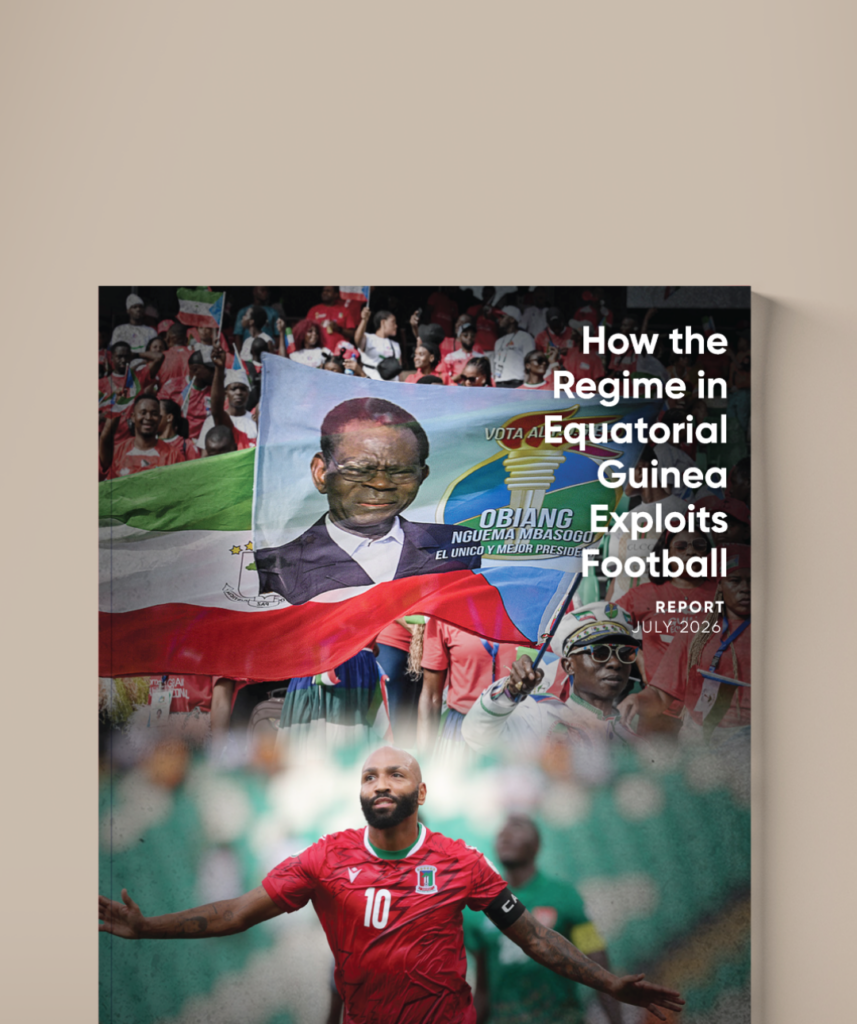

Equatorial Guinea, a tiny central African nation which gained its independence from Spain in 1968, has been under the rule of a dynastic family dictatorship for nearly six decades. Despite the country’s oil and gas wealth, more than half of the population lives in poverty. In this context, football is both a source of hope and a tool of consolidation and projection of power and personal enrichment for the country’s rulers.
With Equatorial Guinea’s football federation and national team often mired in corruption scandals and FIFA disciplinary sanctions, HRF’s report examines professional football in the political economy of Equatorial Guinea.
Drawing on exclusive testimonies from former players for the national football team, Nzalang Nacional, but also journalists and experts in human rights, transparency, sports and history, the 67-page report traces, among other things:
- How Equatorial Guinea’s dynastic ruling family has captured and politicized football institutions, and exploited the appeal of the sport for international prestige and legitimacy, popular distraction, personal enrichment, and the consolidation of a political system with no tolerance for dissent.
- Systemic dysfunction in football governance under the Equatoguinean Football Federation (FEGUIFUT), including:
- Politicization of the federation
- Players’ complaints about arbitrary confiscations of their passports, withholding or embezzlement of pay, poor conditions, and retaliatory suspensions
- Misuse of FIFA funds earmarked for domestic football development towards high visibility events elevating the regime’s international image
- The role of influential, politically-connected foreign actors in profiting from and enabling a system characterized by patronage and kleptocracy.
The report aims to amplify silenced voices, promote a deeper and more holistic understanding of professional football in the political economy of Equatorial Guinea, contribute to greater accountability in international football, and raise awareness of the human rights abuses perpetrated by Equatorial Guinea’s regime.
This report is part of HRF’s Sports & Dictators Program, an initiative exploring the evolving role of sports in international relations, focusing on how authoritarian regimes exploit sports as part of a multi-faceted strategy to shape national identity, boost economic growth, and project soft power on the global stage.
How the Regime in Equatorial Guinea Exploits Football
Equatorial Guinea’s regime has strategically exploited the global appeal of football as a political tool. By leveraging the sport internationally, the regime maintains domestic control, shapes its public perception, and engages in reputation laundering through dubious partnerships, despite chronic shortcomings in local football development.