


Welcome to this week’s Financial Freedom Report.
In India, the state is expanding its central bank digital currency within welfare programs across the country. Officials argue that the pilot tests aim to improve subsidy efficiency and reduce waste, but, in practice, they turn public benefits into programmable, conditional money that can be restricted to approved vendors, products, and purposes, opening the door for increased regime control of society.
In Bitcoin news, Fedi introduced a new swap tool through its integration with Exolix. This allows users to exchange bitcoin for various digital assets, such as stablecoins, without using a centralized exchange. For activists, dissidents, and communities facing financial surveillance, this provides a more private way to move between assets and access the tools they need.
We also feature a powerful keynote panel from the Bitcoin 2026 Conference in Las Vegas, where HRF’s Chief Strategy Officer, Alex Gladstein, is joined by human rights activists Evan Mawarire, Srdja Popović, and Anaïse Kanimba. Together, they discuss Bitcoin as a peaceful revolution and a lifeline for people facing dictatorship and financial repression.
Global News
India | CBDC Turns Welfare Payments Into Programmable Money
India is testing its central bank digital currency (CBDC), the digital rupee, in welfare programs across the country. In Maharashtra, the second most populous state, a pilot run jointly by the World Bank and the Reserve Bank of India delivers irrigation subsidies directly to farmers in digital rupees, which can only be spent at approved vendors on specified equipment. Meanwhile, in Gujarat, another pilot is using the CBDC to distribute subsidized food through government ration shops with similar spending restrictions. Analysts cited by Reuters say China and India are the only countries with large-scale programmable CBDCs, with India’s already having around 10 million users.
Why this matters: India is leveraging its CBDC not merely as digital cash but as programmable, conditional money. Officials aim to reduce leakage in India’s $80 billion welfare system, yet this also enhances the state’s ability to control how money is used. As MIT researcher Neha Narula warns: “This is a really dangerous road to go down.”
Indonesia | Digital Payment System with China Established
China and Indonesia launched a cross-border QR payment system connecting China’s major payment apps with Indonesia’s QRIS network, the country’s national digital payment standard, used by over 50 million people. At launch, the system supports Alipay and UnionPay (China’s dominant mobile payment platform and the national payment network, respectively), allowing travelers and residents from both countries to scan and pay across borders, with transactions settled directly in yuan and rupiah under a local currency settlement framework.
Why this matters: This is an expansion of authoritarian payment infrastructure, with Beijing embedding systems across Southeast Asia via cross-border QR links and local currency settlement. Pilot programs are live in Thailand, Vietnam, and Laos, increasing reliance on financial infrastructure linked to an authoritarian state keen on surveillance, control, and regional influence.
Russia | Additional Fees for International Internet Traffic Proposed
Russia’s Digital Development Ministry is seeking to charge additional fees for users accessing the internet using virtual private networks (VPNs). The measure would impose an additional fee of 150 rubles ($2) for each gigabyte used beyond the 15-gigabyte limit. Officials wanted the system to be live by May 1, but telecom providers pushed back, saying their billing infrastructure was nowhere near ready. The proposal appears tied to the regime’s broader crackdown on VPN use.
Why this matters: Raising the cost of international internet traffic and penalizing VPN use make accessing uncensored information harder, both technically and economically.
Somalia | Businesses and Individuals Abandon the Somali Shilling
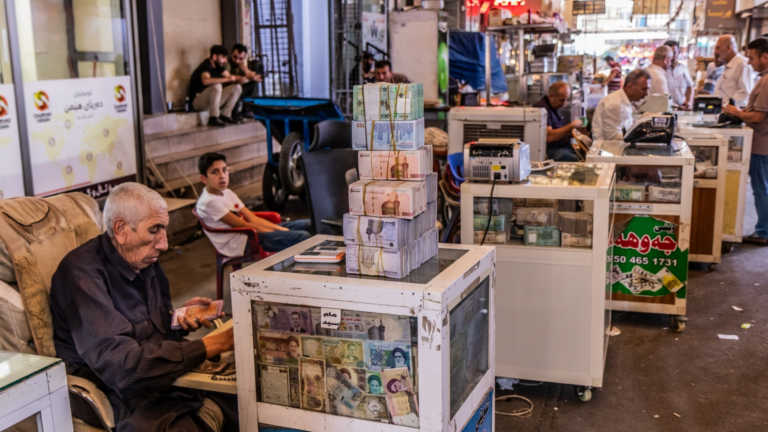
In Mogadishu, the capital of Somalia, businesses and currency traders have reportedly stopped accepting the local Somali shilling and have turned instead to dollars and mobile money. This shift has quickly spread across major markets, public transportation, and small shops, leaving many Somalis who still rely on cash shillings unable to pay for basic goods or even rides. Merchants have cited the currency’s poor physical condition, declining value, and the absence of a system to replace worn-out notes as reasons for the change. Although Somalia has long been dollarized, Mogadishu was one of the main areas where small-denomination shillings were used regularly in daily life.
China | Online Advertising of Bitcoin Banned
China’s central bank introduced new rules that tighten restrictions on digital assets by targeting the way financial products are promoted online. The new framework specifies that only licensed entities may promote financial products and designates the promotion of digital asset issuance and trading as illegal financial conduct. The regulations also extend liability to platforms, intermediaries, and content creators who help promote or facilitate these activities online. In effect, China is widening enforcement efforts from digital asset trading itself to the digital channels that enable people to discover, discuss, and access it.
Why this matters: This is a ban on Bitcoin’s visibility. By targeting platforms, recommendation systems, and online promoters, the state can tighten control over how financial alternatives are delivered to citizens.
Recommended Content
Bitcoin on the Frontlines of Human Rights at the 2026 Bitcoin Conference
Watch HRF Chief Strategy Officer Alex Gladstein host a powerful keynote panel at the 2026 Bitcoin Conference with three brave human rights defenders who have experienced repression firsthand and continue to peacefully resist. The panel featured Evan Mawarire, the Zimbabwean pastor who mobilized millions against Robert Mugabe’s dictatorship; Srdja Popović, who led Serbia’s Otpor! movement that helped peacefully topple Slobodan Milošević; and Anaïse Kanimba, who led the campaign to free her father, “Hotel Rwanda” hero Paul Rusesabagina, from political imprisonment. Together, they discuss Bitcoin as a peaceful revolution and a lifeline for people facing dictatorship, hyperinflation, surveillance, and financial repression.

Join Us at the 18th Annual Oslo Freedom Forum
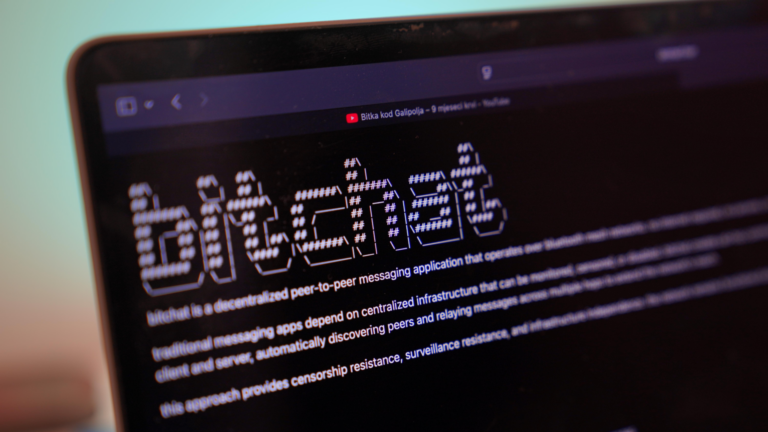
Join HRF this year at the 18th annual Oslo Freedom Forum (OFF), hosted in Oslo, Norway, from June 1–3. This year’s OFF theme of “Dismantling Dictatorship” celebrates the activists, thinkers, technologists, and artists who take tyranny apart with ingenuity, creativity, and solidarity. Together, we celebrate stories of courage and explore bold ideas to advance freedom and unleash human potential through innovative solutions. On June 2, the Freedom Tech track will explore how tools like Bitcoin, offline messaging like Bitchat, decentralized communication protocols like Nostr, and open-source AI are helping human rights defenders resist repression.
Bitcoin and Freedom Tech News
Fedi | Private Digital Asset Swap Introduced
Fedi, a company leveraging Bitcoin and ecash technology to support global communities, integrated a swap tool called Exolix. This feature lets users exchange bitcoin for other digital assets, including stablecoins like USDT (Tether), without the need to create an account. In practice, a user opens Exolix within the Fedi app, chooses the asset they want to receive, enters a destination wallet address, and pays from their Fedi wallet over the Lightning Network, a layer built on Bitcoin that enables instant, low-cost payments. The specified asset is then transferred to the wallet address provided.
Why this matters: For users living under financial repression or in places where exchanges require invasive identity checks, Exolix provides a more private way to move between bitcoin and other digital assets. It also expands ways to use Fedi wallets. Activists and communities can now access other digital assets without depending on centralized exchanges.
ZEUS Wallet | Built in LDK Node Added
ZEUS, an open-source, self-custodial Bitcoin Lightning wallet, introduced an update to simplify self-custody for everyday users. The notable change is a new “graduated wallet” process. This means new users start with Cashu ecash (digital cash backed by bitcoin) for private, fast, and low-friction onboarding. Once comfortable, they can move into full self-custody. ZEUS also replaced its backend with an LDK Node, a lighter mobile node (a computer running the Bitcoin software) that lets users run a self-custodial Lightning wallet directly from their phone. This makes it easier for people to send and receive bitcoin without relying on a bank, exchange, or custodial wallet that can freeze, block, or surveil their payments.
Why this matters: One of the hardest problems in Bitcoin is making sovereignty usable. ZEUS is trying to solve that by giving new users an easier on-ramp to Bitcoin without abandoning self-custody as the end goal. Dissidents who are new to Bitcoin may find this flow more accessible.
Bisq | Software Exploit Drains 11 BTC From Users
Bisq, a peer-to-peer Bitcoin exchange, suffered a security breach where a hacker stole approximately 11 BTC. The attacker manipulated part of the trade setup, resulting in far less bitcoin being locked into the shared transaction than planned, while the rest was redirected to the attacker. Bisq reported that the stolen transactions shared a recognizable pattern, which helped the team identify affected users. As one of Bitcoin’s most prominent decentralized exchanges, this was a serious incident. The team believes the attacker may have used AI to help speed up the discovery of the vulnerability, drawing attention to how AI is changing the cybersecurity landscape. Bisq expressed its commitment to reimbursing all affected users.
Satoshi Sister Circle | 30 Women Graduate into Bitcoin Ecosystem
Satoshi Sister Circle, a leadership and mentorship network for women from Africa and the African diaspora, graduated 30 women from the second cohort of its Career Accelerator program. The initiative focuses on Bitcoin training, building leadership skills, mentorship, and practical exposure to the Bitcoin ecosystem. Graduates hailed from various parts of the continent, including countries ruled by authoritarian regimes such as Nigeria, Rwanda, Malawi, and Uganda. The graduating cohort is prepared not just to learn Bitcoin, but to build, teach, and lead within it.
OpenSats | Spring Grant Applications Open
OpenSats, a nonprofit dedicated to funding open freedom technologies such as Bitcoin and Nostr, is now accepting applications for its spring and fall grant cycles. The organization is calling for applicants focused on Bitcoin base-layer privacy. It aims to support open-source projects that improve on-chain privacy through better wallets, transaction methods, and infrastructure. Areas of interest include privacy tools like Silent Payments, Payjoin, Coinswap, and JoinMarket, along with research and integrations to make privacy the default. Apply here and help build tools activists rely on under tyranny.
MARA Holdings | MARA Foundation Launched With Inaugural Donation
MARA Holdings, a company mining Bitcoin and expanding into AI computing, launched the MARA Foundation, its new philanthropic arm. Its inaugural donation was $100,000 to one of three preselected Bitcoin nonprofits chosen by community vote at the 2026 Bitcoin Conference. The candidates were the 256 Foundation, which supports open-source Bitcoin mining hardware and software; Librería de Satoshi, which works to make Bitcoin technical education accessible across Latin America; and SateNet, focusing on global, community-run internet access powered by Bitcoin. Voting has since closed, and 256 Foundation won the $100,000 contribution to help advance solo Bitcoin mining and achieve greater network decentralization and censorship resistance.
Bitcoin Recommended Content
bitcoin++ Villains Edition Livestream
Last week, developers from across the Bitcoin ecosystem convened at the Hoover Dam in Nevada for the latest series in the bitcoin++ developer conference. If you missed the event, you can watch the debates, talks, and panels that defined the gathering. Topics were intentionally controversial, including Bitcoin protocol proposals, quantum threats, and potential soft-fork ideas. The idea was to explore how Bitcoin will evolve in an increasingly globally adversarial environment.