

Welcome to this week’s Financial Freedom Report.
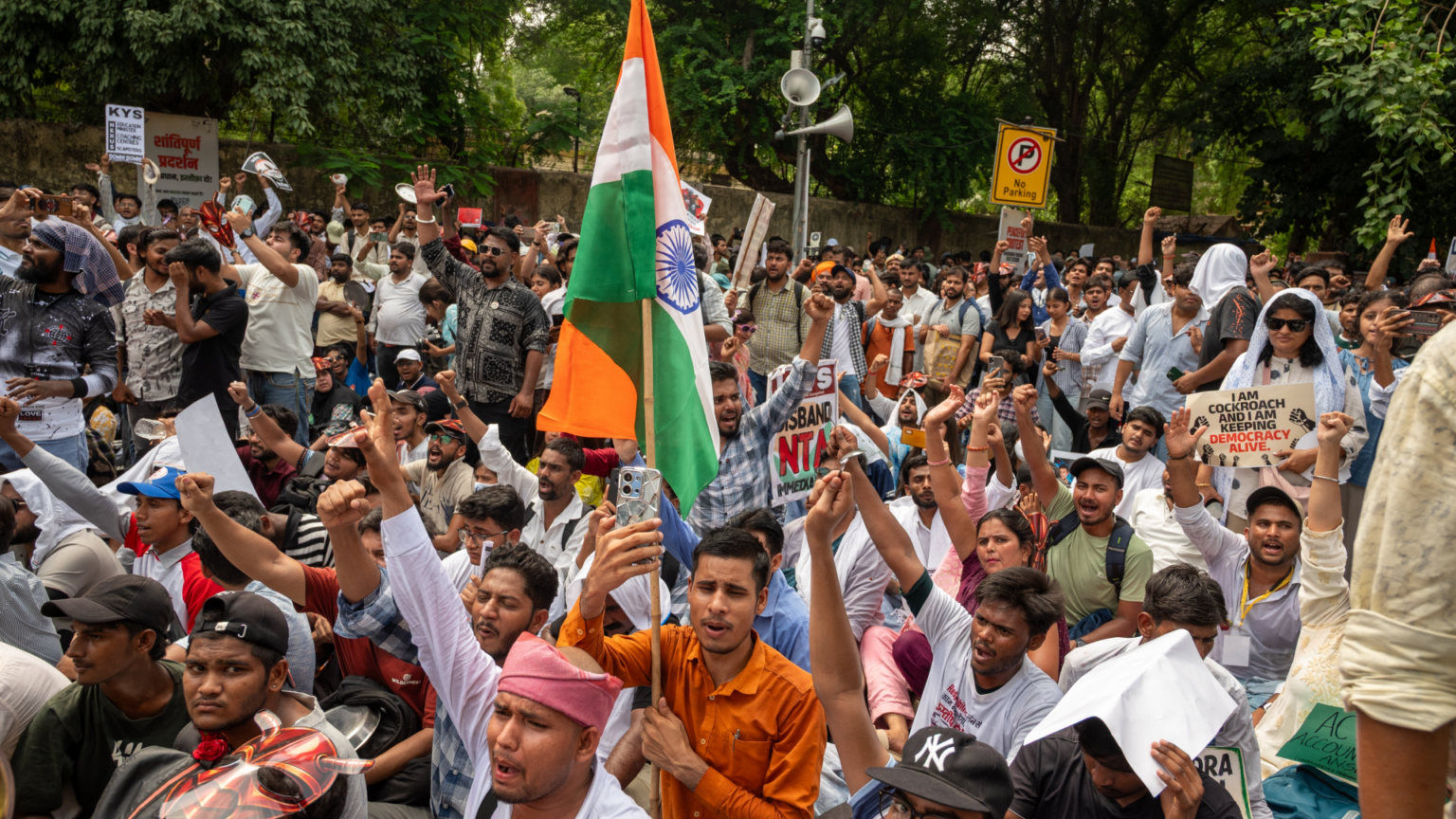
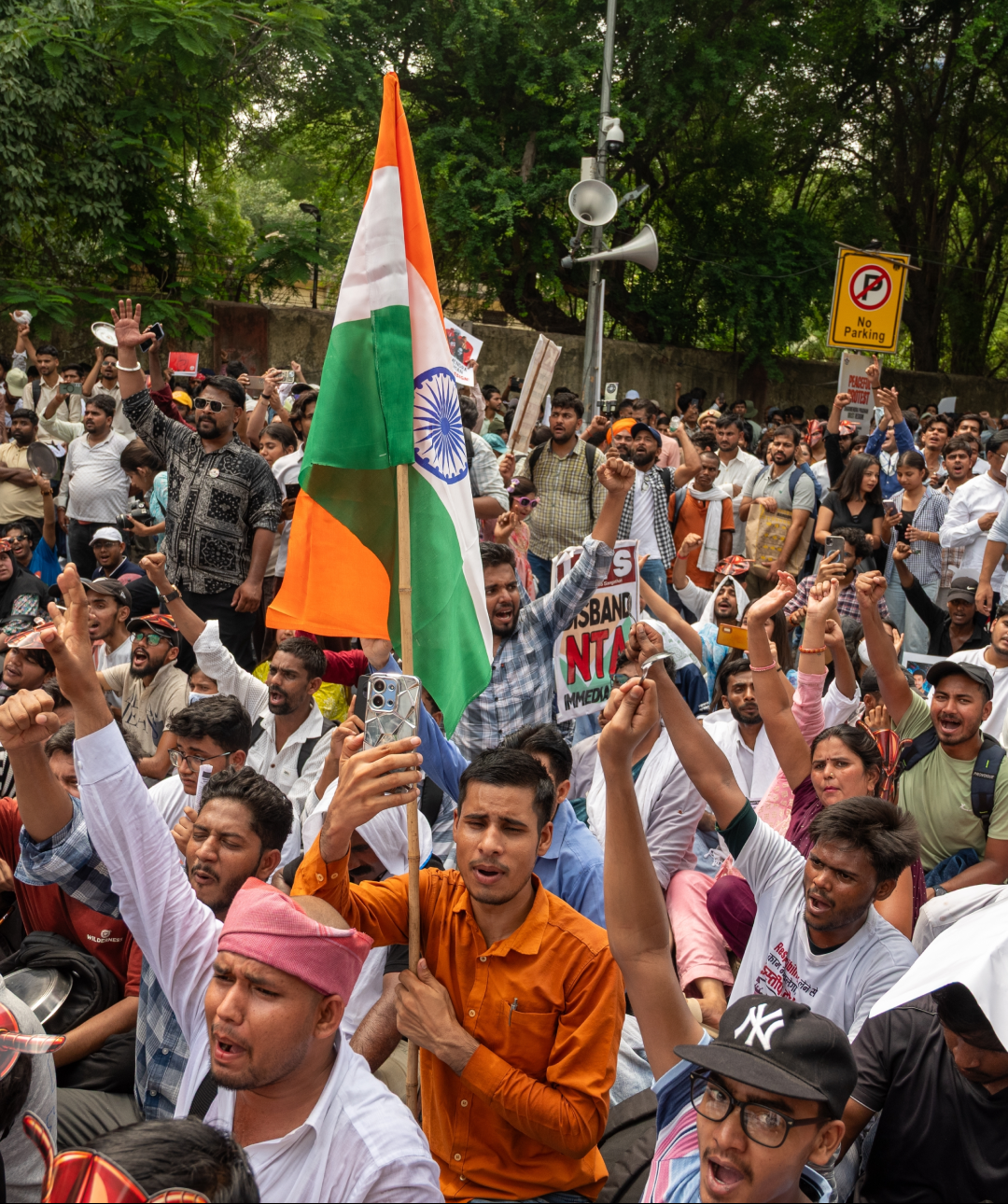
In India, Narendra Modi’s hybrid authoritarian regime attempted to restrict access to code for Bitchat, an open-source app that allows users to send messages over Bluetooth without an internet connection, after suspending internet access during student protests in Delhi. The move comes as thousands of students and youth protest for education reforms amid unemployment and limited economic opportunity.
In Bitcoin news, nine institutions, including BlackRock, Fidelity, Coinbase, and Strategy, announced the Bitcoin Security Consortium, which pledges $15 million over three years toward the security of the Bitcoin network. Addressing potential challenges and risks now will ensure that Bitcoin remains a tool of financial freedom in the decades to come.
We end with a new essay by HRF Chief Strategy Officer Alex Gladstein in the Journal of Democracy on how AI agents can empower human rights defenders. Gladstein argues that while dictators can use AI to expand surveillance and social control, open-source and private AI tools can help supercharge the work of dissidents, closing the resource gap against the regimes trying to silence them.
Global News
India | Bitchat Code Targeted During Protests and Internet Shutdowns
Narendra Modi’s hybrid authoritarian regime ordered GitHub, a platform for storing and sharing software, to remove three code repositories in India for Bitchat, a Bluetooth-based messaging app that allows users to communicate without an internet connection. According to the Internet Freedom Foundation, officials objected to Bitchat’s ability to enable communication “even during network restrictions.” Bitchat has been used repeatedly in protest movements when authoritarian regimes restrict internet access. The order reportedly gave GitHub three hours to comply and threatened the platform with criminal prosecution if it did not remove the code. The takedown did not suppress Bitchat itself: the code reportedly spread to other repositories. Meanwhile, phones that already had the app could continue using it. The broader concern is that India’s regime is not only censoring free expression through internet shutdowns, but also attacking the tools people use to communicate when those shutdowns happen.
In context: The order follows internet restrictions in Central Delhi, where thousands of students and youth, known as the “cockroach movement,” have been protesting for educational reforms amid unemployment and a lack of economic opportunities. The police crackdown that followed sent roughly 300 people to the hospital and led to 70 arrests. The movement ended its five-week protest after Education Minister Dharmendra Pradhan resigned last week.
Africa | ECOWAS Plans for Single Currency Move Forward
The Economic Community of West African States (ECOWAS), a regional bloc of 12 mostly authoritarian West African countries, reaffirmed plans to launch its long-delayed single currency, the ECO, in 2027. The monetary bloc is now considering a phased rollout, with countries that meet inflation, debt, and monetary stability criteria joining first. However, major questions remain, including which countries would participate, how a future regional central bank would operate, and how monetary decisions would be made. The plan is further complicated by West Africa’s political fractures, including the departures of Mali, Burkina Faso, and Niger from ECOWAS, and their continued membership in the CFA franc zone.
In context: Many West Africans still live under the CFA franc system, a colonial-era currency arrangement tied to the French franc. The ECO is presented as a step toward regional autonomy, but it risks centralizing monetary power in political institutions across a region where many member states are ruled by authoritarian regimes. For West Africans, the question is whether the new currency expands financial freedom or simply replaces one controlled system with another.
China | Censorship Makes Protests Harder to Track Amid Economic Strain
China’s increasing use of online censorship is making public unrest harder to detect, even as economic pressures continue to drive dissent. According to Freedom House’s China Dissent Monitor, researchers documented 846 protest events last quarter, down 45% from a year earlier, alongside a 50% drop in protest-related posts on Douyin (the Chinese version of TikTok) between March and June. Researchers attribute much of the decline to the regime’s online censorship rather than an actual drop in dissent.
Why this matters: Censorship weakens the social fabric that makes collective resistance possible. When dissent disappears from online spaces, citizens may assume they are alone, even when frustration is widespread. Open, censorship-resistant protocols like Nostr can help preserve communication rails that are harder for states or platforms to silence. Learn how to use it here.
Tanzania | Central Bank Prepares Digital Asset Regulatory Framework
Tanzania’s central bank is preparing a framework for digital assets after completing a study on cryptocurrencies, stablecoins, and virtual assets. Bank of Tanzania Governor Emmanuel Tutuba said the rules will focus on investor protection, anti-money laundering safeguards, and financial stability. But in a country that has already used financial repression to restrict monetary alternatives, it remains unclear if this framework will benefit Tanzanians. To curb the use of digital assets, the regime has already imposed a 3% withholding tax on digital asset transactions. Regulation could bring clarity, or it could absorb the country’s Bitcoin activity into channels the state can more easily monitor, tax, block, or pressure.
In context: This comes alongside other financial restrictions on foreign currency use and mandates routing more inbound money transfers through the state-run Tanzania Instant Payment System.
Burma | Closer Scrutiny of NGO Financial Activity
Burmese officials are calling for closer scrutiny of the funding sources and financial activity of registered local and international NGOs. Speaking to a parliamentary committee on July 21, a Lower House speaker said lawmakers should verify organizations’ registration status, activities, and financial transparency, and review whether new laws are needed for NGO management, foreign assistance, and humanitarian coordination.
In context: Burma’s junta already uses registration rules to make it harder for humanitarian groups and civil society to operate independently, including by threatening prison and fines for unregistered organizations.
Recommended Content
How AI Agents Are Empowering Human-Rights Defenders by Alex Gladstein
In a new essay for The Journal of Democracy, HRF’s Chief Strategy Officer Alex Gladstein argues that AI is not only a tool for dictators but also a new force multiplier for dissidents. He explains how personal agents, vibe coding, open-source models, and privacy-protecting AI systems can help human rights defenders do work that would have otherwise taken weeks in mere hours. As activists gain increasingly access to open, private, and customizable AI tools, alongside financial freedom tools like Bitcoin they can begin to close the gap against the regimes trying to silence them.

Bitcoin and Freedom Tech News
Bitcoin Security Consortium | Institutions Pledge $15 Million for Bitcoin Security
Nine financial institutions, including BlackRock, Fidelity, Coinbase, and Strategy, announced the Bitcoin Security Consortium, a new initiative pledging $15 million over three years toward Bitcoin security work. The group’s first focus will be quantum computing, a medium to long-term risk that could eventually threaten Bitcoin’s current signature scheme if sufficiently powerful quantum computers are developed. Mike Schmidt, the executive director of Brink and a contributor to Bitcoin Optech, will help coordinate the consortium as a volunteer. He shared that members of the consortium will fund developers and researchers independently, with no pooled treasury and no official positions on protocol changes. Learn more about the consortium here.
In context: Bitcoin’s credibility as freedom money depends on long-term resilience. Independent funding like this for security research can help developers prepare for future threats without creating a centralized body that directs protocol decisions. Large financial firms with major Bitcoin exposure may try to shape development priorities, public narratives, or pressure around protocol changes. But it is undoubtedly a sign of Bitcoin’s continued rise that some of the world’s economic actors are pledging to support open-source Bitcoin development.
Buzz | Nostr-Powered Groupchat Platform for Humans and AI Agents
Last week, Twitter and Block co-founder Jack Dorsey and his team launched Buzz, an open-source group chat platform that functions as an alternative to platforms like Slack and GitHub. Buzz is built on the Nostr protocol and lets people and AI agents collaborate within self-hosted communities. Messages, workflows, code activity, and agent actions then live in a single, shared, searchable log. Several existing AI agents already work with Buzz, including Goose, Codex, and Claude Code. Since its release, it has become one of the top three trending projects on GitHub.
In context: Financial freedom depends on more than money. Civil society groups also need sovereign tools to coordinate, build software, manage campaigns, and protect organizational knowledge without relying entirely on centralized corporate platforms. With Buzz, human rights defenders and civil society can host their own workspace, bring agents into it, and reduce reliance on centralized corporate platforms by combining freedom tech tools like Nostr and AI. It is important to note that Buzz did not ship with encrypted information channels, but some developers are already working to make that a reality.
BitSpenda | Expanded Country Support
BitSpenda, a Bitcoin-to-mobile money tool, expanded payout support to Uganda and Cameroon. It brings coverage to 4 authoritarian-leaning African countries, including Kenya, Nigeria, Uganda, and Cameroon. To use BitSpenda, a user enters a recipient’s mobile money number, a Lightning Network invoice is generated, and the user pays from their Lightning wallet. The recipient then receives local currency directly in their mobile money account without needing a Bitcoin wallet. BitSpenda says it has processed more than 200,000 successful transactions since launching in March 2025, a testament to the demand for freedom money in Africa.
Why this matters: BitSpenda closes the gap between Bitcoin and the local payment rails people already use in the world’s second-most-populous continent. Local merchants, families, activists, and civil society groups in Uganda and Cameroon can now use Bitcoin more practically in everyday situations.
Lightning Labs | Wavelength Introduced
Lightning Labs, a company building on Bitcoin’s Lightning Network, released Wavelength, a toolkit for adding self-custodial Bitcoin payments to apps without requiring developers to run Lightning infrastructure. Builders can create wallets, send and receive Lightning invoices, check balances, view activity, and let users unilaterally exit funds back on-chain. Wavelength also supports AI agents by allowing them to make small payments or access other services without cards or accounts. Under the hood, it uses an Ark-like settlement layer, where users hold VTXOs that must be refreshed to preserve their unilateral exit path.
Why this matters: Wavelength could make it easier to embed Bitcoin payments into apps and AI tools without forcing builders or users into custodial systems.
Btrust | First Round of 2026 Bitcoin Developer Grants Announced
Btrust, a nonprofit supporting Bitcoin development across Africa, awarded $904,000 across five Bitcoin developer education programs: Hack4Freedom, Summer of Bitcoin, Bitshala, Vinteum, and Librería de Satoshi, and B4OS. The grants support programs that train developers, provide mentorship, and create pathways into Bitcoin free and open-source software development, with a focus on Africa, Latin America, India, and the broader Global Majority. Btrust’s grants help more individuals in regions facing financial exclusion and economic instability move from learning just Bitcoin to contributing to its code and building new freedom tools tailored to their exact needs.
Bitcoin Recommended Content
Sparrow Wallet: Craig Raw & Silent Payments
In this episode of The Watchman Privacy Podcast, Gabriel Custodiet interviews Craig Raw, creator of Sparrow Wallet, about Silent Payments and the wallet’s latest updates. Silent Payments are a Bitcoin privacy feature that lets a human rights defender or nonprofit receive bitcoin without publicly reusing the same address or manually generating a new one for each payment. Raw discusses how the feature works, why it matters for privacy on Bitcoin, and how Sparrow is continuing to improve tools for dissidents who want more control over how they receive, store, and spend bitcoin.