
Welcome back to the Financial Freedom Report.
In Russia, officials sentenced a senior programmer to a four-year suspended sentence for donating $21 to the Anti-Corruption Foundation (ACF). Leonid Stepanov was convicted using his own bank statements, showing how the Kremlin weaponizes financial surveillance and demonstrating precisely why alternative payment rails like Bitcoin matter in the struggle for democracy.
Meanwhile, in Southeast Asia, Burmese officials ordered local banks to block the use of their payment systems outside the country, deliberately narrowing the ways people can move money. The immediate effect is that millions of Burmese living abroad have fewer ways to send money home to their families.
In Bitcoin news, the first draft of a Bitcoin Improvement Proposal (BIP) called SHRINCS was published. SHRINCS is an experimental digital signature scheme designed to help protect Bitcoin against future quantum computers, laying the groundwork for how Bitcoin can continue serving as freedom money for civil society in the decades to come.
We also include a conversation from Tangents Daily, in which HRF’s Financial Freedom Content Lead Zac Guignard offers a behind-the-scenes look at the Financial Freedom Report. He shares why stories of financial repression are not just economic headlines, but deeply human accounts of what it actually means when people lose the ability to save, spend, communicate, and organize freely.
Now, let’s dive in.
Global News
Russia
Programmer Sentenced Over $21 Donation to the ACF
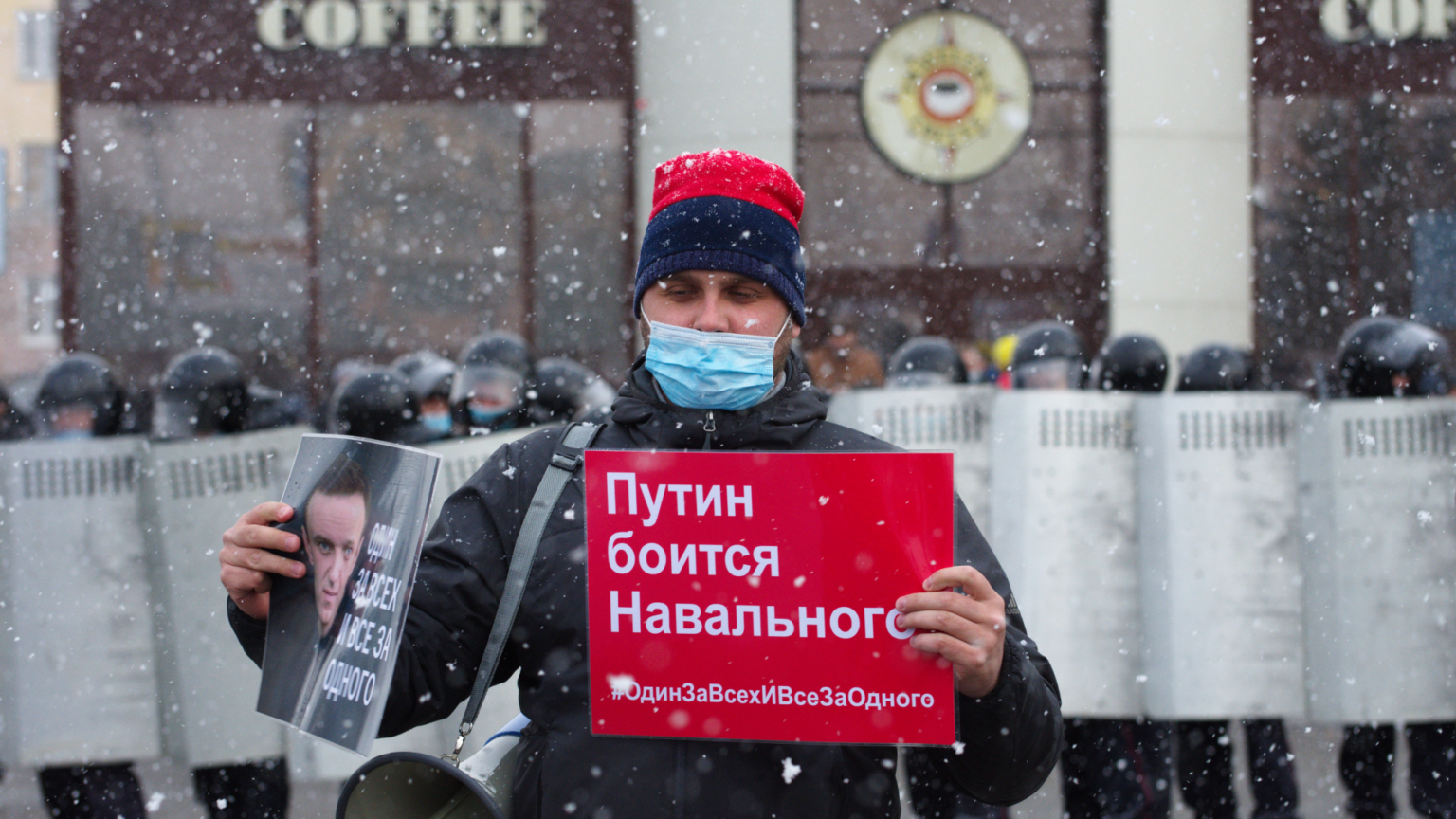
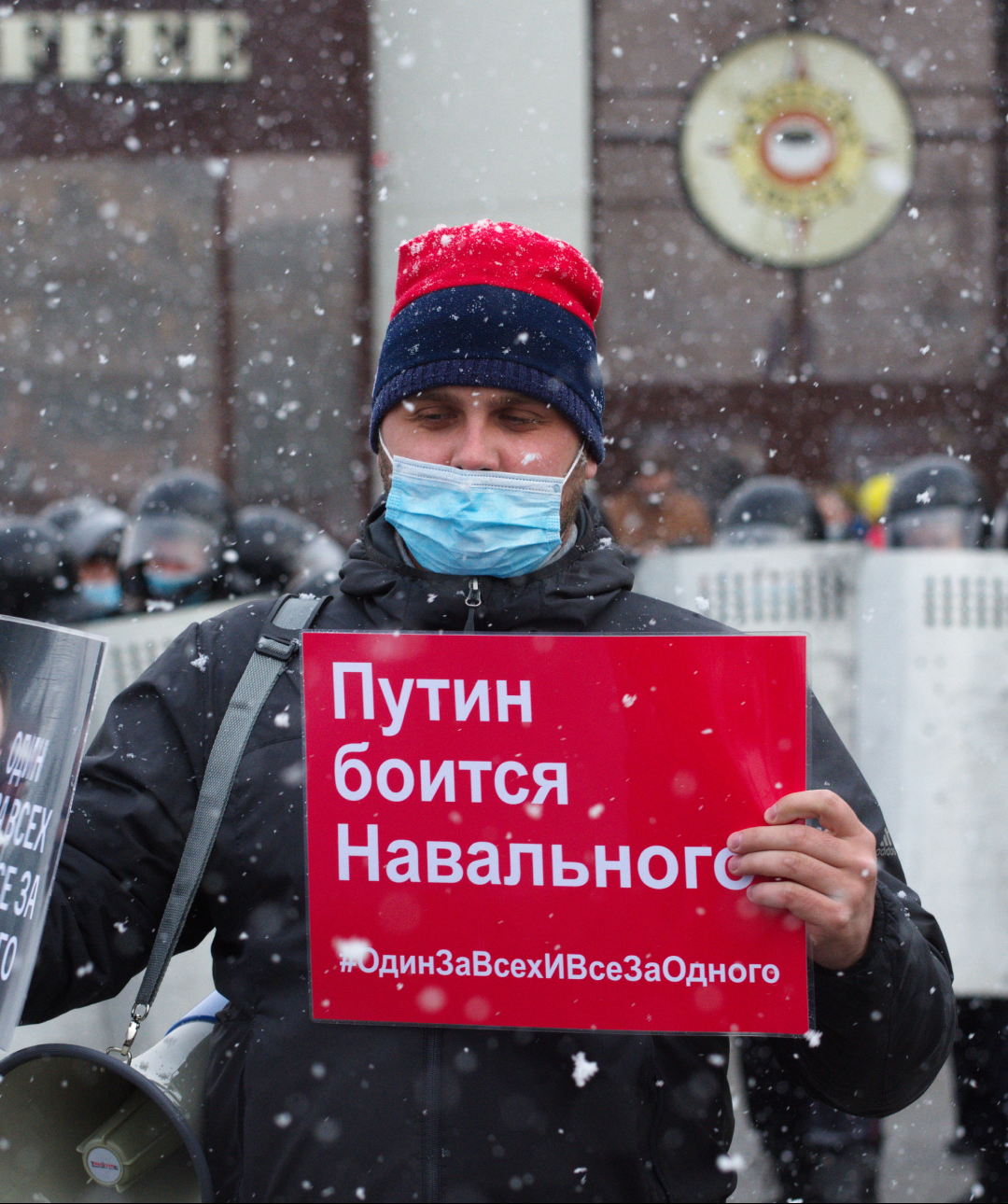
Russian officials sentenced a senior programmer at the country’s communications regulator to a four-year suspended sentence for donating to the ACF. Leonid Stepanov, 48, made two transfers to the foundation in August 2021, totaling just 1,532 rubles and 43 kopecks (about $21). For those donations, officials charged him with “financing extremism.” Stepanov was convicted using his own bank statements, showing how the Kremlin uses financial surveillance against dissent. But when the Kremlin froze the ACF’s bank accounts in 2018, the organization was able to keep operating, in part because it had already begun accepting bitcoin donations. If ordinary bank transfers increasingly serve as criminal evidence against individuals, Bitcoin becomes intertwined with the struggle for democracy itself.
In context: Russian officials have opened more than 225 criminal cases over donations made to the ACF after the Kremlin designated the organization as “extremist” in 2021. Officials now routinely use the label to criminalize financial support for the country’s leading opposition. Reports of new cases or verdicts over donations to the ACF appear at least once a week.
Burma
Domestic Banks Ordered to Cut Off Digital Payments Abroad
Burma’s central bank ordered providers of the country’s dominant payment apps — KPay, Wave Money, AYA Pay, and CBPay — to block their use abroad. The order directs domestic banks to deploy geo-blocking, location-based, and IP-based restrictions and then submit a report on the measures taken. Already, Burmese people living abroad have reported difficulties accessing CBPay, spreading fear that other payment apps will follow suit.
In context: The affected population is potentially enormous. The International Organization for Migration estimates more than 4 million Burmese migrant workers live in Thailand alone — roughly 1.7 million undocumented — and hundreds of thousands of them are believed to use these payment apps to send money home. The same apps are also used to fund the pro-democracy resistance, and accounts suspected of doing so have been frozen, with account holders arrested and interrogated. It’s no surprise that Burmese people continue turning to Bitcoin amid this increasing financial repression.
Indonesia
Protest Organizer’s Bank Account Frozen
Bank Mandiri, Indonesia’s largest state-owned bank, froze the account of a protest coordinator on unclear legal grounds. The account belongs to Supriyono, coordinator of the Pati United Community Alliance, and was frozen on Aug. 21 as he accompanied residents to a demonstration at the House of Representatives. The frozen account held about 80.9 million rupiah ($4,900) in personal funds and public donations meant to cover food, transportation, and lodging for demonstrators. Following criticism from Amnesty International Indonesia, questions in parliament, and even a decline in the bank’s shares, Mandiri restored access on Aug. 26. But the episode shows how quickly a protest movement can lose access to its funds when a bank acts on the request of an unnamed government agency, and only reverses course under public pressure.
Iran
Rial Reaches Another Record Low
Iran’s currency, the rial, fell to a record low last week, passing 2 million to the US dollar on the parallel market for the first time. The rial has depreciated by roughly half since the start of the year, with annual inflation reaching 84.4%. Iran’s central bank still quotes an official rate of about 1.5 million rials per dollar, but that figure bears little relation to what ordinary Iranians actually pay.
In context: Iran’s collapsing currency and soaring cost of living helped fuel nationwide unrest at the beginning of 2026. More than half a year later, the rial continues to reach record lows, providing no respite to and further reducing the purchasing power of 93 million people living under dictatorship.
Uzbekistan
Central Bank to Publish CBDC White Paper
The Central Bank of Uzbekistan is set to publish a white paper on a central bank digital currency (CBDC). According to officials, “The paper will address the assessment of potential use cases, design options, key trade-offs, and implications for the financial system,” without specifying a publication date. Back in September 2025, officials said the central bank was exploring a CBDC, the digital som, and even called for a roadmap to pilot it by April 2026.
Why this matters: Uzbekistan operates under a fully authoritarian regime that heavily represses and harasses unregistered NGOs, political opponents, and independent media. Although the regime already controls much of the financial system, implementing a CBDC could streamline its financial surveillance capabilities and give officials broader reach and control over the financial lives of citizens.
Recommended Content
Telling the Story of Financial Repression and Freedom with Zac Guignard
In this episode of the new Tangents Daily podcast, HRF Financial Freedom Content Lead Zac Guignard joins host Rod Roudi to discuss HRF’s weekly Financial Freedom Report. The conversation explores how the report tracks financial repression as a growing global phenomenon and how authoritarian governments increasingly weaponize money against civil society and individual liberty. He also shares why stories of financial repression are not just economic headlines, but deeply human accounts of what happens when people lose the ability to save, spend, communicate, and organize freely. Listen to the episode here.
Bitcoin and Freedom Tech News
SHRINCS
First Draft of Quantum-Resistant Signatures
Bitcoin’s security relies in part on digital signatures that today’s computers cannot feasibly break. They are how users prove they own and can spend their bitcoin, but in the future, powerful enough quantum computers could compromise them. In anticipation of this threat, the SHRINCS Working Group published the first draft of a proposed BIP called SHRINCS. The proposal replaces the elliptic-curve cryptography Bitcoin currently relies on with a hash-based design built around SHA-256, which is believed to be more resistant to quantum attacks.
Why this matters: If Bitcoin is to secure wealth, extend property rights, and preserve financial freedom in the decades to come, its cryptography needs a path to withstand threats that may not yet exist. You can learn more about the details of SHRINCS in this podcast episode or read the draft BIP here.
Flint
New Open-Source Lightning Plugin for BTCPay Server
Flint is a new open-source plugin for BTCPay Server built by software developer Seth for Privacy. It lets merchants, including nonprofits, accept bitcoin without running their own nodes. It does so by using the Breez SDK and Spark on the back end. Flint is unique in that it can share a seed phrase with an existing BTCPay wallet for simpler setup, automatically move incoming funds into an on-chain Bitcoin wallet, or convert them into stablecoins to reduce exposure to price volatility. For a nonprofit, Flint could make it easier to accept Bitcoin while the end user still maintains choice over where funds ultimately end up.
Important: Flint is still in development and thinly proven in production. Use it with funds you can afford to lose, do your own research, and understand the limitations before processing funds through the plugin. You can test it out here.
Core Lightning
Critical Vulnerabilities Prompt Emergency Update
Core Lightning (CLN), one of the main software implementations of Bitcoin’s Lightning Network, disclosed multiple vulnerabilities last week and urged operators to upgrade immediately or temporarily restart their nodes in offline mode. The disclosure comes amid a surge in AI-assisted security reports across Bitcoin’s open-source ecosystem, with increasingly capable models allowing attackers to find potential vulnerabilities at much greater speed. The CLN team has since released an emergency version (26.06.7) and strongly encourages operators to upgrade. BTCPay Server, the open-source software for accepting Bitcoin, also released an update, as many of its users run CLN software.
Mostro
Expands P2P Bitcoin Markets in Argentina and Brazil
Mostro, an HRF grantee and open-source protocol that lets communities operate peer-to-peer (P2P) Bitcoin markets over Nostr and Lightning, released a new version. The update improves payment retries, fund collection, disputes, and security, while adding verified P2P communities in Argentina and Brazil that run their own Mostro nodes. Mostro also launched mostro.world, which collects public data from nodes on Nostr to show where the protocol is used around the world, offering a unique glimpse into grassroots Bitcoin adoption. Explore it here.
Why this matters: Mostro is localized on- and off-ramp infrastructure, not an app or exchange. Any community or individual can use it to create a local Bitcoin market where buyers and sellers trade sats without accounts, identity verification, or a centralized company holding their funds. That makes local access to Bitcoin easier to build and much harder for anyone to shut down.
Sparrow Wallet
New Release Strengthens Wallet Security
Sparrow Wallet, a non-custodial Bitcoin wallet for desktop and HRF grantee, released a new version following an extensive, AI-assisted security review. The update hardens the wallet across several fronts. It improves Sparrow’s integration with hardware wallets by adding stricter security checks and fixing bugs. Sparrow also now verifies transaction data independently, reducing reliance on external servers to confirm balances and payments. Craig Raw, creator of Sparrow Wallet, said that fixes from the AI review were manually verified and that no active exploits were found. Users should update to version 2.5.4, which improves the wallet’s overall security and robustness for its global user base. Download the latest release here.
Bitcoin Recommended Content
Getting Bitcoin: An Educational Campaign by The Nakamoto Project
The Nakamoto Project, a nonprofit focused on Bitcoin education, has launched Getting Bitcoin, a 12-week campaign to help individuals understand Bitcoin. The initiative includes a website and six essays in The Wall Street Journal. The first, by macro analyst and author Lyn Alden, explores Bitcoin as a protocol of value and why the wrong mental model has led investors to underestimate it. The second piece, by HRF Chief Strategy Officer Alex Gladstein, follows on Sept. 8. Read them all at gettingbitcoin.org, under “Expert Opinions.”