HRF classifies Belarus as ruled by a fully authoritarian regime.
Belarus gained independence from the Soviet Union in 1991, but its brief post-Soviet political openness ended when Alexander Lukashenko, a former collective farm director, was elected president in 1994. Initially, Belarus’s 1994 constitution provided for checks and balances through a moderately strong parliament and an independent constitutional court. Lukashenko quickly moved to dismantle these constraints. In late 1996, he staged a controversial constitutional referendum that expanded his powers and extended his term, allowing him to appoint loyal judges and dissolve the legislature. By the end of 1996, Lukashenko had replaced the parliament with a new assembly of his supporters and brought the judiciary under his de facto control.
Lukashenko has ruled Belarus virtually unchallenged since, winning every election (presidential and parliamentary) by orchestrated landslides. International observers have deemed all national votes since 1994 neither free nor fair. During his early rule, several opposition figures who challenged Lukashenko’s power disappeared under mysterious circumstances. In 1999, for example, opposition leaders Yury Zakharenka and Viktar Hanchar and businessman Anatoly Krasouski vanished and were presumed murdered by a secret Interior Ministry unit. No one has been held accountable for these disappearances, reinforcing a climate of fear and impunity.
Throughout the 2000s, Lukashenko further tightened his grip on power. A 2004 referendum eliminated presidential term limits, paving the way for his decades-long reign. Security services (still named the KGB) and police brutally suppressed periodic protests against his rule, such as in 2006 and 2010, jailing opposition candidates and activists. Lukashenko’s relentless repression of dissent has kept him in power, leading observers to dub him “Europe’s last dictator.” Even when he implemented limited liberalization to ease international isolation in the late 2010s, core authoritarian controls remained firmly in place.
Key Highlights
Elections in Belarus are a sham, to the point where the real, mainstream political opposition does not have a realistic chance to meaningfully compete and possibly win. The Lukashenko government has completely sterilized the political playing field by outlawing all genuine opposition parties and locking up or driving away anyone who could mount a credible challenge. With no independent watchdogs allowed to monitor the vote and hundreds of thousands of exiled citizens deliberately stripped of their voting rights, the officials face no hurdles in fabricating landslide victories through forced early voting and doctored election results.
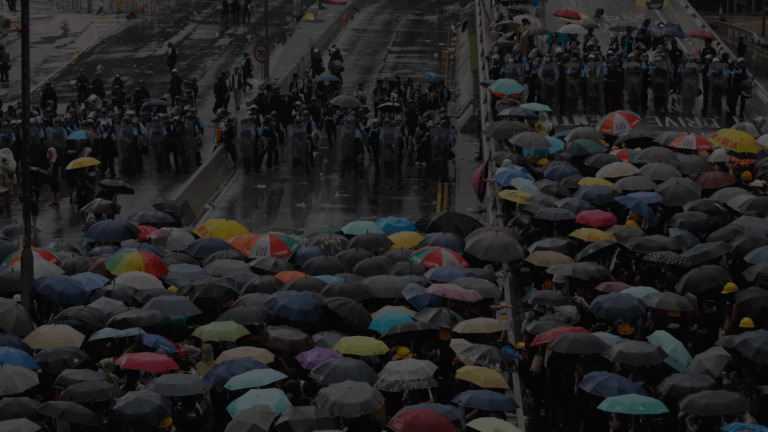
Belarussian independent media, political leaders, civil society leaders, organizations, and members of the general public face overt and systematic retaliation if they openly criticize or challenge the regime. The regime maintains absolute control over society by branding almost any form of independent civic activity as “extremism.” The civil society that existed prior to 2020 has been dismantled entirely, and taking to the streets in protest now carries the risk of facing lethal force. The state’s campaign to crush resistance also pursues dissidents far beyond its borders, utilizing aggressive tactics like passport confiscations, property seizures, and state-sponsored air piracy to punish those who fled.
Institutions largely fail to serve as independent checks on the regime, operating instead as extensions of the executive power. The judiciary lacks even a facade of independence; judges act as loyal enforcers who routinely hand down severe, politically motivated sentences to activists in closed-door trials. Because the legal system is weaponized against citizens, security forces enjoy complete immunity for their abuses. To further insulate the elites from any democratic oversight, recent constitutional changes have hollowed out the parliament, transferring ultimate power to an unelected All-Belarusian People’s Assembly (ABPA) packed with regime loyalists.