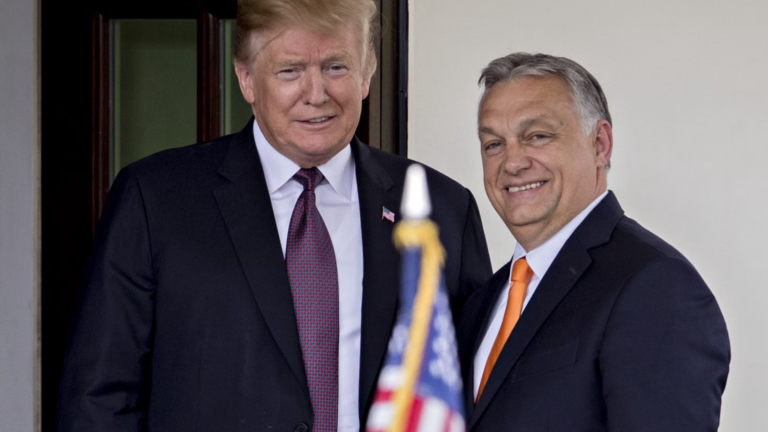
HRF classifies Hungary as ruled by a hybrid authoritarian regime.
Hungary is a parliamentary republic that democratized in 1989-1990. In 1990, it held its first free and fair elections following 40 years of Communist rule, marked by the virtual absence of political alternatives and the thorough suppression of dissent (epitomized by the 1956 military intervention of the Soviet Union that quashed domestic protests against the regime). The president is the formal head of state but holds mostly ceremonial functions. The country has a 199-member unicameral legislature, elected through a mixed system: 106 representatives are elected in single-member constituencies, and the remaining 93 seats are allocated proportionally.
The right-wing, populist Fidesz party, led by the current Prime Minister Viktor Orban, has been in power since 2010. While the party enjoys roughly 50% popular support, idiosyncratic seat-allocation procedures that privilege the winner and the redrawing of constituencies that contradict recent demographic shifts have allowed it to secure two-thirds parliamentary majorities. Single-party rule, in turn, has paved the way for sweeping constitutional amendments and legislation that circumscribes the work of independent media and civil society.
The steady erosion of democratic checks and balances has prompted outcry among international partners, notably the European Union (EU), which Hungary joined in 2004. However, the European Union’s efforts to hold Hungary’s government accountable through infringement procedures (ongoing since 2018), the freezing of COVID-19 recovery funds, and multiple binding rulings of the European Court of Human Rights (ECtHR) have yielded limited results in mitigating the country’s democratic backsliding.
Key Highlights
Electoral competition in Hungary is significantly skewed in favor of the regime, to the point where the real, mainstream opposition has a highly unlikely, although realistic, chance to win. The ruling Fidesz party, in power since 2010, enjoys significant and unfair campaign advantages that seriously undermine the opposition’s ability to compete, from significant overrepresentation in the media to effective control over the state agencies responsible for enforcing campaign regulations.
Independent media, political leaders, civil society leaders, organizations, and members of the general public are seriously and unfairly hindered in their ability to openly criticize or challenge the regime. Fidesz has introduced legislation that led to the shutdown of major independent media, created a powerful media regulatory agency, the Media Council, which is biased in favor of pro-regime outlets, and seriously obstructed the work of civil society organizations. Despite these measures, there are still a handful of independent and opposition-affiliated outlets, and the regime has largely refrained from overtly harassing or intimidating political leaders and members of the general public who dissent.
Institutions are somewhat independent but frequently constrained by the regime. Arbitrary dismissals and other forms of retaliation against dissenting judges and the appointment of loyalists in their stead have considerably undermined judicial independence. Hence, the courts frequently and unfairly side with the regime when reviewing challenges to its main policies, despite isolated instances of dissent. Multiple oversight institutions have also clearly and systematically favored the ruling party, demonstrating a double standard in their application of key regulations.