

Can you walk us through what is happening in Madagascar right now?
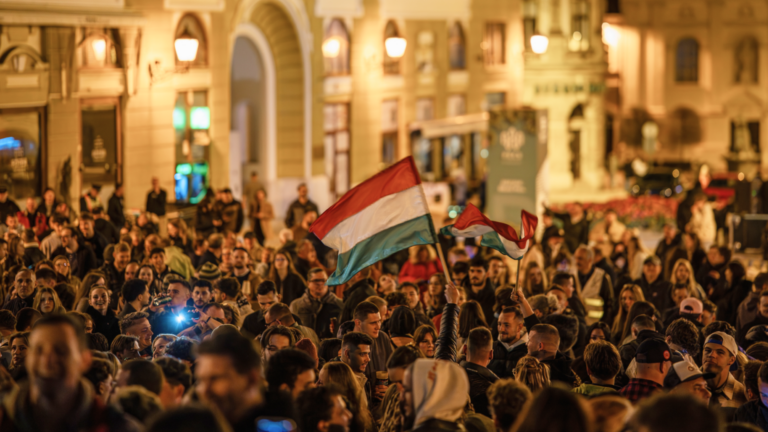
Since September 25, the Gen Z movement in Madagascar has launched massive protests, initially sparked by widespread frustration over constant power cuts and water shortages in the capital, Antananarivo. However, these demonstrations quickly evolved into broader demands for the resignation of former president Andry Rajoelina, who is a figure widely seen as representing years of poor governance, corruption, and repression of dissident voices.
The protests reflect a deep accumulation of anger and frustration among young people, who have endured years of bad governance and neglect. A symbolic example of this disconnect was the government’s decision last year to invest in cable cars in Antananarivo instead of addressing essential infrastructure problems such as electricity and water. For many, this decision epitomized the government’s misplaced priorities and disregard for citizens’ hardships. The current protest movement, therefore, is not about a few months of inconvenience; it is the result of more than seven years of unaddressed grievances.
On Sunday, October 12, it was reported that then-president Rajoelina fled the country with the assistance of the French government. The following night, he addressed the nation from abroad, claiming he had left due to threats and intimidation but insisted he would continue governing from outside Madagascar. Then, on Tuesday, he announced the dissolution of the National Assembly from abroad.
However, the National Assembly rejected his decree, declaring it invalid, and subsequently voted to impeach him. Later that same day, the military intervened and seized power. The Supreme Court then declared that authority would be transferred to Colonel Randrianirina. Through these rapid developments, constitutional procedures have not been consistently followed.
Can you tell us about the “Gen Z Madagascar” youth movement at the forefront of the recent demonstrations?
The official Facebook page of the Gen Z Madagascar movement was created on September 21, but the community behind it had been active long before that. It began with a group of young people sharing videos on TikTok and Facebook exposing the lavish lifestyle of the presidential family, which is a stark contrast to the deep poverty faced by most Malagasy citizens. These videos resonated widely and became the spark that ignited a broader sense of outrage.
At the same time, several municipal officials attempted to organize a peaceful march against power cuts and water shortages, but they were arrested by the government. This incident fueled public anger and inspired the Gen Z movement to take the lead in continuing the protest. The group announced September 25 as the date for a major demonstration at Ambohijatovo Garden, also known as Democracy Square, calling on Malagasy citizens to unite and demand their basic rights to water, electricity, and good governance, while denouncing the systemic corruption that had long plagued the country.
The movement’s organization has been largely digital. Most coordination happens through the official Facebook page and TikTok channel, which have attracted large numbers of young supporters. Discussions and strategic planning also take place on Discord, where members share ideas, run surveys, and poll participants to decide on the movement’s next steps.
I’m one of the leaders of the Gen Z movement. I decided to join because I truly believed this movement could make a difference. Through my experience in HRF’s Freedom Fellowship program and the knowledge I gained there, I realized I could help the group build stronger structures, design strategies, and plan effective tactics for protests. One of my colleagues at Transparency International Madagascar actually designed the Malagasy version of the One Piece pirate flag, which has since become one of the movement’s key symbols. When my colleague invited me to join, he said, “We need your skills in movement building and communications.” I didn’t hesitate because I believed in the potential of this movement from the very beginning, and that’s why I decided to get involved.
Which strategies or tactics of the movement were most successful? How did the movement maintain morale and safety while continuing activism under increased repression?
One of our most effective strategies was combining on-the-ground mobilization with strong, coordinated communication on social media. While daily protests took place in the streets, many others joined the movement through our online platforms. Student unions across the country began creating their own Facebook pages, and soon there were Gen Z pages representing every province in Madagascar. Seeing what we were doing inspired young people across the nation to organize locally and amplify the movement in their own regions. This decentralized, community-driven approach became a key factor in our success.
Another crucial element was the support from the Malagasy diaspora. Our diaspora networks around the world played an essential role in countering government misinformation and propaganda. They helped amplify our messages, provided financial support, and connected us with international journalists who could share our story globally. This global communication network made it much harder for the government to control the narrative or suppress information.
When it came to safety and resilience, we made a deliberate decision early on to operate without a single leader. I learned during the Freedom Fellowship that having one central leader makes a movement vulnerable. If that person is arrested or silenced, the entire effort can collapse. Instead, we chose a collective leadership model, with multiple representatives who could each speak for the movement. This structure made it difficult for the authorities to target any one individual as “the leader.”
For communication, we relied primarily on Signal for its security features. Everyone used pseudonyms, which we changed weekly, so even within the movement, most members didn’t know who was behind each username. This anonymity helped protect participants, especially those most active in organizing. We also used VPNs and other tools to avoid government surveillance and keep our communications secure.
Through these strategies, namely, decentralized organization, secure communication, and strong international support, we managed to maintain momentum and safety.
Now that the military has taken power, what are the new demands of the protesters?
The military’s takeover came as both a surprise and something we partially anticipated. It happened very quickly; almost immediately after the National Assembly voted to impeach Rajoelina, the army seized power. The speed of these events created a lot of uncertainty and concern among citizens and within the movement.
At first, the military appeared open to dialogue. We communicated clearly that the Gen Z movement, and more broadly, Madagascar’s youth, must be at the center of any decisions about the country’s future. Young people have been the driving force behind this change, and their voices need to guide what comes next. However, so far, we are not satisfied. The army has not meaningfully consulted us or other civic groups in its decision-making process. This lack of engagement raises serious concerns, particularly about the risk of a power vacuum that would allow instability or new forms of authoritarianism to take hold.
Our main demand now is that the transitional government must not be controlled solely by the military or any single actor. We firmly oppose the concentration of power in one set of hands, especially in the hands of the army. Instead, we are calling for a collaborative, consensus-based transitional government that includes all key stakeholders: youth representatives, civil society, political opposition, and other sectors.
We also insist that the grievances that fueled the protests must be taken seriously and addressed through real reforms. The success of this transitional period will depend entirely on whether these reforms are implemented effectively and inclusively.
In short, our fight is not over. The Gen Z movement will continue to push to ensure that the aspirations of Madagascar’s youth are not sidelined, and that this transition truly leads to democratic renewal, and not just another concentration of power under a different name.
What lessons from the past inform your strategy for protecting democracy and shaping a successful transition to elected civilian rule?
One of the most important lessons from Madagascar’s past, especially from the 2009 coup, is that transitional governments must be limited in both scope and duration. We do not want this transitional period to last more than one year. The army has announced a possible timeframe of one to two years, but we believe two years is far too long. Prolonged transitions create instability, open the door to political manipulation, and risk entrenching military or unelected authorities in power.
We understand that meaningful reforms, particularly those involving electoral institutions, take time. It is essential to ensure that future elections are fair, transparent, and credible. However, this cannot be used as an excuse to delay the return to civilian rule.
Another key lesson from the past is that members of the transitional government should not have an advantage in the next elections. Those overseeing the transition should be committed to its success, not to advancing their own political ambitions. This principle is crucial to maintaining public trust and avoiding the same mistakes that followed the 2009 crisis.
Above all, we are determined to stay close to the rule of law. Every decision during this transition must strengthen democratic institutions rather than weaken them. For us, protecting democracy means ensuring that this moment of change does not become another cycle of power grabs and unfulfilled promises, but instead leads to a genuine renewal of leadership through free and fair elections.
What steps should the international community take to support the people of Madagascar's push for democratic governance?
The international community has a crucial role to play in supporting Madagascar during this transition. This is a critical moment for our country, and we need sustained engagement and assistance to ensure that the process leads to genuine democratic governance rather than another prolonged period of uncertainty.
Our goal is to make this transitional government as close as possible to the rule of law, while at the same time pursuing necessary institutional reforms, especially those related to electoral processes and good governance. These next months, and possibly the next two years, will be extremely challenging for the Malagasy people. Implementing reforms while maintaining stability will require both technical and moral support from international partners.
We are asking the international community to help guarantee that this transition remains transparent, inclusive, and firmly on the path toward free and fair elections. Their role should be to support civil society, strengthen democratic institutions, and hold transitional authorities accountable to their commitments.
Stand with the Malagasy people in ensuring that this transition leads swiftly and peacefully to an elected civilian government that truly represents the will of the people. We count on the international community’s solidarity and continued support to make this vision a reality.
Editor’s Note: This interview was recorded on October 16, 2025, two days after Colonel Michael Randrianirina seized power. Randrianirina was sworn in as president the following day.