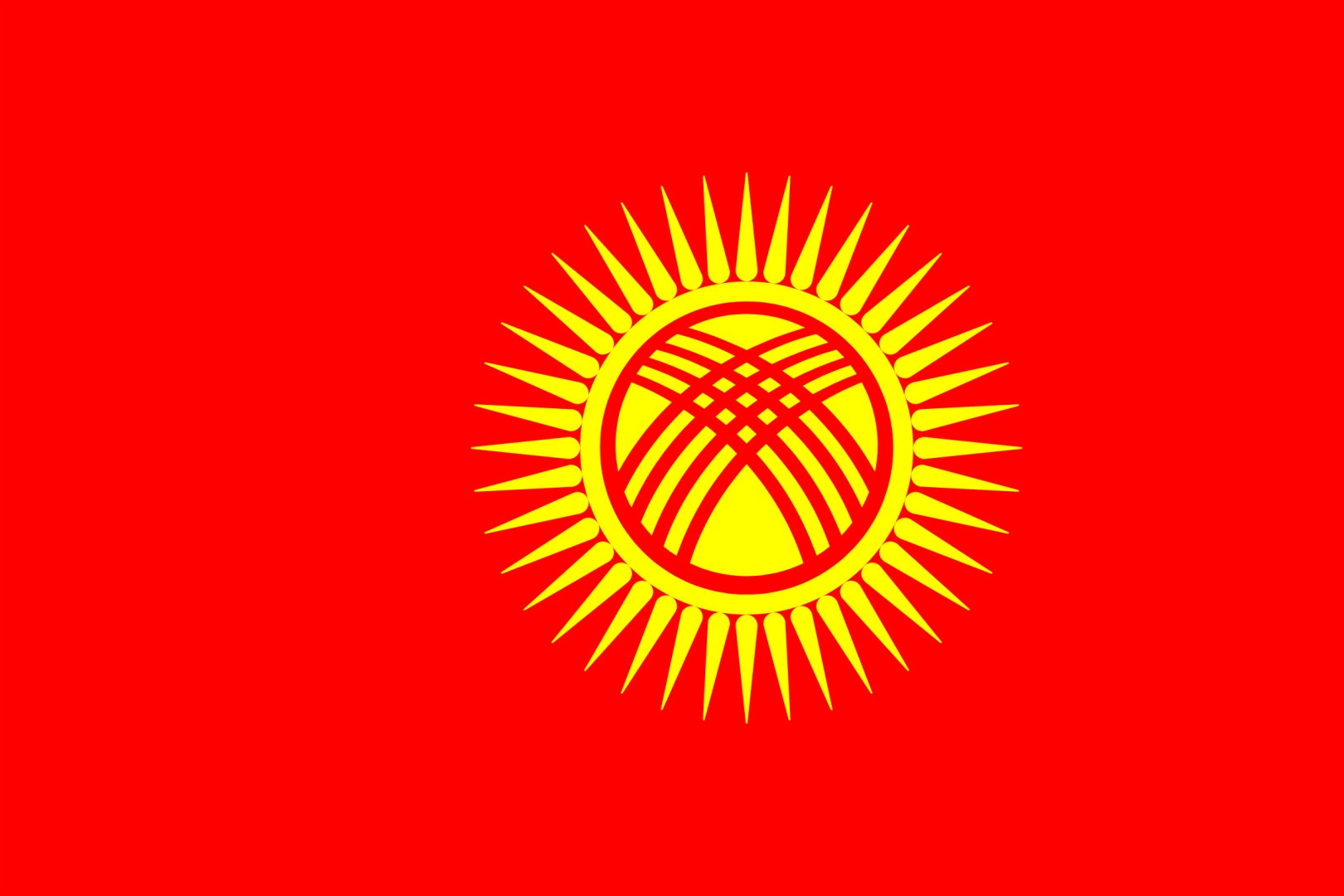
HRF classifies Kyrgyzstan as ruled by a fully authoritarian regime.
Kyrgyzstan, once a constituent republic of the Soviet Union, gained independence in 1991. Its 1993 Constitution established separate legislative, executive, and judicial branches of government and guaranteed basic democratic rights for citizens. Kyrgyzstan experienced periods of genuine democratization following bottom-up revolutions that successfully ousted autocratic leaders: Askar Akayev in 2005 and Kurmanbek Bakiyev in 2010. While subsequent governments did not fully consolidate democratic institutions and uproot pre-existing patron-client networks, Kyrgyzstan’s political and civic landscapes liberalized: a range of opposition parties could operate without overt obstruction, active and diverse media flourished, and NGOs, including watchdog groups critical of the government, proliferated. The swift rise of President Sadyr Japarov (2020 – Present), however, has severely undermined these democratic gains.
Prior to his ascent to power, the contested 2020 parliamentary elections spurred mass protests alleging systemic electoral fraud, some of which culminated in demonstrators storming state buildings and freeing prominent prisoners (including Japarov himself). Under public pressure, the Central Election Commission annulled the results. Rather than schedule new elections, considering the extraordinary circumstances, parliament extended its own mandate indefinitely and confirmed Japarov as Prime Minister and, a few days later, President. A combination of surging popularity, abuses of incumbent advantages, and some electoral manipulation enabled Japarov to win the subsequent presidential election in January 2021 in a landslide. In a referendum held on the same date, voters ostensibly supported sweeping constitutional amendments that effectively transformed Kyrgyzstan from a parliamentary into a presidential republic, further empowering Japarov.
Key Highlights
Under President Sadyr Japarov’s regime, national elections are a sham, to the point that the real, mainstream political opposition does not have a realistic chance to meaningfully compete or possibly win. The Japarov regime has obstructed potential challengers, sanctioning unlawful surveillance and politically motivated arrests. In addition, it has benefited from disproportionate, overwhelmingly positive media coverage and the misuse of administrative resources. These structural advantages and direct electoral manipulations produced a landslide victory for Japarov in the 2021 presidential election. The November 2021 snap parliamentary elections, similarly marred by numerous irregularities, gave newly formed pro-Japarov parties a supermajority in parliament.
Independent media, political leaders, civil society leaders, organizations, and members of the general public face overt and systematic retaliation if they openly criticize or challenge the regime. It has adopted vague and repressive speech laws that have been used to target critical outlets, subjected a growing number of dissidents to arbitrary judicial persecution, and increasingly cracked down on peaceful demonstrations criticizing its policies.
Institutions in Kyrgyzstan largely fail to serve as independent checks on the regime. The Kyrgyz courts rubber-stamped the arbitrary extension of parliament’s term and the unlawful installation of Japarov at the helm of government. In addition, they have convicted prominent dissidents on dubious grounds, such as “inciting hatred” or spreading “false information,” while dismissing legitimate complaints of electoral irregularities. Despite already exercising substantial control over the legislature, as regime-aligned parties command an overwhelming majority, the regime has significantly undermined parliament’s functioning by empowering a parallel, unelected “People’s Council” (Kurultai) with a vague and expansive mandate. Considerable expansion of presidential powers and the establishment of an opaque, largely unaccountable quasi-legislature eliminated the capacity of executive institutions and independent oversight bodies to check the regime.