


Welcome to the 25th edition of HRF’s AI for Individual Rights newsletter.
This week, Microsoft reported that several North Korean hacking groups now use AI across much of their operations, the same week that regime-linked hackers stole $6.3 billion from cryptocurrency exchange Binance. As hackers linked to repressive regimes use AI to scale cyberattacks, human rights organizations could face increasing risks.
Meanwhile, French AI lab Mistral released the weights of Le Chonk, its most powerful model yet. Most leading open-weight models come from China, and this one provides an alternative made in a democracy. And NVIDIA has launched an open-weight transcription model covering 40 languages, one that can run locally to privately transcribe sensitive interviews and testimonies.
We end with an article published in Forbes by journalist Roger Huang. As Trump and Xi met in Washington in September, Huang found a different kind of gathering a few blocks away, where technologists and pro-democracy activists built tools together at HRF’s AI Hack for Freedom III.
The Latest in AI for Repression
North Korean Hackers Now Use AI Across Operations, Microsoft Says
Microsoft Threat Intelligence reported that several hacking groups linked to the North Korean regime are using AI to scale cyberattacks aimed at generating revenue and stealing sensitive intelligence. Hackers are using AI to create convincing fake identities and phishing messages to deceive targets into granting access to sensitive systems, while also developing malware capable of stealing information and compromising networks. In one example, North Korean hacking group Sapphire Sleet likely used AI to develop malware designed to evade detection during an attack targeting developers working on Rust (a programming language used to build software, including security-sensitive applications). As authoritarian regimes use AI to make cyberattacks faster and more sophisticated, human rights organizations with limited security resources could face increasing risks.
In context: The same week Microsoft published its report, hackers linked to North Korea’s regime stole $6.3 billion from Binance in the largest digital asset heist in history. Although there is no confirmed AI connection to that attack, the massive theft illustrates the scale of North Korea’s cyber operations and the resources they can generate for the regime. By increasingly adopting AI, these hackers’ ability to carry out sophisticated attacks only grows.
India Plans to Train AI on Citizens’ Data
India’s Ministry of Electronics and Information Technology has proposed a national framework for training AI models on the country’s health, financial, and state data. Under the plan, called the “Data Empowerment and Protection Architecture for AI Training,” hospitals, banks, and state agencies would make citizens’ anonymized data available through a data-exchange platform where, under MeitY’s design, models are meant to train in secure environments without raw data leaving provider control. The ministry says the project could improve healthcare, financial services, and other public systems. While officials do seem to make an effort to preserve citizens’ privacy, the framework could create centralized points of access to sensitive data. In India, where the hybrid authoritarian regime has used digital surveillance against critics and restricted free expression, this could create new opportunities for state surveillance.
In context: Even when data is anonymized, sophisticated AI systems can cross-reference large datasets and use combinations of seemingly harmless details to re-identify individuals. That makes the concentration of health, financial, and government data especially sensitive.
Chinese Study Warns AI in China’s Social Credit System Could Expand Surveillance
A state-funded study from China warned that AI could turn the country’s already controversial social credit system into a “large-scale surveillance tool.” China’s social credit system already tracks and assesses the conduct of individuals and businesses, sometimes affecting their access to public services. The study’s author, Lin Jianxing, a doctoral candidate at Sichuan University’s School of Law, writes that AI could amplify those scores by automating risk assessments across public agencies and influencing how citizens are treated in healthcare, lending, and state services. Lin warns that algorithmic administration of this kind could trigger “opacity, large-scale surveillance and discrimination,” and that without strict data rules and independent oversight, the system could “evolve from a risk management tool into a means of behavioural surveillance.”
Why this matters: Social rating already carries real consequences, with blacklists blocking millions of Chinese citizens from flights, trains, credit, and jobs. Social-credit enforcement already carries real consequences, and the study warns that AI could strengthen automated risk assessments that flag people based on patterns before any act is committed. The report shows what full integration looks like, with AI systems flagging people as suspicious based on patterns, and pressure arriving before any act is committed.
Study Reveals Hidden AI Costs for Non-English Speakers
A study by the Coalition for Language Equity in AI Research reveals how people using AI in certain non-English languages face higher costs and reduced efficiency. Some languages require up to 17 times more tokens to process the same content. Tokens are the units of text that AI models process, so more tokens mean higher costs, slower responses, and less room for documents and conversation history. This “tokenizer tax,” as the study’s authors call it, stems partly from AI systems being optimized for English and other widely represented languages, leaving languages written in less common scripts (such as Burmese, Tibetan, and Khmer) at a disadvantage. The disparity is most severe in places where compute and connectivity are already limited, potentially putting powerful AI tools further out of reach for human rights defenders working in those languages.
Russia Adds Apple and Microsoft to State Surveillance Registry
Russia’s communications regulator, Roskomnadzor, has added Apple and Microsoft to its registry of “organizers of information dissemination,” a legal category that requires companies to preserve users’ communications and hand them over to Russian security services on request. Under the law, companies must store users’ message content (including audio and video) for up to six months and communication records for three years in Russia. Failure to comply could result in fines or services being blocked in Russia. Neither company has publicly indicated whether it will comply. The move is the latest step in Moscow’s effort to fold digital platforms into its surveillance apparatus.
In context: Russia has steadily tightened control over digital communication. WhatsApp, Telegram, Snapchat, and Google Meet are also on the surveillance registry. Officials have blocked FaceTime and Signal and restricted calls on WhatsApp and Telegram, further limiting private communications.
Recommended Content
Turkish Civil Society Grapples with AI Adoption, Study Finds
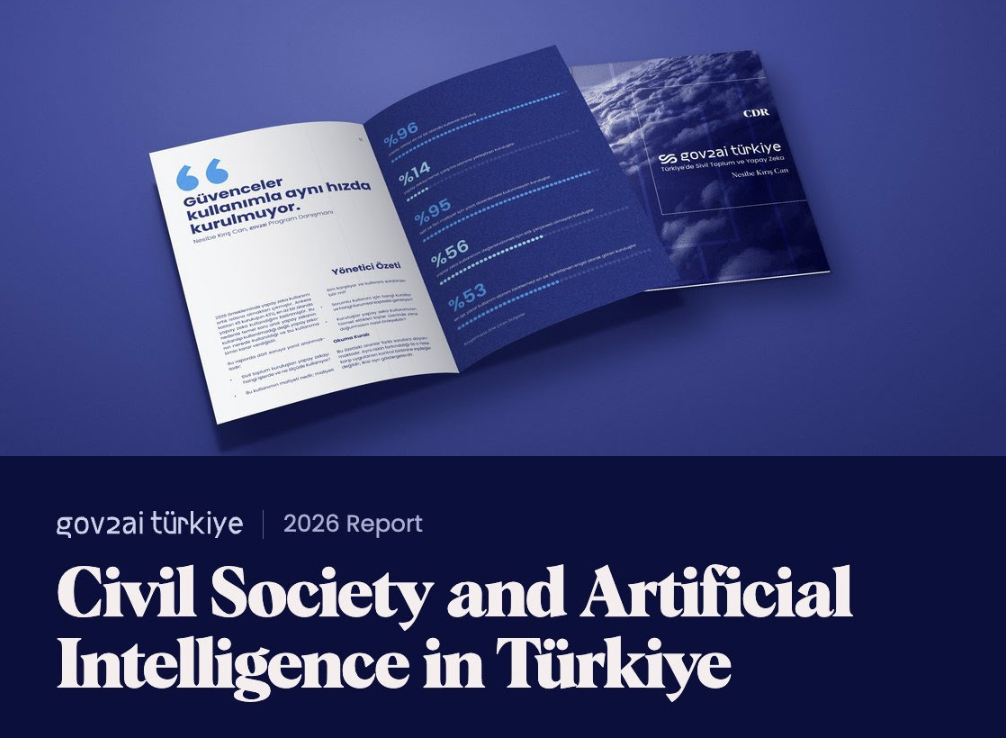
Turkish civic technology organization CDR has released a report examining how 45 civil society organizations in Turkey are using AI. An overwhelming 96% reported using AI in some capacity, a sign of its potential to empower civil society. But only 14% have integrated AI into their core work and 40% have no dedicated AI budget. Concerningly, 56% lack an ethical framework for evaluating AI use. That means human rights organizations operating under Turkey’s fully authoritarian regime, as classified by HRF’s Tyranny Tracker, could be putting sensitive information into corporate chatbots, raising privacy and security implications. To help civil society harness AI safely and effectively, CDR has also released practical toolkits to protect sensitive data, establish safeguards, and ensure human oversight. Read the report here.
The Latest in AI for Freedom
Mistral Has Released Weights of Mistral Large 4 (“Le Chonk”)
French AI lab Mistral has released the weights for Mistral Large 4, its most powerful model yet, also known as Le Chonk. Open-weight models let anyone with sufficient hardware download, customize, and run them independently. Initially made available in public preview without its weights, the model has since received what Mistral calls “massive improvements in coding and defensive cybersecurity.” The company says it now ranks among the leading open-weight models for identifying software vulnerabilities and patching security weaknesses, and leads open-weight coding benchmarks.
Why this matters: As AI accelerates cyberattacks, developers need equally powerful tools to defend their software, especially ones that dissidents can rely on. Open-weight models help them find and fix security weaknesses without relying on proprietary services that sometimes deny defense requests. With most leading open-weight models coming from China, Mistral Large 4 offers an alternative from a democracy. The model is very large, however, with 1 trillion parameters; running it locally requires expensive hardware.
NVIDIA Releases Open-Weight Model for Private Transcription
NVIDIA has released Nemotron 3.5 Transcribe, an open-weight AI model designed for transcription. Nemotron 3.5 can transcribe speech in 40 languages, process recordings up to an hour long, and distinguish between speakers even when they talk over each other. The company stated that the model also translates to and from English in 31 of those languages and outperforms other open-weight models on major transcription benchmarks. Journalists and human rights defenders could use it to transcribe sensitive interviews, document testimonies, and translate recordings privately, without relying on third-party AI services. Running Nemotron 3.5 locally requires a powerful GPU, limiting its accessibility, but since its weights are open, developers can modify and compress the model to run on more affordable hardware.
Why this matters: Transcription is a common AI need in human rights work, and often a risky one to outsource. Interview recordings and testimony archives can identify dissidents, survivors, and witnesses, and uploading them to third-party transcription services means trusting those companies with highly sensitive evidence. An open-weight model that runs locally means the audio never leaves the device — a meaningful safeguard for journalists and documentation groups working in closed societies, where a leaked recording can be as dangerous as a leaked document.
Hermes Agent Launches Mobile App Beta
AI research company Nous Research has launched an iOS and Android beta for Hermes Agent, its free, open-source AI agent. This agent can automate research, manage files, write code, and perform complex tasks on the user’s behalf. Until now, Hermes has had no official mobile app; people reaching their agents on a smartphone often used Telegram, Discord, Simplex, or a web dashboard. The new mobile app now lets users chat with their agents, give voice instructions, schedule automated tasks, and connect services such as Slack and Notion. The app works with agents hosted on the user’s own hardware and with Nous Cloud, where agents run on the company’s servers for a fee.
Why this matters: Hermes has become a useful tool for activists. The agent is free and open source, connects to services activists already use, and can run entirely on their own hardware. The mobile app is a practical step toward putting that capability in their pockets, letting them direct agents and monitor automated work from anywhere. The choice between self-hosting and Nous Cloud remains the main consideration, since one keeps data under the user’s control while the other trades some privacy for convenience.
Privacy-Protecting AI Platforms Tinfoil and NEAR AI Add Decision Models
Tinfoil and NEAR AI, two services that provide encrypted access to AI models, have added support for decision models, which quickly return decisions and probability scores rather than lengthy text responses. These models can be integrated into software to decide things like whether or not to flag sensitive content, whether an AI agent should act, or whether a tip submitted from a whistleblower needs urgent review. Tinfoil and NEAR AI both route AI requests through Trusted Execution Environments, hardware-protected environments designed to keep user data hidden from the provider. With decision models now available, individuals and companies developing Freedom Tech could automate more complex tasks while keeping user information private from AI providers.
Unsloth Brings Browser Automation to Local AI
Unsloth, a US-based open-source AI company, has introduced a browser automation feature for Unsloth Desktop, its app for running AI models locally. The feature allows local models to control a web browser and complete tasks autonomously. In a demonstration, the company showed the Chinese open-weight model Qwen3.8-27B navigating a browser to play chess and paint without human intervention. Unsloth asks for user approval before sign-ins, form submissions, and downloads, with permissions configurable for each website. Browser automation is not new (agent frameworks like Hermes already offer it), but complex browsing tasks have generally relied on frontier cloud models. Unsloth’s demonstration suggests that local, open-weight models can now handle these tasks on their own, giving users greater control over their browsing.
Recommended Content
As Xi And Trump Met, Bitcoin And AI Converged For Liberty
In a recent Forbes article, journalist Roger Huang explores the potential of Bitcoin and AI to empower individuals. As Trump and Xi met in Washington, D.C., with technology high on their agenda, a different conversation was unfolding at the Bitcoin Policy Institute’s Freedom Tech DC conference and HRF’s AI Hack for Freedom III. Huang asks whether powerful technologies like Bitcoin and open-weight AI will empower individuals or become instruments of state repression. Through these gatherings, he finds a hopeful answer. Activists and developers are already putting these technologies to work to advance freedom. Read more about how here.