
Welcome to this week’s Financial Freedom Report.
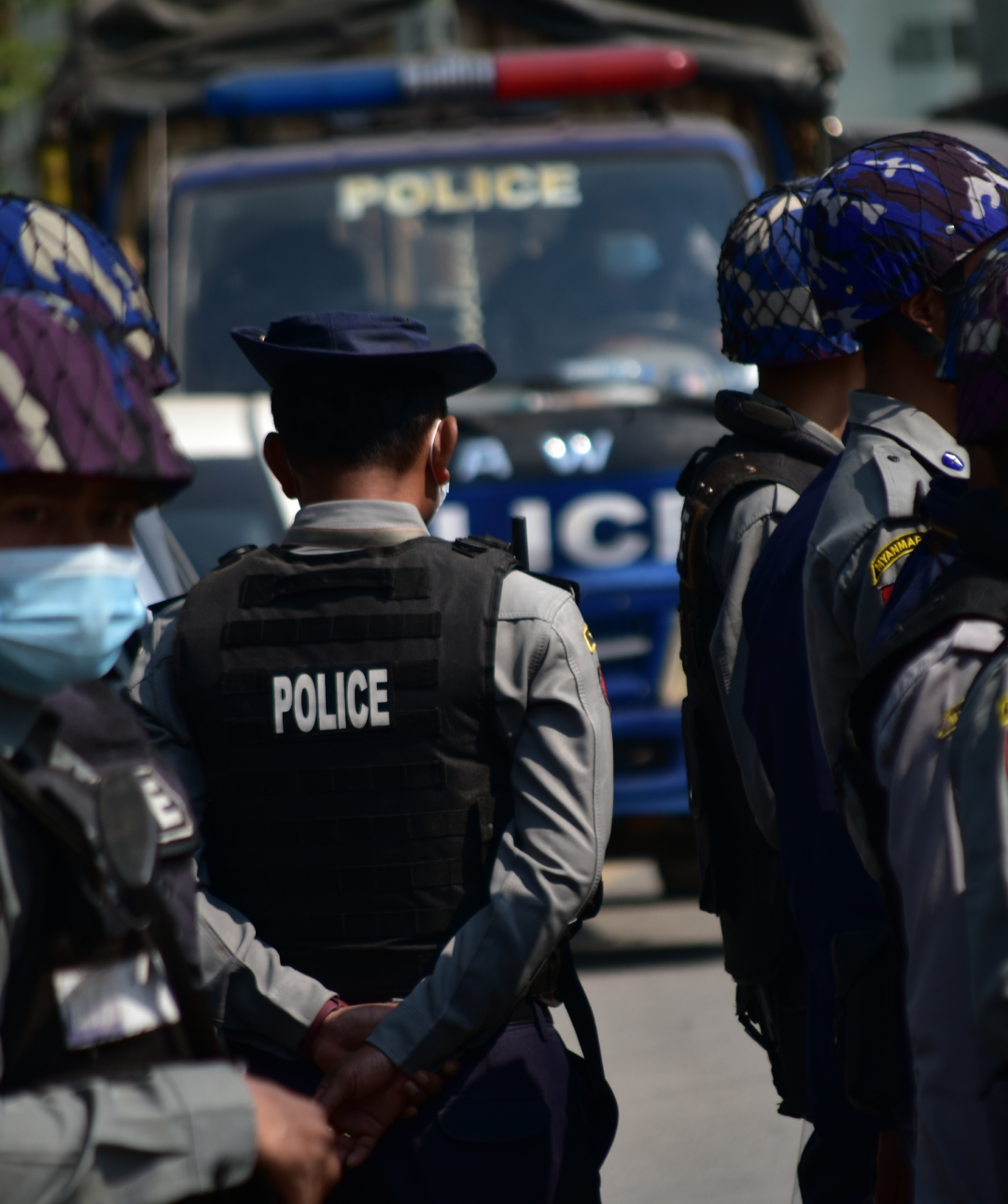
In Burma, officials froze the bank accounts of more than 100 companies, including firms involved in car imports, fuel, agriculture, gemstones, and import-export businesses. The account freezes coincide with worsening economic conditions since the 2021 coup, as the military junta has used forced foreign-exchange conversion, cash restrictions, and crackdowns on informal markets to backstop its repression of dissent and opposition.
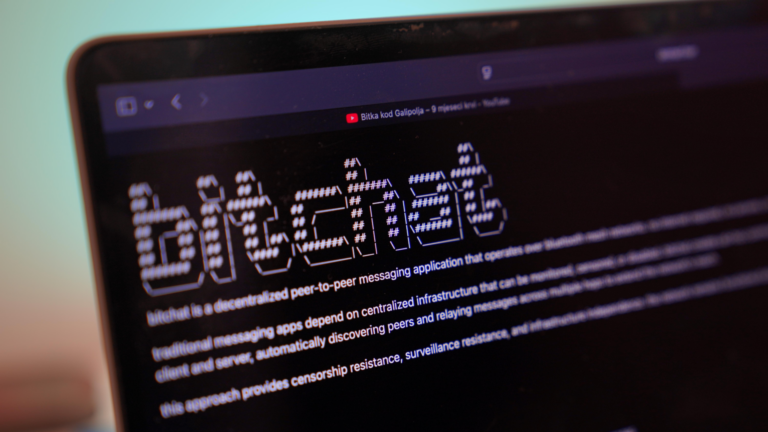
In freedom tech news, the team behind Cake Wallet launched Radar, a new app that combines private messaging with self-custodial Bitcoin payments. Built on the same protocol as the private messaging app Signal and integrated with Bitcoin’s Lightning Network, Radar lets users send bitcoin payments inside private chats, providing a new tool for activists and civil society groups to coordinate, communicate, and transfer funds.
We include a Wall Street Journal op-ed by HRF Chief Advocacy Officer Roberto González, who breaks down Cuba’s new market reforms. González warns that economic opening may not automatically produce political freedom unless Cubans can turn a more independent economic base into leverage against increasing state control.
Global News
Burma | More Than 100 Bank Accounts Frozen
The military junta in Burma froze the bank accounts of more than 100 companies, including firms involved in car imports, fuel, agriculture, gemstones, and import-export companies. Business owners and individuals were also summoned for questioning to Nay Pyi Taw, the capital, where the military junta is headquartered.
In context: Since the 2021 military coup, financial freedom and economic conditions in Burma have deteriorated significantly. The junta continues to target dissent through currency controls, forced foreign-exchange conversion, and restrictions on cash withdrawals. Routine account freezes turn financial access into a choke point that determines whether businesses, individuals, and civil society groups can access money, pay employees, or continue operating.
India | Central Bank Pushes Digital Asset Prohibition
India’s central bank is again pursuing a digital asset policy “leaning toward prohibition,” according to new government documents examined by Reuters. The Reserve Bank of India wants banks and regulated financial institutions barred from holding, trading, or offering exposure to digital assets and stablecoins. Officials also warn that offshore exchanges and peer-to-peer platforms are difficult to track. The documents estimate that India has nearly 39 million digital asset investors holding roughly $2.1 billion in digital assets.
Why this matters: India’s stance shows how authoritarian regimes can treat financial activity they cannot easily monitor as a threat in itself. By saying peer-to-peer platforms are difficult to track, officials can frame open monetary networks as tax and compliance problems, then use that framing to justify pushing users back toward regulated intermediaries where access, identity, and transactions are easier to surveil and control.
Russia | Sberbank Plans Digital Asset Wallet and Custody Service
Russia’s largest state-controlled bank, Sberbank, plans to launch a digital asset wallet and depository by December this year. The service would reportedly enable Russians to access authorized digital assets through Sberbank while allowing the bank to store and account for clients’ digital assets. It comes as Russian officials prepare to implement a far-reaching regulatory framework for digital assets.
In context: The framework maintains that digital assets are “high-risk instruments” that are banned from payments in the country. This ensures the ruble remains the sole means of payment in Russia. It would also divide investors by permission level: “qualified” investors get broader access, while everyone else must pass a test and may face yearly purchase caps. Officials frame this as investor protection, but the result is a permissioned system in which access to Bitcoin depends on state-approved status.
Venezuela | Earthquake Relief Campaigns Using Bitcoin
Grassroots organizers in Venezuela are using Ágora, a Bitcoin and Nostr-based crowdfunding platform launched at the 2026 Oslo Freedom Forum, to raise money for earthquake relief directly from donors around the world. The campaigns fund medical care, communications infrastructure, and support for families displaced by the earthquake. The need comes as families are hit by overlapping crises: twin earthquakes on June 24 and a renewed surge in prices, with inflation doubling over the past month and consumer prices up 129.8% so far this year.
In context: Organizers say traditional aid often depends on foreign intermediaries, creating delays and barriers for local groups. Ágora, built on permissionless protocols, is a new way for civil society to deploy campaigns when traditional channels are too slow, expensive, or inaccessible.
China | Dissident Economist Passes Away
Gao Shanwen, a Chinese economist who gained international attention for publicly questioning Beijing’s official economic data, has died at age 55 due to cancer. In late 2024, he said the quiet part aloud: China’s real GDP growth, he suggested at a Washington conference, may have been closer to 2% than the official figure of around 5%. China maintains a strict GDP target, and his comments were seen as a challenge to the regime. Soon after, Gao disappeared from public view for nearly a year.
Why this matters: Chinese officials routinely silence whistleblowers, analysts, and commentators who challenge official narratives, even on economic issues, with punishments ranging from censorship and termination to disappearance from public life.
Recommended Content
Decades Late, Cuba Approves Serious Market Reforms by Roberto González
In an op-ed for The Wall Street Journal, HRF Chief Advocacy Officer Roberto González argues that Cuba’s new market reforms are an admission that decades of central economic planning have failed. Pointing to the cases of China and Vietnam, which have also introduced market reforms while maintaining political repression, he warns that economic opening does not automatically produce political freedom, but rather argues that a more independent economic base could eventually give Cubans greater leverage against a regime that has long used poverty, dependency, and state control to suppress dissent.

Bitcoin and Freedom Tech News
Radar | New Private Chat App Combines Messages and Bitcoin
The team behind Cake Wallet, a self-custodial digital asset wallet, launched Radar, a new app that combines encrypted messaging with Bitcoin payments. The messaging app uses the same protocol as Signal and integrates Bitcoin’s Lightning Network. Combining these technologies allows users to send bitcoin and communicate directly inside private chats.
Why this matters: Money and messaging are both sensitive coordination tools. Activists often need to ask for support, confirm receipt, reimburse people, or move emergency funds while also keeping conversations and financial activity private. Radar brings those actions into a flow that is oriented towards user privacy and control in adverse environments.
ChapSmart | Shillings to M-PESA Using Bitcoin
ChapSmart, a Tanzanian Bitcoin-powered remittance tool, added the ability to send Tanzanian shillings to any M-PESA number in the country using Bitcoin. M-PESA is East Africa’s dominant mobile money service, letting users store and transfer money via basic phones without a bank account. In practice, this means a ChapSmart user can type a recipient’s M-PESA number as a Lightning Address, pay the invoice from any Lightning wallet, and have the recipient receive Tanzanian shillings directly in their M-PESA account. The sender uses Bitcoin, while the recipient gets local currency, with no Bitcoin wallet, app download, signup, or KYC required on the recipient’s end.
Why this matters: In a country where mobile money is widely used under an authoritarian regime, Chapsmart helps bridge Bitcoin to everyday payment rails. A dissident, journalist, or civil society group could use it to receive bitcoin from abroad and quickly convert it into local currency for transport, communications, supplies, or emergency support without requiring every recipient to use a Bitcoin wallet.
Bitaxe | Solo Miner Finds Bitcoin Block
A single Bitaxe miner, an open-source mining device that lets individuals mine bitcoin at home, found Bitcoin block 957,382, earning the full 3.1382 BTC block reward, worth roughly $200,580. The device was reportedly mining through Public Pool, an open-source mining pool that lets users choose their own block templates and run a self-hosted Stratum server. At roughly 1 terahash per second (the number of calculations a mining device can perform each second), the odds of finding a block are about once every 16,000 years.
Why this matters: Bitaxe does not make mining reliably profitable, but it does make direct participation in Bitcoin mining more accessible. Users can solo mine for the very rare chance of finding a block or connect to open-source pools using the Lightning Network or ecash that support small, private payouts. This gives individuals a way to earn small amounts of bitcoin without relying on an exchange or custodian, a meaningful option for dissidents and activists in dictatorships.
bitcoin++ | Consensus Edition in Toronto
bitcoin++, a Bitcoin developer conference series, will host a Consensus Edition in Toronto from July 22 to 24. In Bitcoin, consensus refers to the shared set of rules that determine how the network works, including which transactions and blocks are valid. With proposals like BIP-110 actively being debated, the theme is more relevant than ever. For human rights defenders who use Bitcoin as freedom money, these debates matter because changes to the protocol can shape Bitcoin’s long-term decentralization, usability, and resistance to capture.
Ark Node AI | Launched on Google Play
Ark Node AI, a new pay-as-you-go AI app created by HRF grantee Noelyne Sumba, launched on Google Play. It gives users access to AI tools without an account or a monthly subscription. Instead, users can pay per prompt with more permissionless forms of money, such as Bitcoin or M-PESA. This makes AI tools more accessible to civil society in regions where traditional payment methods are more restrictive and mobile money is more dominant. However, Ark Node AI is not fully private. Removing accounts reduces the amount of personal information users must hand over to access AI tools. However, prompts are still sent to third-party AI providers for processing, so users should not treat them as suitable for highly sensitive information.
Spiral | Open Money and Open Intelligence Initiative
Spiral, the Bitcoin-focused research and development lab started by financial services company Block, announced an expanded focus on open-source AI alongside its existing work on Bitcoin. The organization argues the fight between open and closed systems now extends beyond money to intelligence. Spiral will continue supporting open-source Bitcoin development while also building and funding projects at the intersection of Bitcoin and AI, including machine-to-machine payments, agentic commerce, privacy, security, and decentralized AI infrastructure in support of more private and open AI tools that activists can use in their efforts against tyranny.
Bitcoin Recommended Content
bitcoin++ Open-Source Edition Livestream
Last month, leading Bitcoin developers and freedom tech advocates gathered in Nairobi, Kenya, for the open-source edition of the bitcoin++ developer conference. The talks from the event are now available, featuring discussions on practical Bitcoin software, open protocols, mobile-money integration, maintainer tooling, and local adoption across Africa. The conference also hosted a record-setting hackathon, with 90 participants submitting 37 open-source freedom tech projects.