
Welcome back to the Financial Freedom Report.
In Iraq, the regime devalued the dinar by about 14.5% overnight, pushing up the cost of imported food, medicine, and fuel while eroding the value of salaries and savings. The move marks the country’s second major devaluation in five years, as Iraqis once again bear the cost of a fiscal shortfall through a weaker currency.
In Bitcoin news, Ledger, one of the most popular manufacturers of crypto hardware wallets, confirmed that affected user devices, purchased through a reseller in Southeast Asia, contained a hidden implant capable of capturing users’ recovery phrases and draining their funds. An on-chain investigator estimates losses above $86 million, though Ledger has not confirmed a figure, showing how hardware wallet supply chains can become a critical attack vector when the device that generates a user’s recovery phrase is compromised.
In recommended content, three members of HRF’s Freedom Tech team joined Bitcoin Magazine TV to explain Bitcoin’s role in financial freedom from different angles: Alex Gladstein on global financial exclusion, Femi Longe on everyday bitcoin payments in Kenya, and Anna Chekhovich on how civil society groups can continue receiving funds after traditional financial access is cut off.
Now, let’s dive into the full stories.
Global News
Iraq
Regime Devalues Dinar by About 14.5% Overnight
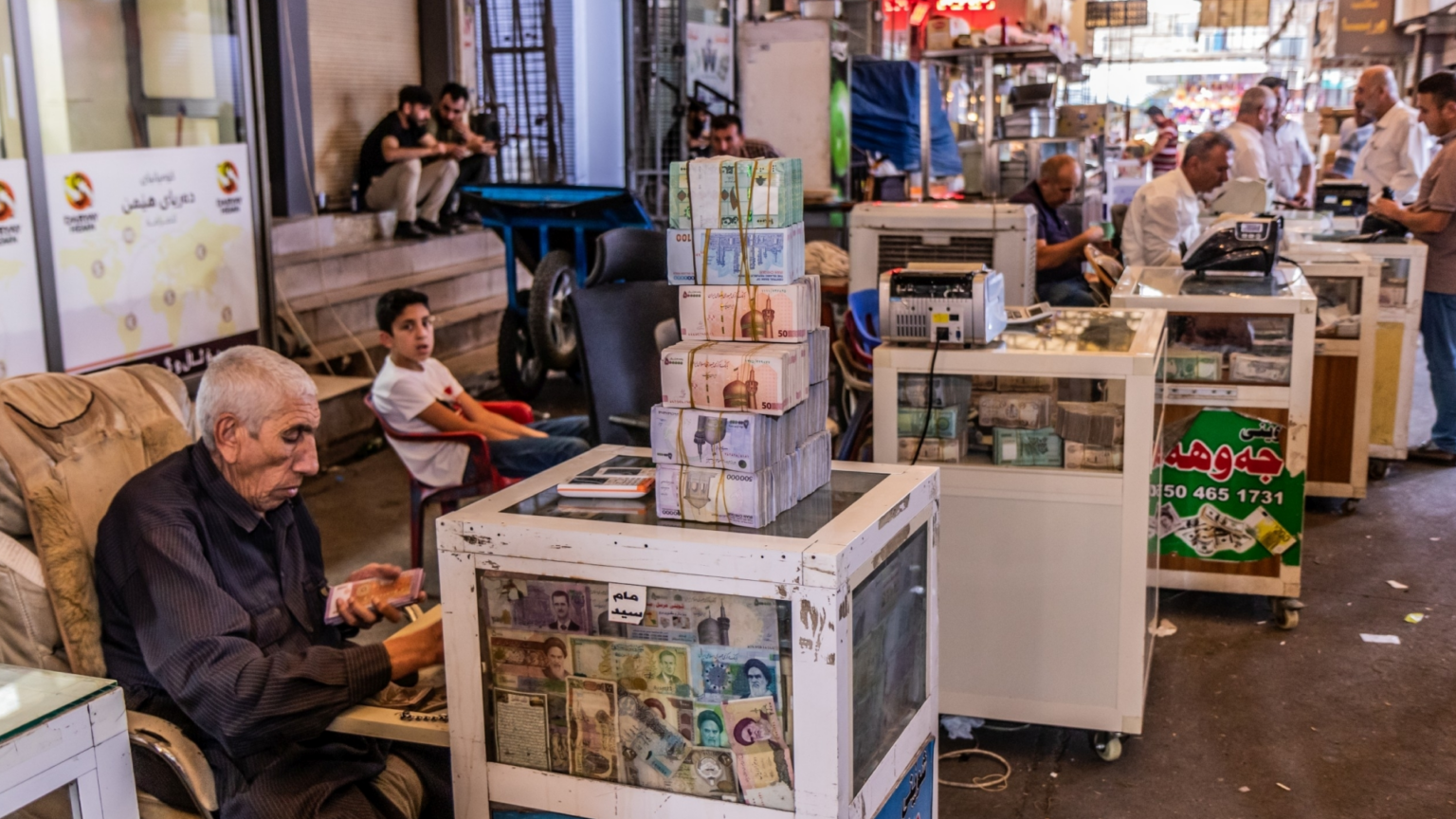
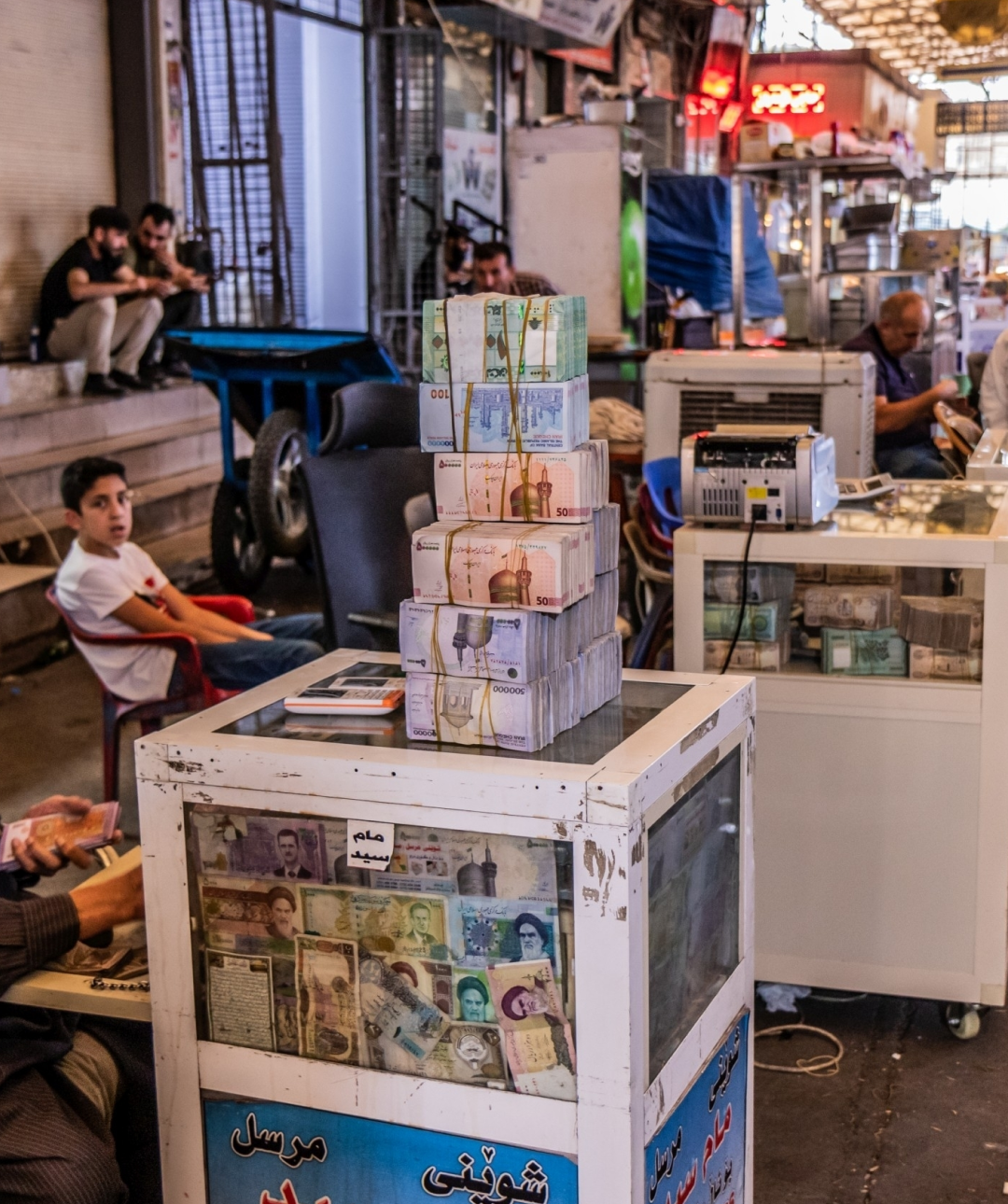
In Iraq, the central bank devalued the dinar by about 14.5% overnight, setting a new “official” rate of 1,520 dinars per US dollar, up from 1,320, according to Reuters. Officials blame war-disrupted oil exports for the shortfall, but the cost is landing on Iraqis: Prices for food, medicine, and fuel (most of it imported) are rising, while dinar-based salaries and savings lose value. Already, dollars are trading at nearly 1,700 dinars on the street — the rate many Iraqis actually face because they cannot access the official rate. Not all officials are on board with these monetary decisions, though. Member of Parliament Aziz Nasser al-Shammari, speaking for dozens of lawmakers who opposed the move, declared that “waging war on the poor like this is wrong.”
Why this matters: Rather than cutting its projected 2027 deficit of more than 40 trillion dinars (about $30 billion), the regime chooses to pay its bills with a weaker currency. This is the second major devaluation in five years, following December 2020’s devaluation from 1,182 to 1,450 dinars per dollar, and the dollar’s climb toward 1,700 on the parallel market signals it may not be the last.
Russia
More than 220,000 Russians Open Accounts to Access CBDC
With the first month of Russia’s digital ruble rollout complete, the central bank says Russians have opened more than 220,000 accounts — nearly four times its 60,000-account forecast. The infrastructure rollout was compulsory for Russia’s largest banks and major merchants, even though using the currency remains nominally voluntary for individuals. The Kremlin is now pushing the digital ruble through payroll. On Oct. 1, the Finance Ministry began paying some of its employees’ salaries in digital rubles through a voluntary program. But most Russians say they don’t want to use it. In a recent survey by pollster Mar Consult, half of respondents said they wouldn’t use the digital ruble in the coming year, and half said its real purpose is state control over their spending.
Why this matters: Russia already punishes dissent through money — freezing the accounts of exiled artists and activists, prosecuting donors to opposition groups such as the Anti-Corruption Foundation over transfers as small as $21, and routing all “legal” bitcoin through state-approved intermediaries. A digital ruble centralizes the machinery of financial repression. Every balance sits directly on the Bank of Russia’s platform, and every payment runs through infrastructure the state can inspect, program, and switch off.
China
Communist Party Shuts Down a Record 670 Banks in 2025
China shut down a record 670 banks in 2025, about a quarter of the country’s lenders and nearly all of them small rural institutions. This comes as Beijing accelerates a campaign to merge weak lenders into bigger ones or dissolve them outright, according to Fitch Ratings. Rural depositors have experienced this before. In 2022, four rural banks in Henan froze withdrawals on some $5.6 billion belonging to roughly 400,000 depositors. When protesters gathered to demand their savings, officials turned the COVID health codes on their phones red. At the time, every phone in China ran a mandatory health app that assigned each person a color-coded QR code — green to move freely, red to be barred from trains, buses, and public buildings. Stranded mid-journey, the depositors couldn’t reach the banks, the protest, or their own money. That’s the system depositors are being folded into.
Why this matters: As weaker rural banks are merged into larger institutions, depositors have fewer institutions holding their savings and greater exposure to a banking system that is closely supervised by Beijing.
Iran
Dictatorship Attempts to Arrest Its Way Out of a Currency Collapse
As the rial free falls, Iran’s dictatorship is arresting the people who trade around it. Tehran’s economic security unit chief, Mehdi Afshari, says detentions of currency traders have risen 40–50% over the past six months, with uniformed and plainclothes police targeting currency traders at street-market hubs like Ferdowsi Square. This is because, under Iranian law, foreign currency may only be traded at licensed exchange offices and banks, meaning the regime sees every rial-to-dollar trade outside those counters as a crime. Yet since Oct. 3, the central bank has been selling dollars through five banks at below-market rates, allowing anyone with a national ID to buy up to $10,000. The gap between the parallel market rate (currently about 265 million rials to the dollar) and the central bank’s lower selling rate creates a sizable advantage for those able to access the full allocation, but few Iranians have the savings to do so.
In context: Access to hard currency at official rates is effectively reserved for those positioned to exploit it, while everyone else is left holding a currency in free fall, with their government simultaneously arresting people for trying to escape it.
Zimbabwe
Central Bank to Borrow India’s UPI
Zimbabwe’s central bank is negotiating with India’s National Payments Corporation to adopt the technology behind the Unified Payments Interface (UPI), according to Bloomberg. Bank governor John Mushayavanhu said talks could conclude by Oct. 31, and framed the deal as cheaper, faster payments for Zimbabweans. But the system’s design purpose is worth stating plainly: UPI’s 555 million Indian users generate roughly 24 billion transactions a month, all of them flowing through state-linked infrastructure. A UPI-style network in Zimbabwe would create a common digital payments backbone connecting banks, mobile-money operators, and fintechs. In a country ruled by an authoritarian regime where the central bank has previously frozen accounts without court orders, concentrating more payments onto a highly traceable national rail raises important questions about who can access transaction data and what safeguards would limit its use.
Recommended Content
HRF Voices on Bitcoin Magazine TV: Three Perspectives on Financial Freedom
Three HRF Freedom Tech team members recently joined Bitcoin Magazine TV to discuss how Bitcoin serves the individuals and communities this report covers.
Alex Gladstein, HRF’s chief strategy officer, laid out the global need: Most people can’t access US stocks or payment apps like Venmo, billions remain unbanked, and even those with accounts can have them frozen by a dictatorship. For all of them, he argues, Bitcoin is plan B. Watch his interview here.
Femi Longe, HRF’s global bitcoin lead, brought the on-the-ground view from Kenya, where Tando has turned every mobile number into a potential Lightning wallet. Watch his interview here.
Anna Chekhovich, HRF’s freedom tech education lead, described the shift she’s seen for human rights organizations: Movements once died the moment they were labeled foreign agents and cut off from donations. With Bitcoin, they can keep receiving funds and keep advocating for civil liberties. Watch her interview here.

Bitcoin and Freedom Tech News
Ledger
Hardware Implant Found in Reseller Device Compromises User Funds
Ledger, one of the most popular crypto hardware wallet providers worldwide, confirmed that affected user devices purchased through one of its official resellers contained an unauthorized hardware implant. Reported cases of stolen funds have been linked to devices sold by CryptoBilis, a Ledger reseller that operates in Indonesia, Malaysia, and the Philippines, which has paused hardware wallet sales pending Ledger’s investigation. The scale is significant; pseudonymous on-chain investigator Specter puts losses above $86 million, with later on-chain estimates running past $100 million across more than 300 wallets, although Ledger has not confirmed any figure.
The exploit is ruthless in its simplicity: A hidden circuit board is attached to the Ledger device and captures the recovery phrase (the 24 words given to you when you set up a Bitcoin wallet) as the device generates it during setup. The recovery phrase is then transmitted to the attacker over a built-in cellular connection. Anyone who obtains those 24 words can reconstruct the wallet’s private keys and take control of its funds. It shows how hardware wallet supply chains can become a critical attack vector when the device that generates a user’s recovery phrase is compromised. Ledger is warning anyone who bought from the reseller in the last 90 days not to initialize an unopened device, and anyone who already has one to move their funds to fresh hardware with a new recovery phrase.
In context: Across many countries, one of the only ways to get a hardware wallet is through a local reseller. This is either because official shipping doesn’t reach them or because an international package raises questions at customs. What the Ledger case shows is that an official reseller can be a source of misplaced trust and lead to device compromise. It is one reason some activists build their own bitcoin hardware wallets using tools such as SeedSigner. This open-source signing tool is assembled by users directly from off-the-shelf electronic parts that are widely available. Because users source components separately and assemble the signer themselves, there is no single finished-device supply chain for an attacker to compromise in the same way, though do-it-yourself devices carry their own risks, such as tampered parts or faulty software.
Tando
Major Redesign Prepares Bitcoin Payments for Expansion
Tando, a Kenyan payments app that lets users spend bitcoin anywhere that M-Pesa is accepted while merchants receive Kenyan shillings, launched a redesign of its mobile app. The app works by letting Kenyans pay in bitcoin from their Lightning wallets, while connecting the payments to Kenya’s existing M-Pesa network. The redesign makes payments faster overall, adds recipient name confirmations for people users have paid before, and replaces Tando’s original four-button layout with a new user interface designed to support additional payment types and future expansion to other countries. The Tando team also reduced the number of steps required to make a payment and moved QR codes into the background, rather than making them central to the payment experience.
Why this matters: Tando lets Kenyans who hold and earn bitcoin pay for rent, utilities, shops, or other people through the payment network Kenyans already use. Improving that experience — and designing the app to work across more payment systems and countries — makes Bitcoin more practical as day-to-day money by bridging between bitcoin users and the financial systems around them.
Bitcoin Core
Silent Payments Move Toward Wider Adoption
Bitcoin Core, the main implementation of the Bitcoin protocol, has merged the foundational code for Silent Payments, a feature that makes receiving bitcoin more private. As things stand, publishing a bitcoin address (for example, a nonprofit collecting donations) exposes every payment sent to it on the public blockchain. Silent Payments gives the recipient a single reusable address to share, which the sender’s wallet then transforms into a new, one-time address for each donation. The newly merged code handles core functions such as creating and recognizing these payments, but Silent Payments are not yet integrated into Bitcoin Core’s built-in wallet, where users would actually send and receive them. The merge is an important step toward making private, reusable Bitcoin receiving more widely available.
Marmot
Multi-Device Messaging Comes Into Focus
Marmot, a protocol for building secure, private messaging apps without relying on a single centralized service, is moving toward its next major phase of development. The protocol provides the underlying rules developers can use to create encrypted conversations in a decentralized way, while apps such as White Noise use Marmot to turn that protocol into a messaging experience people can actually use. Marmot’s core specifications are now largely stable, and its development kit closely matches them. Attention is now shifting to multi-device support, which would let users access the same chats and message history across several devices, similar to how Signal works.
In context: Multi-device support is especially difficult for a decentralized messaging protocol like Marmot, where there is no central server keeping every device in sync. The team is working toward a technical specification for how that should function. These improvements point toward a future in which private communication could be accessible without depending on any one company.
OpenSats
Funding Bitcoin’s Builders and Defenders
OpenSats, a nonprofit supporting open-source Bitcoin development, announced new grants for Bitcoin Core contributors and security researchers. Its latest Bitcoin Core funding supports work on reproducible builds, the Bitcoin Kernel Project, wallet development, networking, and the miner interface. OpenSats also launched its first grants from the Red Team Fund, created after recent AI-accelerated security incidents across Bitcoin software. The fund helps researchers cover AI-model and computing costs while they scan projects like Bitcoin Core, libsecp256k1, BTCPay Server, and the Go Bitcoin stack for potential vulnerabilities.
Why this matters: Bitcoin security increasingly depends not only on developers maintaining critical infrastructure, but also on researchers trying to break it before attackers do. OpenSats is funding both sides.
Bitcoin Recommended Content
BIP Explorer by Fernando Nikolić
Fernando Nikolić, a digital assets analyst, created and shared BIP Explorer, a website that explains Bitcoin Improvement Proposals in plain English. BIPs are the technical papers that developers use to propose and debate changes to Bitcoin, covering everything from new address formats to upgrades like Taproot. Yet they tend to be written by developers for developers, with regular users often struggling to understand them. The site condenses 213 proposals and maps how each one led to the next, arranged by category and year and spanning consensus rules, wallets, and payments. Explore it here.