



What Is Transnational Repression?
Digital Safety
Physical Safety
Long-Term Community Resilience
Download
If you would like to save this report, you can always download it here as a PDF.
What Is Transnational Repression?
Transnational repression (TNR) broadly refers to the practice of foreign governments or their proxies extending their reach beyond their own borders to control individuals, including human rights defenders, journalists, politicians, activists, artists, academics, and members of diaspora communities whose speech, activity, or perceived affiliations are regarded by the state as unacceptable or a threat. While individuals without a direct connection to the state concerned may also be targeted, nationals, former nationals, and members of diaspora communities whom the state considers to remain within its asserted jurisdiction, are often particularly vulnerable.
Although an internationally recognized definition of TNR has not yet been codified, human rights practitioners, academics, and civil society leaders have established several robust working frameworks. This toolkit primarily adopts a diaspora- and exile-centered understanding of China’s TNR as:
- “Repression of diasporas by home-country regimes,” according to sociologist Dana Moss;4
- “governments reaching across borders to silence dissent among diasporas and exiles,” according to Freedom House;5
- Repression that “particularly targets people with a ‘national connection’ to the repressing state, among them nationals or former nationals as well as members of diasporas and those living in exile,” according to a 2026 European Parliament report.6
We believe that in order to thoroughly address the unique nature of TNR, we must focus on understanding the experiences of diaspora members who are targeted by an evolving set of authoritarian tactics.
Country Context: China
HRF classifies China as ruled by a fully authoritarian regime, with the CCP being the sole ruling party retaining absolute control over all branches of government. While freedoms are enshrined in the Constitution of the PRC, in practice, the CCP monitors all aspects of daily life to actively suppress any criticism of its rule and ideologies.
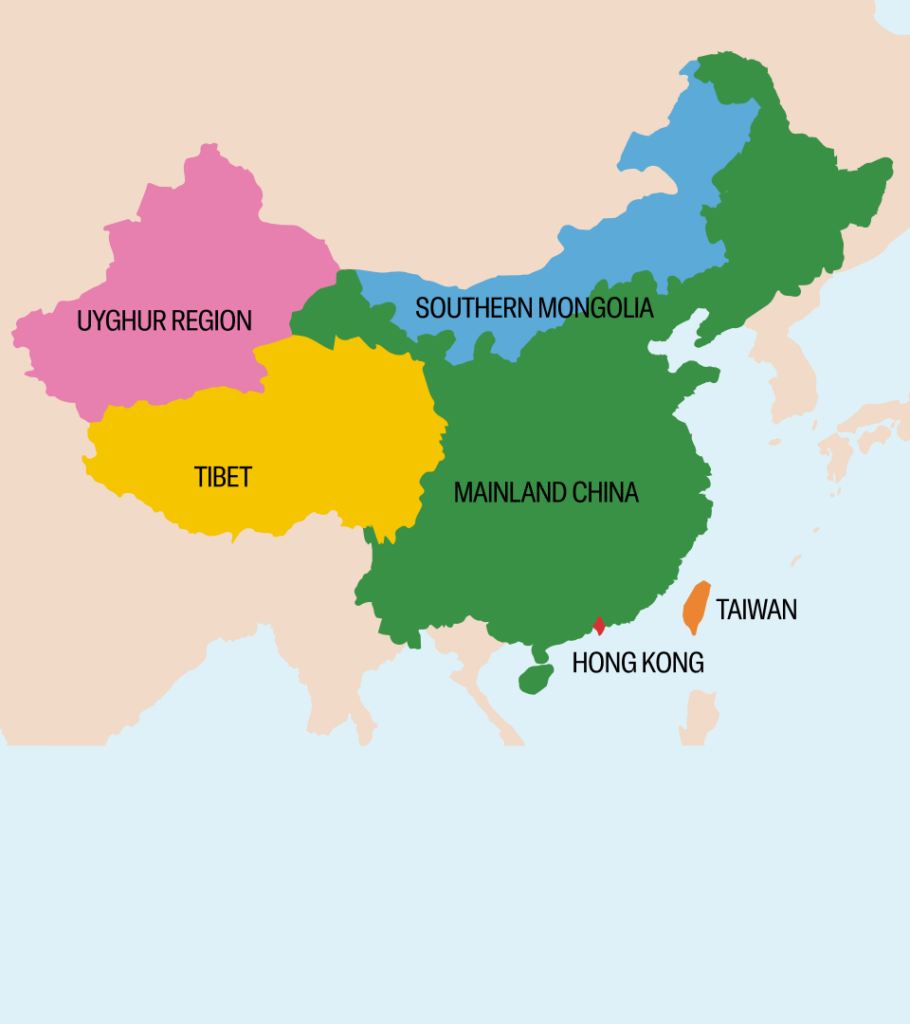
Under General Secretary and President Xi Jinping, the CCP’s desire for control — both domestically and beyond its borders — has tightened. Xi’s unprecedented continued tenure is largely characterized by repressive government policies to consolidate power under the guise of fostering harmony and state security. His political and ideological vision, dubbed the “Chinese Dream,” centers on making China a global powerhouse and revitalizing a homogenous nation-state. As a result, the regime has dramatically scaled up its repression of dissenting voices while exporting the party’s narrative overseas. As the world’s leading perpetrator of TNR, Beijing almost indiscriminately targets diaspora members of ethnic-national groups7, religious groups, and Chinese dissidents, as their ethnic or religious identities and political existence itself are viewed as a threat to the CCP’s authority and ambitions.
The TNR campaign is further legitimized by the PRC Law on the Promotion of Ethnic Unity and Progress, which formalizes provisions that assert extraterritorial reach. In particular, Article 63 stipulates that organizations and individuals outside China that commit acts that “undermine ethnic unity and progress or create ethnic division are to be pursued.”8 This provides a legal foundation for the CCP to further constrain freedoms of expression, assembly, and belief in contravention of China’s constitution and international human rights standards, increasing the risk of ethnic-rights advocates and Taiwanese people who speak up beyond China’s borders.
China’s operationalization of TNR involves numerous party-state organs, including public security and intelligence organs, United Front networks, and diplomatic outposts, such as embassies and consulates. In practice, the Chinese government conducts TNR through a wide ecosystem including student and business associations, overseas community organizations, as well as co-opted actors, including members of ethnic-national diasporas, foreign nationals, or institutions, that are incentivized, pressured, or coerced into assisting state surveillance, intimidation, or information-gathering. The blurred boundary between state and non-state actors makes clear attribution harder, as it may be carried out directly by state agencies or indirectly through intermediaries or through co-opted actors whose relationship to the state is harder to trace.
Digital transnational repression (DTNR) refers to the use of digital tools by states and state-aligned actors to monitor, intimidate, and silence people across borders. It can include spyware, spearphishing, account compromise, foreign information manipulation and interference (FIMI), doxxing, platform manipulation, online harassment, and coordinated disinformation. DTNR often operates alongside traditional offline physical forms of TNR, such as mobility tracking, direct violence and intimidation, coercion-by-proxy, among other methods, further amplifying their overall impact.
China’s use of AI is increasingly reshaping the methods and reach of DTNR by enabling faster, cheaper, and more scalable operations that are harder to identify.9 For example, AI tools can help aggregate and analyze diaspora behavior patterns through social networks, online activity, location signals, and consumer data to identify individuals or communities perceived as politically sensitive and assess potential gathering points. For current or former PRC citizens, these risks may be heightened when facial and biometric information or family information already exists within PRC-linked administrative or surveillance systems.
AI-enabled repression can also include personalized and targeted intimidation through impersonation, reputational attacks, or deepfakes to discredit activists, with women and gender-nonconforming dissidents often disproportionately targeted.
While weakening activists’ credibility, the CCP also exports the party’s narrative through AI-generated influence campaigns. AI allows the accelerated production of social media content that legitimizes repression, diverts public attention, and misrepresents historical realities, such as claims that Tibet, Taiwan, or the Uyghur Region have “always” been uncontested parts of China. Content may also be sensationalized in ways that inflame emotions and shift public sentiment. The manipulation of search engines, machine translation, and AI chatbots often contributes to the normalization of problematic CCP narratives by making politically sensitive issues seem more ambiguous, less urgent, or merely “controversial.”
The PRC’s cyber operations increasingly rely on a contractor ecosystem in which private firms are tasked with identifying vulnerabilities, developing attack tools, and executing espionage operations. Such operations further blur the boundary between state and non-state activity, creating a profit-driven marketplace for amplifying China’s DNTR, while also complicating attribution.10
Diaspora groups and activists can better address CCP-backed DTNR when they remain consistently vigilant and allocate adequate resources towards digital security. Technology and information literacy are equally important, particularly across generations. Members should normalize a basic understanding of digital hygiene, from account and device protection to privacy settings; AI-enabled risks, including social engineering, phishing attacks, impersonation, and deceptive content; to disinformation resilience, including source assessment, pattern recognition, multilingual verification, and, where appropriate, pre-bunking. The purpose is not to make communities permanently suspicious, but to make manipulation easier to identify before it causes harm and to build capacity in preventative resilience.
Organizers can adopt the following daily habits to improve their digital security and to reduce their risks when peacefully mobilizing.

Regardless of one’s risk level, these [digital hygiene] practices are good [for all] involved in activism /advocacy (basically all forms of being naughty in the eyes of the CCP) … These practices should really become universal.
Device
- Keep your operating system updated to reduce vulnerabilities that could be exploited for malware or data extraction.
- Use privacy screens and turn off on-screen notifications to prevent prying looks; use a passkey where you can.
- Turn off Bluetooth, AirDrop/nearby sharing, and automatic Wi-Fi connections when not needed.
- Avoid using free, openly accessible Wi-Fi hotspots, especially without a VPN.
- Avoid plugging your device into USB charging ports in public spaces; bring a power-only USB-C cable if you must use a wall hub.
- Minimize or regularly review your camera, microphone, photo, contact, and location permissions.
- Activate Stolen Device Protection (Apple) or Theft Protection (Android) when your smartphone is away from familiar locations.
- Consider putting your iPhone in lockdown mode if you handle sensitive data and believe you may face a highly targeted cyberattack, including mercenary spyware or zero-click exploits. The closest Android equivalent is Android Advanced Protection Mode, which provides an extra layer of resistance against infectious attacks and restricts features commonly exploited.
- Use a reputable, privacy-respecting VPN.11 Commonly recommended options include Mullvad, Obscura, and Proton VPN.
- Avoid putting sensitive data or information into non-encrypted websites (HTTP). Surf encrypted websites (sites whose URL starts with HTTPS) when possible.
- Encrypt your device (Windows, MacOS) and systems (macOS).12
- For further protection, ensure files are securely backed up on your Apple or Android device, or Google Drive. For long-term file-sharing and cloud storage solutions, consider encrypted platforms such as Cryptomator, VeraCrypt, and Tresorit.
- Back up sensitive files on separate physical devices to offer another layer of protection, with at least one hard copy stored in an undisclosed location.13
- If possible, separate devices for personal and activism use.
- Exercise caution when bringing devices to events where sensitive information might be shared.
- Use signal-blocking bags for specific high-risk contexts to best protect your digital communications.
- Use a burner phone when traveling to high-risk countries.14
Software and Apps
- Only download apps from verified, trustworthy sources, and keep browsers, password protectors, VPN, and social media updated to stay on top of bug fixes and patched security vulnerabilities.
- Frequently check the App Privacy Report (Apple) or Privacy Dashboard (Android), and uninstall apps accordingly.
- Regularly review where your Google account is logged in, and sign out of anything you do not recognize or that you have not used in 90 days.
- Use strong passwords and a trusted password manager, such as 1Password, Bitwarden, or KeePassXC. Use a different password for each platform, and do not repeat passwords.
- Consider setting your passwords to 8-10 random digits; good passwords are not meant to be easily remembered. They can be generated by your password manager and include special characters.
- Consider printing out the recovery codes and keeping them at home.
- Limit microphone, camera, photo, contacts, and location access on all apps.
- Turn on multi-factor authentication for all apps and systems, including email, cloud storage, social media, and financial accounts. When possible, use an authentication app or a security key (such as Yubico) instead of SMS.
- Consider using a browser, such as Brave or Tor Browser, to reduce the amount of data websites collect.
- If possible, separate your personal and activism email addresses. Encrypt your emails and consider using a temporary email address when traveling to high-risk countries.
- Disable remote content in your email settings (Gmail, Microsoft Outlook, and Proton) to limit location tracking and prevent the automatic loading of external elements.
- Exercise caution with links or unidentified attachments by disabling link and file previews in your email and messaging apps. These previews can sometimes serve as entry points for malicious software, including spyware.
- Remove metadata from documents and photos that are being sent out.
- Prioritize secure communication apps with end-to-end encryption such as Signal.
Signal Tips
- Set up an account username and hide the associated phone number.
- Enable “Always Relay Calls” to avoid your IP address being exposed.
- Enable disappearing messages by default, and keep screenshots of important messages.
- Verify safety numbers with individuals you message the most.
- Enable Signal PIN and registration lock.
- Set up a passcode lock, which is also applicable for other apps such as WhatsApp and Telegram.
For Chinese Apps
Chinese mobile apps, such as WeChat, Douyin, and Kuaishou, pose significant digital privacy risks due to the platforms’ adherence to China’s strict national security laws.
If you have to use Chinese apps to maintain communications with family:
- Limit access to the microphone, camera, photo, contacts, and location services.
- Consider using a separate dedicated device for high-risk applications to manage exposure, limit permissions, and reduce the amount of sensitive information shared through those channels.
- Use creative forms of communication, including screenshots and coded language as a way to potentially circumvent censorship.
- Use video calls over text.
- Recall or delete chat histories regularly.
- Avoid opening URLs in the app.
- Limit or refrain from downloading sub-applications, such as WeChat’s “Mini Programs.”
- Avoid linking your main phone number.
- Log out when not in use.
Disinformation and Cyberattacks
- Regular monitoring of media and public discourse is critical.
- Recognize characteristics of misleading context: common language of scapegoating, polarized language, and cherry-picked facts are used.15
- Identify CCP-coordinated attacks by spotting potential patterns, such as bot-driven harassment or posting during Beijing work hours.16
- Social Listening tools or Google Fact Checking tools can help track online activity surrounding key terms or topics, including those that have already been debunked.
- Visual content verification tools such as TinEye or InVID could help detect manipulated images and deepfakes.
- Use tools such as Google Alerts to monitor and trace mentions of your (organizational) name or information online for early detection of possible online harassment or defamation.
- Collaborate with local fact-checking organizations.
- Based on your personal tolerance for online comments and activities, consider blocking the accounts and limiting screen time. Take screenshots for future reference and reporting purposes.
- Have an organizational rapid response plan for impersonation or deepfake incidents so that false material can be quickly documented, reported, and publicly countered.
- Directly contact social media platforms to discuss the possibility of safe reporting and removal of harmful content, if possible.
- If you need additional expert help, you can contact the University of Toronto’s Citizen Lab, Access Now’s Digital Security Helpline, or refer to Amnesty International’s Security Lab resource hub.
- If you have concerns about digital surveillance and spyware, consider having your device checked by reputable experts, such as through the Security Lab’s forensic support page. The Security Lab offers a free-of-charge Digital Forensics analysis service for human rights defenders and other civil society members at risk.
Artificial Intelligence (AI) Use
- Avoid sharing sensitive personal information with AI tools.
- Verify AI-produced information across varied languages and sources to identify problematic biases or hallucinations — AI-generated content that is false, fabricated, misleading, or unsupported by the input or available evidence.17
- Establish an organizational AI policy to determine usage guidelines, including by:
- Preparing a tiered risk classification of AI tools and chatbots to determine appropriate usage;
- Aligning on disclosures surrounding AI use; and/or
- Increasing human oversight for additional verification.
Refer to HRF’s AI for Individual Rights Toolkit for additional recommendations on privacy-preserving and open-source AI tools.
As a woman, I’m the most afraid of deepfakes and use of AI [that] weaken[s] my sense of agency in ways that can’t be predicted.
– Pezilet Ismayil, HRF’s 2026 Beyond Borders workshop participant
As TNR follows people into the physical realm, participation in public events, such as peaceful demonstrations or advocacy-related conferences, can pose risks to physical safety. There are well-documented cases of public activists being violently treated by pro-CCP actors during protests or arrested by either uninformed or Beijing-friendly local law enforcement.18 The unpredictability of local police in one’s host country may require activists to be trained on risk assessment, safety measures, documentation, and reporting.
For anonymous activists who avoid public activism, being photographed or identified at sensitive events such as workshops or even cultural gatherings may lead to subsequent CCP harassment, pressure on family members, and visa or travel concerns. Privacy preferences should be standardized and respected across community spaces, especially within diaspora organizations, so people feel safe to seek support, share concerns, or contribute without public visibility. As not everyone can assume the same travel, legal, family, or protest risk, communities should brainstorm creative ways for vulnerable individuals to meaningfully participate, either anonymously or through lower-risk roles. If you are traveling to China, review HRF’s guidance for additional security considerations and recommendations.
Organizers can adopt the following practices to reduce risk when gathering in democratic host countries and support intentional and coordinated participation in activism.
Pre-Event Planning
For Organizers:
- Vet venues, fellow organizers, and volunteers thoroughly to screen for any potential CCP infiltration. Aim to limit event participation to pre-vetted members or invited guests, if desired.
- Conduct a risk analysis to identify:
- Safety and security for all participants, including public-facing figures who may be targeted;
- Possible physical, digital, and legal threats;
- Community members and contacts who may also be affected if security is compromised.
- Anticipate occasions or dates (e.g., politically sensitive events, anniversaries, cultural holidays) on or around which China’s TNR-related activity may intensify.
- Ask for people’s privacy preferences. Distinguish between those who are comfortable with being photographed and those who are not.
- Set roles and assignments for individuals in your group based on each person’s risk tolerance. Roles may include a main point of contact, location scout, police liaison, spokesperson, translator, digital security support, and first aid point person.
- Conduct basic digital and physical safety training for all organizers and volunteers.
- Map exits and entrances, nearby CCTV cameras, choke points, and access to public transit. Identify safe gathering points.
- Contact relevant local authorities to apply for any necessary permits and to identify what security support is available.
- Prepare first-aid and wellness kits and portable chargers in case you need to respond to minor emergencies or stay connected during public demonstrations.
- Publicize information strategically. Share basic details, such as location and time. For highly sensitive events, it is recommended to only share the meetup spot, not the exact location.
- Have contingency plans for unanticipated scenarios, including unexpected disruptions or venue cancellation.
- Prepare a strategy for documenting instances of TNR, including by sharing clear instructions with attendees on how and what to record.
- Create safety documents based on the specific needs of the community, to be available in multiple languages, widely distributed, and encouraged for people to reference. Documentation may include the following:
- Event safety planning and digital safety checklists
- Hotlines and emergency contact sheets
- Incident log templates
During Event
For Individuals:
- Consider attending events with others, if possible. Assess risks and take precautions that are realistic and available to you.
- Be vigilant in observing your surroundings. Watch for unusual attention to your fellow protesters. Examples include people filming or asking for information such as names or affiliations, or attempting to enter restricted spaces.
- Wear a mask, sunglasses, hat, or anti-surveillance clothing if you prefer not to be identifiable. Clothing featuring algorithmic knit patterns can confuse AI object-detection and facial recognition, while clothing integrated with LED lights or highly reflective materials can help avoid night-time cameras.19
- Decide which device, if any, to bring to the event. Phones may be subject to seizure or search by law enforcement, lost, stolen, confiscated, or accessed without consent. If you have sensitive data on your device and are at risk of being arrested, consider the following actions:
- Fully power off your device. The decryption keys needed to access your data will remain unavailable until you power your device back on and enter your passcode.20
- Consider handing your phone to someone with less risk of arrest.21
- Uninstall apps with sensitive data, such as your password manager.
- Disable biometric unlocking features.
- If you receive malicious messages, do not reply. Keep the message or screenshot for documentation and block the account.
- If you are being followed or verbally harassed by potential PRC government proxies while you are alone, avoid confronting the individual and move to a safer or more public location where possible. Share your location and circumstances with a trusted contact.
In Case of Escalation
- Aim to maintain composure. Create a safe distance between yourself and counter-protesters.
- Ask your group to remain seated to reduce panic and maintain the safety of large groups. It can also be helpful to remain calm by chanting or singing.22
- Seek emergency assistance if there is an immediate risk of physical harm, medical emergencies, abduction, or other urgent situations.
- Document and/or share the incident when it is safe to do so.
Suggested Recording Tips
- Begin evidence preservation as soon as it is safe to do so.
- While remaining respectful of participants’ respective privacy preferences, photograph or record incidents when possible, including the location of an incident, physical injuries, damaged property, objects used in an attack, nearby CCTV cameras, and vehicle license plates. Some activists prefer streaming services to avoid the possibility of videos being deleted if a device is lost or confiscated.
- Keep original files, such as metadata and timestamps, whenever possible.23 Create a detailed incident log, which may document:
- Dates, times, exact locations, people involved, and sequence of events
- Exact words used, actions taken, demands made by the perpetrator(s), and your response, especially if you had to engage directly with the person or group involved
- As much information as possible about the perpetrator(s), such as their affiliation, their appearance, clothing, age, physical description, language used, vehicle information, companions, and direction of travel
- Contact information or descriptions of witnesses and anyone present at the incident
- Patterns or observations, such as unknown individuals surrounding, filming, questioning, or monitoring you or your group or repeated contact from unfamiliar accounts or intermediaries
- Whether family or friends, especially those in their homeland, are impacted as a result
- For instances of DTNR, gather screenshots of account handles, phone numbers, emails, information, and timestamped messages, and record incoming phone calls.
After Event
- Debrief, assess staff well-being, and ensure appropriate support for affected individuals. Identify and circulate best practices. Don’t forget to celebrate the success of the event!
- Strategize which aspects of the event — including instances of TNR, physical violence, or escalation — should be highlighted with the media to help document any confrontations and raise public awareness.
Suggested Reporting Tips
- When deciding whether to report an incident, prioritize your immediate safety. If you are in immediate physical danger, contact local emergency law enforcement.
- Several democratic countries now have a dedicated TNR reporting hotline. For specific country information, refer to Safeguard Defenders’ reporting guide. Every report helps identify potential patterns and supports future legal, policy, or advocacy work.
- When reporting incidents, be specific about how you believe you are targeted by China’s TNR.
- Strategically include mentioning your experience as a violation of human rights while also highlighting it as foreign interference and a threat to national security.
- If possible, share relevant reports, policy papers, and/or government materials on TNR with local law enforcement to help them understand the incident not as a case of isolated harm, but as part of a broader pattern of foreign interference, intimidation, or coercion targeting diaspora communities.
- Prepare clear and concrete requests, while remaining cognizant that police may not be able to fully accommodate them. You are entitled to ask how your privacy will be protected, what safety measures are available, whether your home or devices can be assessed for surveillance risks, who your direct point of contact will be, when to expect follow-up, and whether the case can be recorded as TNR, foreign interference, harassment, or another relevant category.
- Find trusted friends or community members to accompany you when reporting to law enforcement. These may be daunting environments that you do not have to navigate alone.
TNR seeks to break down the relationships, trust, and capacity of diaspora communities to act collectively. Workshop participants detailed instances of self-censorship among community members, extending to their religious and cultural practices and to their participation in politics and social life.
Long-term resilience should widen trusted networks, strengthen community education, and prolong cultural continuation.
Communities should invest in diaspora-wide empowerment, not only in the most visible activists. Long-term resilience embraces community-led solutions, restores the trust and capacity of the diaspora, and allows communities to define and create safety for themselves.
– Esma Memtimin ,HRF’s 2026 Beyond Borders workshop participant
Building Trusted Networks
Community trust is one of the most valuable ways to build collective resistance against TNR, especially where institutional protection is limited or slow to materialize. Yet it is also within communities where tensions and conflicts may arise.
Fostering intergenerational, international, and cross-diaspora relationships can reduce isolation, widen access to knowledge and support, and create solidarity that endures beyond shifting political circumstances. Workshop participants expressed their hope to have youth leadership be treated as a genuine strategic necessity in their communities and emphasized the importance of strengthening international ties to broaden coalitions and distribute capacity.
HRF observed parallel experiences across diasporas that can contribute to shared learning, strengthen cross-movement resilience, and reaffirm the legitimacy of their greater collective cause.
Lastly, workshop participants reiterated the importance of developing safe ways to connect with their homeland and its people to sustain information flows to ensure that diaspora advocacy highlights the most relevant and consequential issues.
Strengthening Preparedness Through Knowledge Sharing
Long-term resilience requires a community-wide understanding of how to recognize patterns of TNR, assess risk, understand the solutions available, respond collectively, and provide care for those directly affected. All community members, not just professional advocates, should be empowered to participate in the building of resilience strategies.
Inclusive community responses ensure that all community members are equally equipped to understand and navigate China’s TNR. This includes making sure that specialized information is widely circulated in accessible formats, such as practical resource maps, translated materials, and referral information for legal, technical, health, psychosocial, and advocacy support.
Knowledge also needs to be implemented. Empowering people to report incidents of TNR encourages diasporic communities to take the lead on enhancing accountability and demanding protection from local authorities.
Foster spaces where people can dump their qualms. Open up to others, let others help you.
– Ankar Uyghur, HRF’s 2026 Beyond Borders workshop participant
Cultural Preservation As Resilience
China’s TNR targets artists and cultural practices, aiming to erase spaces for people to freely express themselves, remember history, and celebrate identity. Workshop participants expressed that culture is one of the ways their respective communities remain resilient, connected, and grounded. Supporting cultural life, investing in language schools, history projects, storytelling, music, film, visual art, and performance is therefore a direct form of peaceful resistance.
Diasporas are strong because of their diversity, and artists and community members need space, resources, and recognition to interpret inherited traditions and make art that captures the full range of experiences and identities in the diaspora. Cultural preservation depends on freedom of expression — and the freedom of each generation to participate in its creation and continuity.
– Sonya Imin, HRF’s 2026 Beyond Borders workshop participant
Acknowledgments
This toolkit was informed by HRF’s Beyond Borders: Youth Resilience Against the Chinese Communist Party (CCP) activist workshop in March 2026. The content reflects insights generated through a multi-track program designed to examine the CCP’s transnational repression, with a particular focus on its impact on rising activists, diaspora communities, and civil society actors. To bridge youth leadership and policy action, HRF also developed two companion briefs—one for U.S. and one for EU policymakers—translating the workshop’s lived expertise and priorities into concrete recommendations.
We extend our deepest gratitude to Athena Tong, Sarah Moulton, Loretta Lau, Ambassador Freddy Lim, Vanina Waizmann, Pema Doma, and Laura Harth for serving as facilitators at our workshop.
We thank Alexander Dukalskis, Athena Tong, David Tobin, Sarah Moulton, Tashken Davlet, and the Uyghur American Association for contributing to the development of this toolkit.
X

HRF’s “Beyond Borders: Youth Resilience Against the CCP” was graciously sponsored by the Taiwan Foundation for Democracy and the Atlas Network.

X

References
To align with our conceptual focus on diaspora members as key targets of CCP’s TNR and to respect Taiwan’s sovereignty, this toolkit views China’s long-arm in Taiwan as foreign interference and coercion, rather than TNR. We understand that 1) Taiwanese nationals and activists of Taiwanese descent are particularly targeted by the CCP, displaying tactics that often overlap with those of TNR, such as intimidation, FIMI, and diplomatic pressure; and 2) Taiwanese national identity and political existence are seen as threats to the Chinese government in ways that resemble the experiences of other diaspora groups. Taiwan is a democratic country that has never been ruled by the CCP.
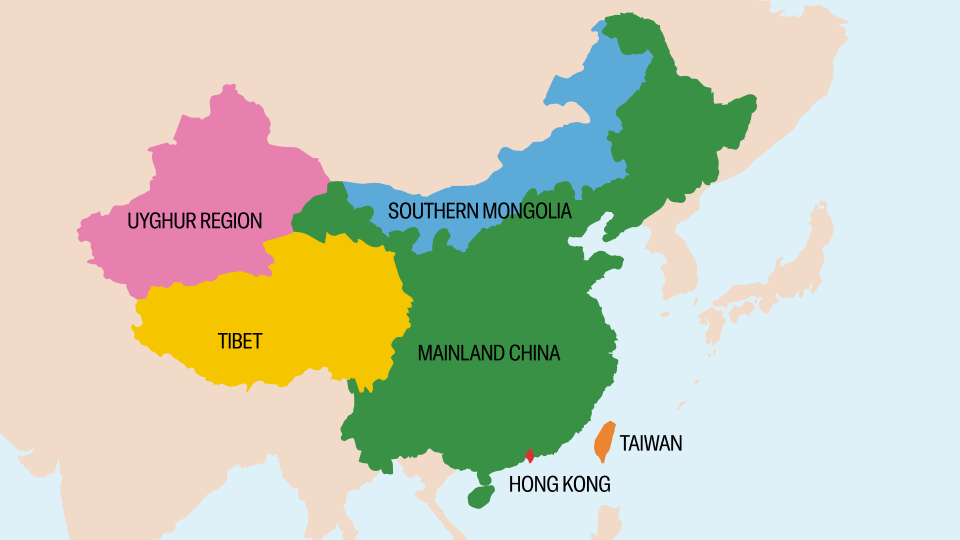
Including Tibet, Uyghur Region, Southern Mongolia, or Hong Kong.
“Tyranny Tracker,” Human Rights Foundation, https://tyrannytracker.org/.
Dana M. Moss, “Transnational Repression, Diaspora Mobilization, and the Case of The Arab Spring”, Social Problems, 63, No.4 (2016): 480–498. https://academic.oup.com/socpro/article-abstract/63/4/480/2402855?redirectedFrom=fulltext&login=false.
“Transnational Repression,” Freedom House (2022), https://freedomhouse.org/report/transnational-repression.
Nate Schenkkan et al., “Perpetrators and methods of transnational repression and possible counter strategies,” European Parliament (Jan., 2026), https://www.europarl.europa.eu/RegData/etudes/STUD/2026/775286/EXAS_STU(2026)775286_EN.pdf.
For the purposes of this toolkit, “diaspora members of ethnic-national groups” are defined as individuals from the Uyghur, Hong Kong, Tibetan, and Southern Mongolian diasporas to 1) acknowledge their collective exposure to China’s TNR that comes as an extension of the rights abuses happening in their homeland due to their religion or ethnicity; and 2) respect their self-identification as an ethnic or national group, rather than an “ethnic minority” of China.
“PRC Law on the Promotion of Ethnic Unity and Progress,” China Law Translate (Mar. 12, 2026), https://www.chinalawtranslate.com/en/ethnic-unity-and-progress-law/.
Doublethink Lab, “The Rise of AI in PRC Influence Operations: Nine Takeaways from the GoLaxy Documents,” Medium (Mar. 4, 2026), https://medium.com/doublethinklab/the-rise-of-ai-in-prc-influence-operations-nine-takeaways-from-the-golaxy-documents-2d6617a753e5.
Jakob Bund, “Hand and Glove: How Authoritarian Cyber Operations Leverage Non-state Capabilities,” Stiftung Wissenschaft und Politik (Jun. 25, 2025), https://www.swp-berlin.org/publikation/hand-and-glove-how-authoritarian-cyber-operations-leverage-non-state-capabilities.
VPN hides traffic from your ISP or local network, but it also shifts trust to the VPN provider, who can still see, store, and modify your traffic.
“How to Protect the Data that is Stored on Your Devices,” CISA, https://www.cisa.gov/resources-tools/training/how-protect-data-stored-your-devices.
Files can be backed up on the software Time Machine for iOS devices or an encrypted external SSD.
It could also be helpful for community organizers to develop travel risk guidelines for individuals with different profiles, especially for those who are traveling to China, and those who are at high risk of deportation from transit countries, with acknowledgment that they are most likely to be isolated physically and psychologically.
Common manipulation techniques include blaming one group for complex issues (scapegoating), using divisive “us vs. them” language (polarization), and presenting only facts that support one viewpoint while ignoring relevant evidence (cherry-picking). European Parliament, Foreign Interference in All Democratic Processes in the European Union, Including Disinformation, Study for the Committee on Foreign Affairs (Brussels: European Parliament, Policy Department for External Relations, 2021), https://www.europarl.europa.eu/RegData/etudes/STUD/2021/653635/EXPO_STU(2021)653635_EN.pdf; European Parliament, “Spotting Disinformation: Six Tactics Used to Fool Us,” European Parliament Topics (Mar. 6, 2025), https://www.europarl.europa.eu/topics/en/article/20250227STO27081/spotting-disinformation-six-tactics-used-to-fool-us.
Dan Milmo, “China accused of flooding social media with spam to crowd out protest news,” The Guardian (Dec. 4, 2022), https://www.theguardian.com/world/2022/dec/04/china-accused-of-flooding-social-media-spam-covid-protests; Robert Booth, “Experts warn of threat to democracy from ‘AI bot swarms’ infesting social media,” The Guardian (Jan. 22, 2026), https://www.theguardian.com/technology/2026/jan/22/experts-warn-of-threat-to-democracy-by-ai-bot-swarms-infesting-social-media; Christopher Bodeen, “China hackers seen as increasingly professional,” NBC News (Feb. 26, 2013), https://www.nbcnews.com/tech/tech-news/china-hackers-seen-increasingly-professional-dont-work-weekends-flna1c8543779.
Rahul Awati, “What are AI hallucinations and why are they a problem?,” TechTarget (Oct. 11, 2024), https://www.techtarget.com/WhatIs/definition/AI-hallucination.
Alex Willemyns, “Protesters in US were attacked by Beijing-linked figures: report,” Radio Free Asia (Aug. 2, 2024), https://www.rfa.org/english/news/china/apec-xi-san-francisco-attacks-transnational-repression-08022024104927.html;
This type of clothing may reduce the likelihood of facial recognition under certain conditions, but it should not be relied upon as a standalone protective measure. Its effectiveness varies depending on the surveillance technology and operating environment. AI Surveillance & Digital‑ID, “Anti-AI Fashion: How Clothing Blocks Facial Recognition,” Substack (Oct. 8, 2025), https://aiunpackedpod.substack.com/p/anti-ai-fashion-how-clothing-blocks.
When your device is turned off, your files are protected by encryption and cannot be accessed without your passcode. Entering your passcode unlocks the security system that protects your data, allowing the device to read your files and operate normally. Once unlocked, your device is in an active state where your information will be accessible. Lily Hay Newman, “How Law Enforcement Gets Around Your Smartphone’s Encryption,” WIRED (Jan.13, 2021), https://www.wired.com/story/smartphone-encryption-law-enforcement-tools/.
The specific risk level of an individual is context-dependent and should be assessed by the individual themselves or by trusted organizers, taking into account factors such as their role, level of visibility, legal status, physical and mental health, exposure and vulnerability to the CCP, and other relevant circumstances.
“De-escalation tactics at protests,” Activist Handbook, https://activisthandbook.org/wellbeing/deescalation.
One recommended option is Tella, an app that automatically encrypts your photos, videos, and audio recordings as soon as they are captured and stores them separately with password protection capabilities. https://www.tella.com/.