
In the News
HRF Condemns WP Engine for Blocking the Tyranny Tracker in Russia
In August, the Putin regime designated HRF and its work as “undesirable,” criminalizing HRF’s work inside Russia and threatening anyone who engages with it — including Russian citizens living abroad — with fines and imprisonment. Then, in September, Roskomnadzor (Russia’s censorship agency) sent a notice to WP Engine stating that HRF’s Tyranny Tracker “violates the national laws of Russia” and demanding that WP Engine restrict access to the site in Russia. In response, the Austin-based web hosting company told HRF to implement a geo-block or it would do so “on our behalf.” HRF declined and formally objected.
The Online Citizen covered WP Engine’s decision to block HRF’s Tyranny Tracker in Russia at the behest of the Kremlin, and HRF’s refusal to block the site. This demand is an alarming case of a US company carrying out an authoritarian regime’s censorship demand. Companies based in democratic countries should not enable dictators’ transnational repression.
New Research & Reports
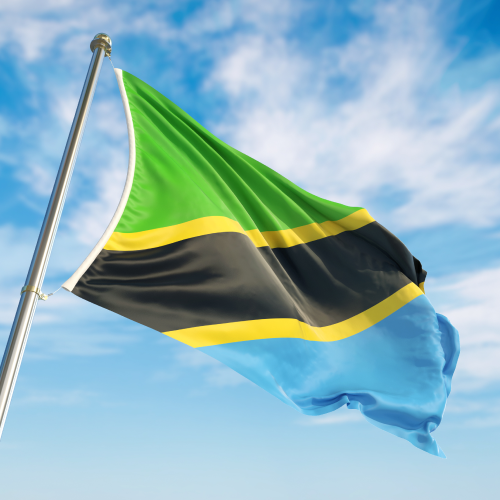
How Tanzania’s Flawed 2025 Election Produced a Crisis of Legitimacy
Last month, Tyranny Tracker Research Fellow Wiriranai Masara published a blog post on Tanzania’s flawed 2025 election and its impact on the country today. President Samia Suluhu Hassan declared victory in the election, but the main opposition was excluded, serious challengers were neutralized, and civic space was heavily restricted. Masara analyzes how the flawed electoral process displaced political contestation from the ballot box into prisons and courtrooms, and produced a crisis of legitimacy that has continued long after the votes were counted.
Learn how Tanzania places on the Tyranny Tracker.
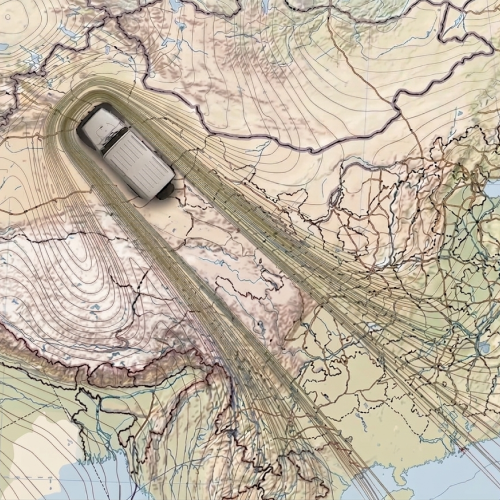
Risks Beyond Wrongdoing: Traveling to China
HRF published guidance on travel to China following the regime’s expanding use of exit bans, another tool the Chinese Communist Party (CCP) uses to restrict movement and extend repression beyond its borders. New regulations took effect on Sept. 15, broadening the regime’s power to prevent people, including foreign nationals, from leaving the country. Travelers to China already face the risk of surveillance, interrogation, arbitrary detention, and exit bans under the CCP’s sweeping national security laws. HRF’s latest analysis explains what the new regulations mean and outlines practical steps travelers can take to reduce their exposure.
Learn more about China’s repression in the Tyranny Tracker.

Thailand’s Disinformation Operations: The Ongoing Struggle Against Digital Harassment
In July, a Thai court ruled that the country’s Internal Security Operations Command had carried out an unlawful online smear campaign against human rights defenders Angkhana Neelaphaijit and Anchana Heemmina. The ruling comes amid mounting evidence that Thai officials have used coordinated online disinformation campaigns to target activists, opposition figures, and civil society, while suppressing criticism of the monarchy and military. HRF’s blog post explores the Thai regime’s ongoing digital repression. The court’s ruling is one step toward ending all forms of harassment and digital violence in Thailand.
Learn more about the state of dissent in Thailand through the Tyranny Tracker.
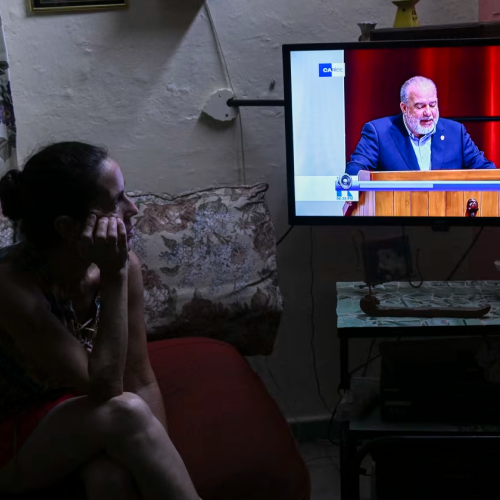
Decades Late, Cuba Approves Serious Market Reforms
Cuba has approved its most significant market-oriented reforms since the 1959 revolution, but economic reform is not the same as political freedom. Cuba remains a one-party dictatorship that imprisons political dissidents, bans independent media, and suppresses basic freedoms. In an op-ed published in The Wall Street Journal, HRF’s Chief Advocacy Officer Roberto González examines what these reforms reveal and whether they could lay the groundwork for greater freedom.
Tyranny Tracker Events
Connections Across South America
In August, HRF brought the Tyranny Tracker to Buenos Aires, Brasília, São Paulo, and Santa Cruz de la Sierra, connecting students, academics, civil society leaders, and pro-democracy activists across the four cities.
In Buenos Aires, HRF attended CADAL’s Annual Conference on Memory, Human Rights, and International Democratic Solidarity and hosted events at the University of CEMA and the University of Buenos Aires. The events featured voices from across the region, including Venezuelan pro-democracy activist Jesús Armas and human rights lawyer Elisa Trotta, Nicaraguan pro-democracy advocate Jonathan Duarte, and a Salvadoran representative of Cristosal. In Brazil, the team hosted events at IDP Brasília and IDP São Paulo to examine authoritarianism in Latin America. HRF also joined São Paulo’s Fundação Armando Álvares Penteado to explore autocratic expansion globally. And in Bolivia, HRF hosted an event exploring the Tyranny Tracker at Fundación Universidad Privada de Santa Cruz de la Sierra.
A Warm Reception at Georgetown University
On Sept. 18, HRF presented the Tyranny Tracker at Georgetown University’s School of Foreign Service to discuss the latest trends in authoritarianism. The event explored the issue of authoritarian collaboration and the need for pro-democracy activists to build community in response. The team’s regional experts were joined by Nikola Ilić, professor at Georgetown and founder of ChangeLab, and Nicaraguan opposition leader Félix Maradiaga.
Country Spotlight
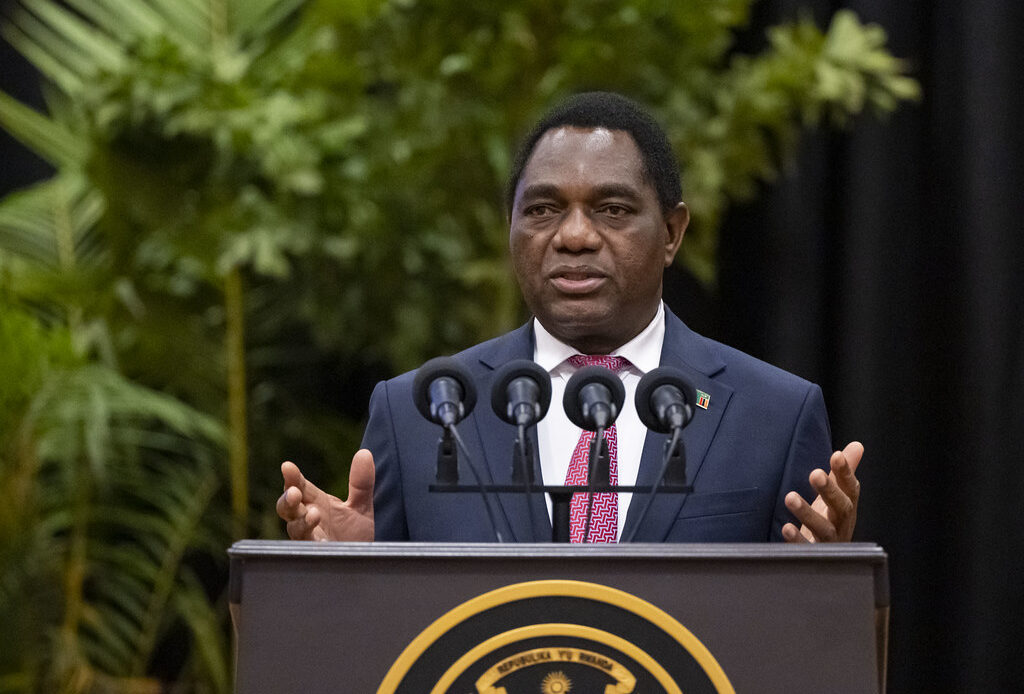
Zambia
Zambia’s general elections on Aug. 13 followed an election campaign marred by deadly clashes between rival political groups, police restrictions and repression, and state-sponsored violent intimidation of opposition candidates. Incumbent President Hakainde Hichilema claimed victory in the elections, which the opposition disputed. Shortly after, the regime charged opposition candidate Brian Mundubile and his running mate, Makebi Zulu, with treason on vague and unsubstantiated accusations of seeking to overthrow the government. Mundubile and Zulu are being held in Mukobeko Maximum Security prison in the town of Kabwe.
In September, the Zambian regime canceled the passports of six prominent critics on unspecified national security grounds. This includes four opposition members (former ambassador Emmanuel Mwamba, former lawmaker Emmanuel Jay Banda, current lawmaker Binwell Mpundu, and Peter Kaiser Zulu, a political advisor to former ruler Edgar Lungu); a UK-based social media influencer, Lillian Mutambo; and academic Sishuwa Sishuwa. Authorities stripped Sishuwa and opposition politician and lawyer Celestine Mukandila of their citizenship. These practices reflect the weaponization of the judiciary to silence dissent, as is common in authoritarian regimes.
The developments also continue a concerning pattern of authoritarian repression that followed Hichelema’s democratic election in 2021, shattering early hopes that he would be a democratic reformer. In his September piece in the Journal of Democracy, Tyranny Tracker Research Fellow Wiriranai Masara argues that each of these developments has “landed on top of an already substantial record of restricting political competition, chilling dissent, expanding surveillance powers, interfering with democratic institutions, and weakening democratic checks in a country already classified as ‘hybrid authoritarian’ by the Tyranny Tracker.”
To learn more about authoritarianism in Zambia, read the Tyranny Tracker’s analysis and Research Fellow Wiriranai Masara’s piece in the Journal of Democracy.