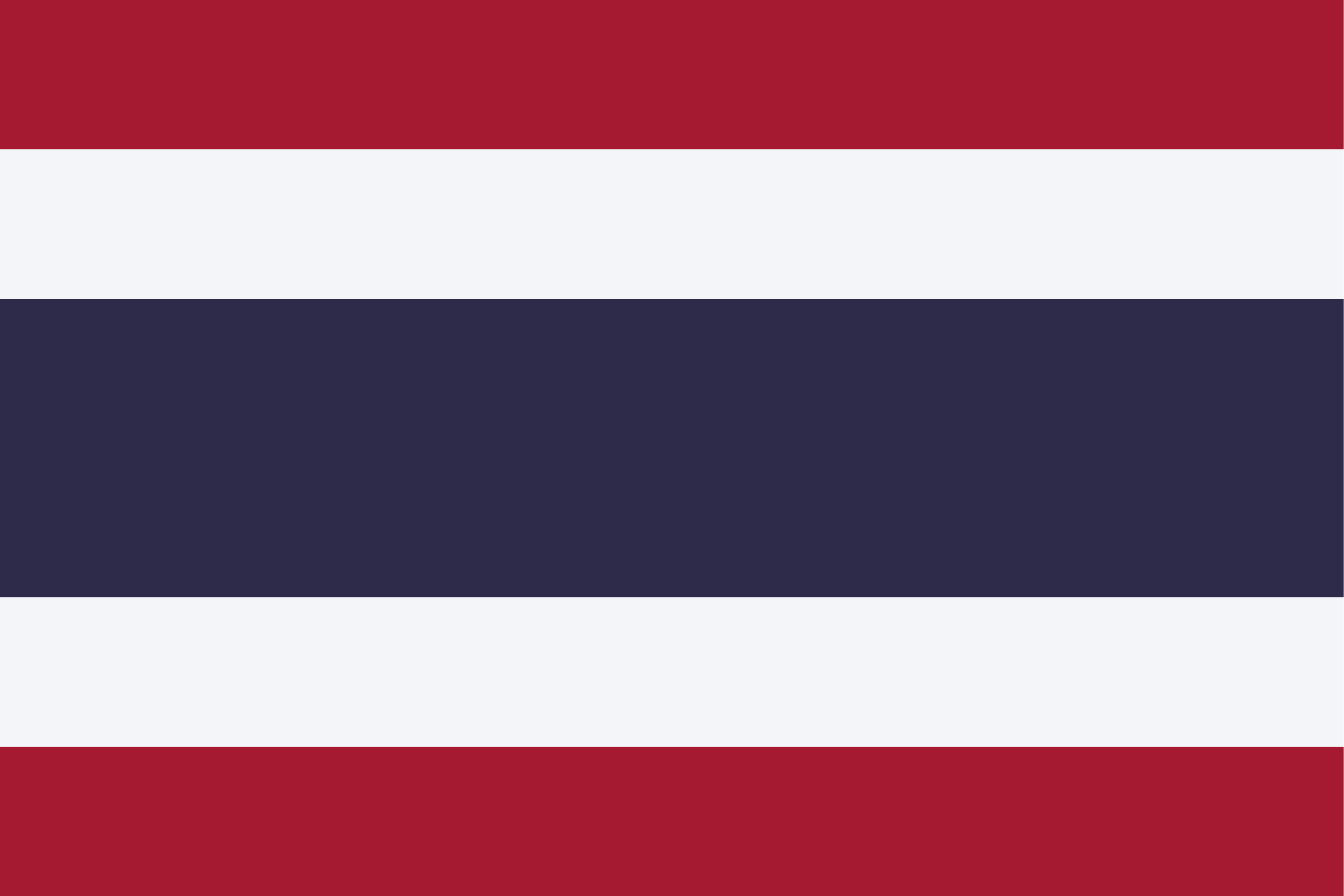
HRF classifies Thailand as ruled by a hybrid authoritarian regime.
Since becoming a constitutional monarchy in 1932, Thailand has experienced 12 military coups and adopted 20 constitutions, most of which were drafted by military juntas or as an indirect result of the coups. Many coups were primarily driven by deep-seated tensions between conservative elites and oppositional factions supporting monarchy reforms and were orchestrated in the name of protecting the monarchy, a venerated institution that has enjoyed virtual immunity from accountability. The King’s significant influence over state policy – including the constitutional trajectory, key political appointments, and legislative reforms – has resulted in growing scrutiny from pro-reform advocates. The monarchy has also lent legitimacy to incoming regimes through tacit approval of military coups. The latest coup in 2014, led by General Prayut Chan-o-cha, toppled the democratically elected government of Yingluck Shinawatra, a member of the influential Shinawatra family.
In August 2024, Yingluck’s niece, Paetongtarn Shinawatra, assumed the prime ministership after the Shinawatras’ Pheu Thai Party (PTP) entered into a coalition with pro-military parties in a delicate bid to restore the family’s political influence, abandoning its alliance with progressive parties. In August 2025, however, Paetongtarn was removed from office by a Constitutional Court ruling over a leaked phone call between her and Cambodian strongman Hun Sen amid an escalating border conflict between Thailand and Cambodia. Paetongtarn is the fifth prime minister removed by the courts since 2008. Former deputy prime minister Anutin Charnvirakul succeeded her with support from several parties, including the PTP, the main opposition People’s Party, and Prayut Chan-o-cha’s former political vessel Palang Pracharat. As of December 2025, Anutin has dissolved parliament in preparation for fresh elections. He is the leader of the conservative Bhumjaithai Party that is historically seen as right-leaning and pro-military.
Key Highlights
Electoral competition is significantly skewed in favor of the regime, to the point where the real, mainstream opposition has a highly unlikely, although realistic, chance to win. The 2019 and 2023 elections were administered under electoral rules that afforded pro-establishment parties an unfair advantage. While major opposition parties could register for these elections and win votes, the regime nullified their electoral successes by dissolving them and banning their leaders from politics after polling concluded. The election management body is historically biased in favor of the pro-establishment camp, with limited exceptions.
Independent media, political leaders, civil society leaders, organizations, and regular people are seriously and unfairly hindered in their ability to openly criticize or challenge the regime. Since the 2014 coup, the regime has restricted critical media, pursued criminal charges against thousands of dissidents based on vague speech laws, repressed peaceful protests, and censored online criticism. It has also been implicated in transnational repression against dissidents abroad and enables transnational repression by neighboring countries. The civic space has nevertheless remained resilient, with sizable numbers of independent media and civil society organizations.
Institutions largely fail to serve as independent checks on various administrations. Institutions in Thailand continue to operate under the military-drafted 2017 Constitution, which entrenches mechanisms that could be abused to manipulate election results and protect establishment interests. The judiciary – especially the Constitutional Court – plays a central role in dissolving opposition parties, disqualifying politicians, and enforcing harsh laws. Executive authority is weakened by vague “ethical” standards and the Court’s sweeping power to remove prime ministers. The legislature remains structurally skewed toward unelected actors, with an opaque Senate capable of blocking reforms and targeting progressive parties.