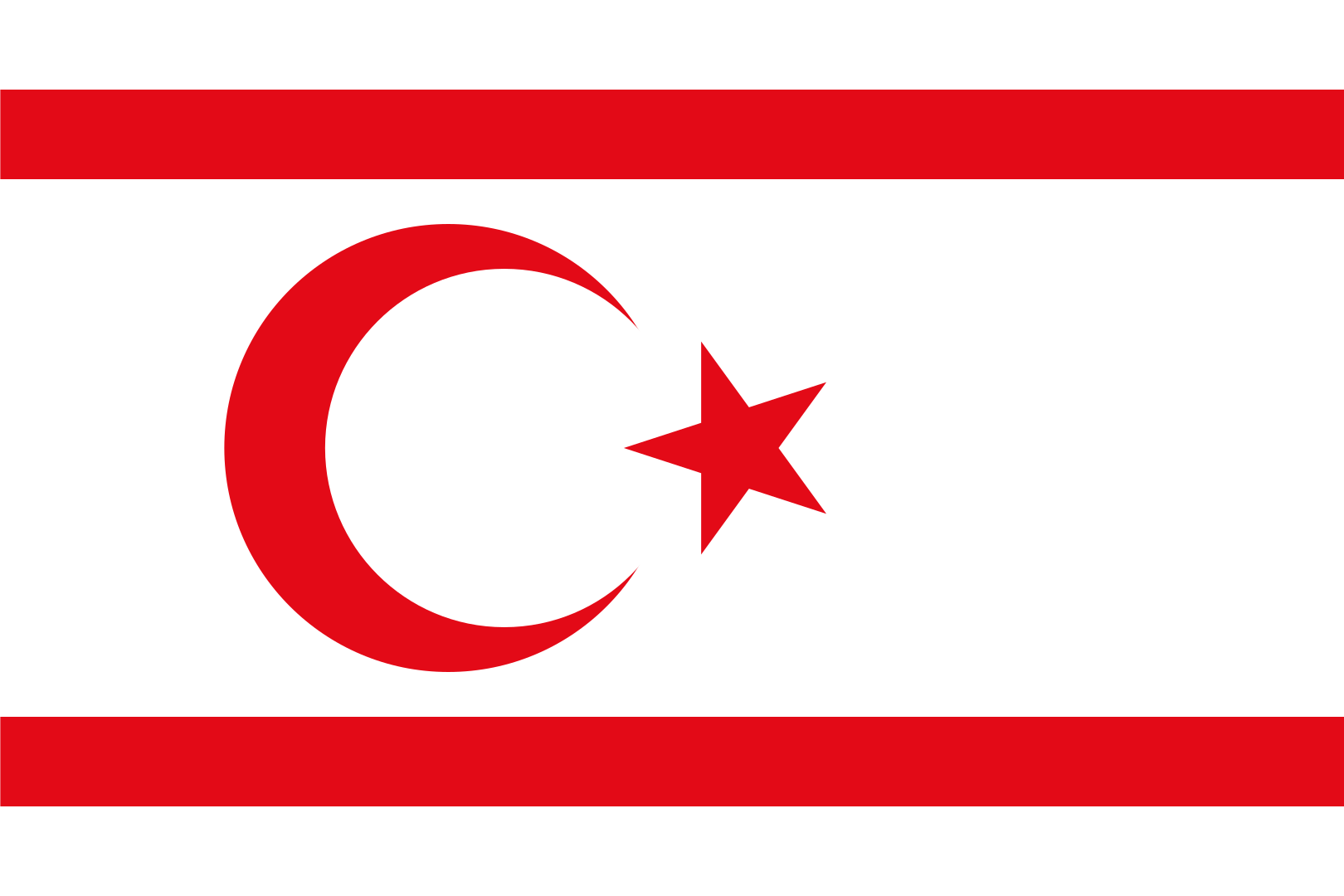
HRF classifies the breakaway territory of the Turkish Republic of Northern Cyprus as democratic.
Cyprus gained independence from the United Kingdom in 1960. However, state-building was precarious from the outset, as its two main ethnic communities held incompatible political aspirations. While most Greek Cypriots sought eventual reunification with Greece, Turkish Cypriots advanced a two-state solution or a unitary state with strong minority rights protections. A 1974 coup attempt by hardline Greek Cypriots to advance reunification with Greece prompted a military intervention by Turkey, under the pretext of protecting the Turkish Cypriot community.
After years of failed negotiations and continued de facto division, Turkish Cypriot leader Rauf Raif Denktaş unilaterally proclaimed the independence of the Turkish Republic of Northern Cyprus in 1983, with Ankara’s direct support. No country other than Turkey recognizes the TRNC, which has profoundly shaped the breakaway region’s political and economic trajectory. The European Court of Justice banned direct trade between the TRNC and the EU in 1994, rendering Turkey the breakaway territory’s main export route and primary patron. Between 2005 and 2014 alone, Turkey reportedly provided over USD 2.7 billion in aid, and it continues to station tens of thousands of troops on the island. Turkish officials have also exerted significant influence in domestic affairs, particularly during national elections.
The ongoing partition of the island (the so-called “Cyprus Question”) remains a salient political issue, with nationalist parties supporting a two-state solution (in line with Turkey’s interests in the region) and left-leaning parties typically advocating reunification under a federalist framework. The current de facto head of state, President Tufan Erhuman of the Republican Turkish Party (CTP), is a vocal proponent of the latter.
Key Highlights
National elections are largely free and fair. Notwithstanding the dominance of two major parties (the nationalist National Unity Party (UBP), a consistent proponent of a two-state solution, and the center-left Republican Turkish Party (CTP), which generally favors federal reunification with the Republic of Cyprus), the political system is pluralistic, with multiple parties typically gaining seats in the legislature. Given the TRNC’s robust institutions and record of competitive elections, the main threats to electoral integrity are exogenous: the Turkish regime has, on some occasions, overtly and unfairly supported particular candidates in the TRNC’s elections, while non-state actors, likely linked to the Turkish regime, have intimidated and harassed their main opponents.
Independent media, political leaders, civil society leaders, organizations, and members of the general public are largely free to openly criticize or challenge the de facto governing authority. Despite sporadic, arbitrary interference by Turkey and non-state actors that have harassed critical journalists and opposition leaders, the TRNC has a diverse media ecosystem. Although a 2025 Law on Public Assemblies imposes some undue restrictions on public gatherings, peaceful protests remain common and generally proceed without undue interference from law enforcement. The de facto governing authority also upholds freedom of association.
In the TRNC, institutions are independent and largely serve as effective checks on the de facto governing authority. The judiciary, overseen by the impartial Supreme Council of Judicature, has often acted contrary to the interests of the governing authority and in accordance with democratic principles on notable occasions. Other oversight institutions have generally ensured horizontal accountability, notwithstanding the persistence of low-level corruption and nepotism.