


Good morning readers,
In Nigeria, a tax law requires providers of digital assets to monitor transactions, collect personal information, and link payments to biometric national ID systems. The law gives the state a powerful means to surveil and trace the financial activity of individuals and civil society in real time without accessing blockchains directly.
At the recent HRF-sponsored AI Hack for Freedom in Austin, Texas, teams of open-source developers and front-line dissidents created new freedom tech tools to address activists’ most urgent needs. Over the weekend, teams built and tested new safety, reporting, and investigative technologies designed to function in the face of financial censorship, authoritarian surveillance, and internet shutdowns.
We also feature a new episode of The Network State Podcast, where HRF’s Chief Strategy Officer Alex Gladstein sits down with Balaji Srinivasan to explain how Bitcoin serves as a financial escape hatch for billions grappling with inflation, financial repression, and authoritarian-controlled banking systems.
Time to dive into what happened around the world.
Global News
Nigeria | Tax Law Ties Digital Asset Transactions to National ID
Nigeria is attempting to tighten its grip on digital finance through a new tax law that mandates that virtual asset service providers collect and maintain records of users’ transactions, National Identification Numbers (NIN), and other personal information. The NIN system is also tied to biometric data, including Nigerians’ fingerprints and facial scans. Mandating identity collection at exchanges and service providers enables officials to trace monetary flows from platforms to named individuals and cross-reference them with biometrics, income declarations, and tax records, without needing to surveil blockchains directly.
In context: For dissidents, journalists, and vulnerable groups, tying digital asset use to real identities creates surveillance risks that could expose their sensitive work under authoritarian regimes.
Iran | Freedom Tech Surges Amid Historic Protests
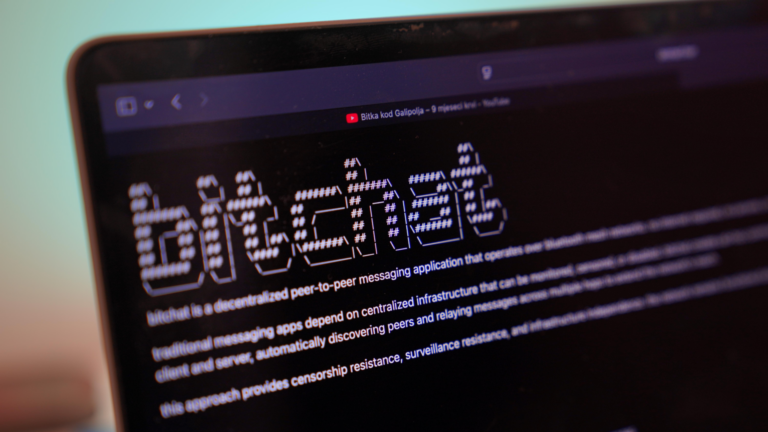
As historic protests grip Iran, people are turning to freedom technologies to communicate, organize, and protect themselves from authoritarian repression. Downloads of the offline messaging app Bitchat, which enables peer-to-peer communication without an internet connection, have more than tripled in Iran as people seek ways to circumvent the regime’s internet shutdown. At the same time, Iranians are moving Bitcoin off exchanges and into self-custodial wallets, with a sharp spike in withdrawals concurrent with late-2025 protests and the January 2026 internet blackout, according to reports from Chainalysis. This comes as the Iranian regime imposes a virtual lockdown following weeks of mass protests against currency collapse and state corruption that began on December 28. Human rights groups estimate that several thousand people were killed and more than 20,000 detained.
In context: The Iranian regime is pairing financial collapse with total security control: internet blackouts, mass surveillance of phones, and militarized policing aimed at deterring protest through fear. It underscores that the uprising has not merely been suppressed; it has forced the state to expose how fragile its grip on the Iranian people has become.
India | Proposes Linking Authoritarian CBDC Infrastructure
India’s central bank has proposed that countries in the BRICS bloc link their central bank digital currencies (CBDCs) to facilitate cross-border trade and tourism payments. This would mark the first formal attempt by member countries to connect sovereign digital currencies directly. The proposal mirrors the efforts of Project mBridge, a China-led cross-border CBDC platform, which has now processed more than $55.5 billion in transaction volume. Project mBridge connects the central banks of China, Hong Kong, Thailand, the UAE, and Saudi Arabia, allowing them to settle cross-border payments directly using CBDCs rather than correspondent banking networks.
In context: Combining CBDC systems centralizes settlement, surveillance, and programmability at the protocol level, and concentrates monetary power within participating authoritarian states. As mBridge scales and proposals emerge to link CBDCs across blocs like BRICS, the risk extends to the export of autocratic financial repression across borders, to the detriment of civil liberties and democratic society.
Venezuela | Currency Collapse and Repression
The Venezuelan bolívar’s value has declined by 20% on the streets of Venezuela since the US capture and subsequent ousting of dictator Nicolas Maduro. The regime has cracked down on all aspects of society, and the shock has intensified economic uncertainty, causing Venezuelans to hoard US dollars while the bolívar rapidly loses value. The devaluation is pushing businesses to shut down or leave the country, while wages remain effectively worthless. For perspective, Venezuela’s monthly minimum wage now amounts to a mere 18 cents. Yet, a kilogram of beef costs $12, and 30 eggs cost $6.30, putting immense pressure on Venezuelan families. Meanwhile, state workers earn a $40 monthly food bonus and “economic war” handouts totaling $120.
Russia | Digital Ruble CBDC Usage in State Payments
Russia has begun using its digital ruble CBDC for government payments, marking its first real-world deployment ahead of a broader national rollout expected later this year. As of January 1, the digital ruble can be used to pay salaries for state officials, as well as social security benefits, maintenance costs for state properties, and other regime expenditures. Participation is currently optional, with recipients allowed to choose between receiving the CBDC or using traditional payment methods.
In context: The use of CBDCs in state payments is a test ground for programmability, surveillance, and financial control, especially in authoritarian environments like Russia, where civil society already faces banking restrictions and immense political repression.
Recommended Content
Money Is Broken for 7 Billion People with Alex Gladstein
In this episode of The Network State Podcast, hosted by Balaji Srinivasan, Alex Gladstein, Chief Strategy Officer at HRF, explores how Bitcoin serves as a monetary lifeline for billions living under financial repression. He argues that currency devaluation and other regime measures function as predatory tools that tax the world’s most vulnerable populations. Gladstein frames Bitcoin as freedom technology and illustrates how it allows individuals to bypass authoritarian-controlled banking, reclaiming financial freedom.
Bitcoin and Freedom Tech News
Hack4Freedom | New Freedom Tech Tools Built
HRF sponsored the first AI Hack for Freedom in Austin, run on Jan. 17 to 18 by Bitcoin Park, bringing together frontline dissidents and open-source developers to build and test tools for movements operating under authoritarian repression. Using vibe coding, activist-led teams of developers built and deployed new freedom tech over the weekend.
First place was given to Stringer Safety, a journalist safety app that lets reporters in high-risk environments track one another, share location, and send alerts or messages when in danger. Second place went to Pathos, a censorship-resistant reporting platform built on Nostr (a decentralized communications protocol) that allows activists to document and share events and to receive self-custodial Bitcoin donations securely. It also automatically switches to Bitchat for offline messaging during internet shutdowns. In third place came the Corruption Disrespector, an AI-powered investigative tool that analyzes large volumes of corporate, financial, and legal documents to surface hidden relationships, map corruption networks, and accelerate human rights and anti-corruption investigations. Learn more about the event here.
Bitchat | New Update as App Clone Circulates in Iran
Bitchat, an offline messaging app, released an update that adds photo sharing and audio messages over its Bluetooth-based mesh network, expanding beyond text-only communication. It has also improved message reliability by extending the effective mesh range in dense or mobile environments. But it’s not all good news. Bitchat’s exploding popularity has seeded the grounds for malicious clones of its app. In Iran, amid historic pro-democracy protests, developers have warned of a closed-source clone of Bitchat circulating without attribution, making false claims and soliciting donations. In adversarial environments, it is potentially dangerous, especially for demonstrators and civil society actors who rely on anonymity, security, and censorship resistance to stay safe.
Fedi | Community Generator Tool Launched
Fedi, a company leveraging Bitcoin and ecash technology to support global communities, launched a new in-app tool that lets anyone create and manage their own community directly from the Fedi app. Communities function as Fedi’s social layer, allowing users to chat, share files, run polls, post announcements, and organize group conversations, all in one place. The new Community Generator guides users through a simple setup flow, allows them to select or link Mini Apps (such as Bitcoin tools or external websites), and create group chats. Communities can be edited at any time directly from the app, making them easy to adapt as needs evolve.
In context: Communities are designed to work alongside Fedi’s Federations (shared custody bitcoin wallets built on the Fedimint protocol) without merging the two. A community can recommend trusted federations, while members remain free to use any federation wallet they choose. Over time, communities can evolve into running their own federation if trust and coordination deepen, improving discreet Bitcoin access for those on the margins of financial systems.
Breez | Winners of the time2build Developer Challenge Announced
Breez, a company building on the Lightning Network, announced the winners of the time2build challenge. The event aimed to demonstrate the Lightning Network as a universal language for connecting Bitcoin-adjacent protocols and tools such as Nostr, Cashu, wallets, and platforms. One developer built a BTCPay Server plugin that enables Lightning payments without requiring merchants or nonprofits to run or manage a Lightning node. Another built a self-custodial Lightning wallet integration for the Primal Nostr client that removes personal info and custodial onboarding, allowing journalists and dissidents to generate keys and transact in Bitcoin with more sovereignty. Learn more about the other projects here.
Bitcoin Mining | 36 Independent Bitcoin Blocks Found in 2025
In 2025, 36 Bitcoin blocks were mined by independent miners who successfully claimed the entire 3.125 BTC reward and transaction fees. Using open-source mining equipment like the Bitaxe, these individuals competed with increasingly dominant mining pools, which involve a variety of participants pooling their computing power together to produce Bitcoin blocks and share rewards.
Why this matters: Any individual miner or mining pool can choose which transactions to include or exclude in the Bitcoin blocks they produce. However, when a miner or pool has a small share of computing power, any transactions they exclude are simply picked up by other miners on the network and included in subsequent blocks. Censorship becomes a systemic concern if a small number of pools control a large share of computing power and coordinate exclusion over time. Solo mining strengthens the network by further decentralizing Bitcoin block production and, in doing so, preserving Bitcoin as freedom money amid expanding authoritarian financial repression worldwide.
Recommended Content
“Why can I trust my wealth with bitcoin’s cryptography?” by Unchained Capital
This article from Unchained Capital, a Bitcoin financial services company, explores the mathematical foundations that secure the Bitcoin protocol against online threats, brute force, and technological shifts. It runs the numbers to show how Bitcoin’s security surpasses that of traditional financial systems, which are also subject to risks such as freezes, institutional holds, or mismanagement by authoritarian regimes. The article offers an accessible starting point for anyone wanting to understand the mathematics that make Bitcoin secure, censorship-resistant, and unseizable.