
Welcome to this week’s Financial Freedom Report.
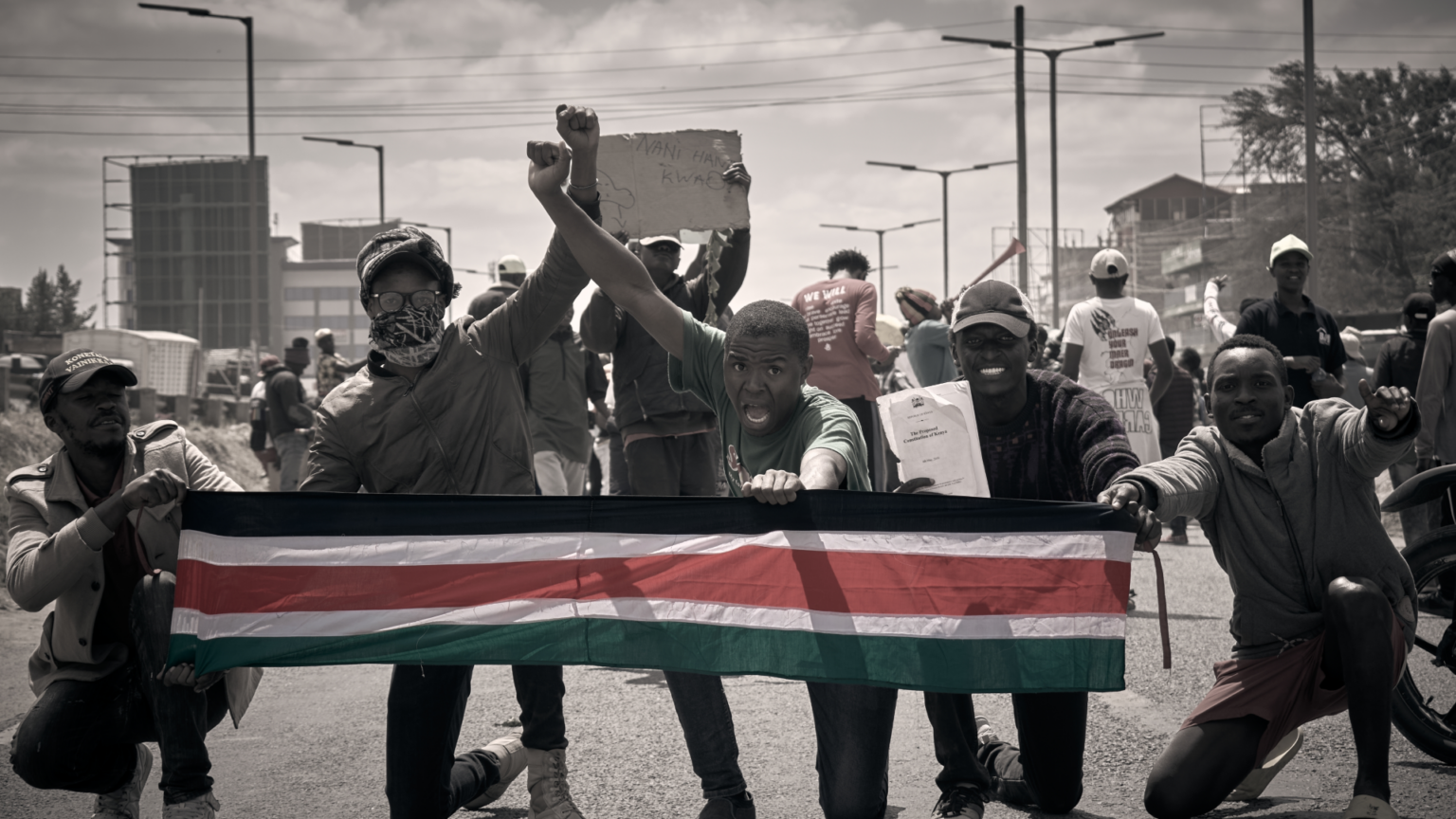
Last week, Kenyan police detained hundreds as families of those killed in the 2024 Finance Bill protests marched to Parliament. The anniversary has become a yearly flashpoint, showing how authoritarian governments facing public anger over worsening socioeconomic conditions and police brutality can turn accountability into another occasion for repression.
In Bitcoin news, a team of Indian developers released Compass, a new open-source wallet for feature phones. The wallet is built for KaiOS devices (the third-most popular operating system in the world) and can be disguised as any ordinary app, allowing users to conceal the wallet’s presence while self-custodying bitcoin on inexpensive mobile phones that are common across much of the global majority.
We include a Journal of Democracy essay by Venezuelan opposition leader and World Liberty Congress co-founder Leopoldo López. In the piece, he argues that repression increasingly happens through the digital infrastructure people already rely on to communicate, organize, move, and transact. The essay maintains that defending democracy now requires new systems and technologies that protect freedoms before dictators can quietly take them away.
Global News
Kenya | Police Detain Hundreds During Anniversary of Finance Bill Protests
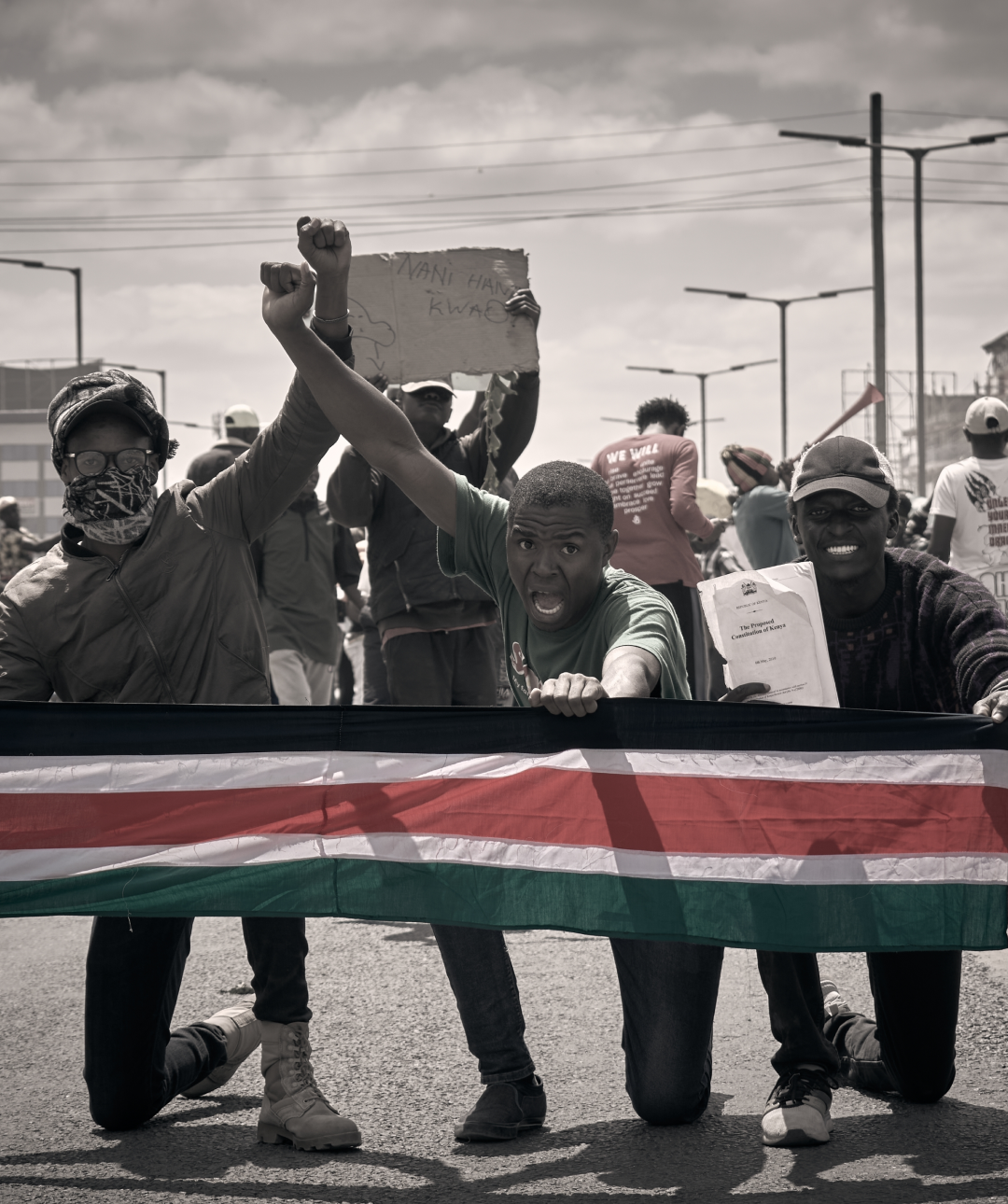
Last week, Kenyan police detained more than 350 people on the second anniversary of protests against tax increases that threatened to raise the cost of living. Families of those killed in the 2024 demonstrations were marching to Parliament to demand justice when police fired tear gas and began making arrests. Officials blocked major highways into Nairobi, barricaded the parliament building, and forced businesses to close. President William Ruto said the protests would be allowed, but the police response suggests otherwise. When authoritarian regimes face public anger over policies that make life more expensive for already struggling citizens, they too often respond not with accountability, but with more repression.
In context: The original protests against the finance bill took place in June 2024 over proposed tax hikes on income, fuel, and basic goods, and the ensuing crackdown claimed more than 60 lives before Ruto walked back the plan. The anniversary has become an annual flashpoint: in 2025, security forces killed at least 19 people commemorating the dead, and in 2026, officials again responded with arrests of peaceful demonstrators.
Russia | Central Bank To Pay Banks to Process Digital Ruble Salaries
Russia’s central bank will begin paying commercial banks to process salary payments through the digital ruble starting in January 2027, creating a profit motive to expand adoption of its central bank digital currency (CBDC). The move comes ahead of a broader rollout for the CBDC later this year.
Why this matters: Subsidizing payroll processing could push the digital ruble into Russian workers’ everyday financial lives. If salaries and payments increasingly flow through state-operated CBDCs, the Russian regime will gain greater visibility into daily transactions and have more ways to freeze funds, pressure employers, monitor workers, or punish dissent through the financial system.
Iran | Women Face Deepening Financial Repression
A new report from the Iran Human Rights Monitor makes the case that Iranian women are facing deepening financial repression as the regime pushes them out of the formal economy. Iranian women are targeted by a myriad of discriminatory laws, mandatory hijab enforcement, professional bans, low wages, and limited access to childcare. Female economic participation has reportedly fallen as low as 12%, while many women who lose work are reclassified as “housewives” or “economically inactive,” hiding their exclusion from official unemployment data.
In context: This is not only a labor-market crisis, but a system of enforced dependency through financial control. If women are blocked from work, banking, education, transportation, or public life because of dress codes, protest activity, or gender discrimination, then economic exclusion becomes a way to force obedience.
Thailand | QR Payments for Visitors Expanded
Thailand is expanding its cross-border QR payment system, allowing visitors from China, Vietnam, Laos, Cambodia, and other Asian countries to pay local merchants through their existing banking apps and e-wallets. Officials say the program will reduce reliance on cash, make travel easier, and help businesses meet demand for digital payments. But even when marketed as convenience, these rails can deepen dependence on banks, platforms, and state-regulated payment networks.
Turkey | Censorship of Comedian on X
Turkish officials censored X posts sharing clips from comedian Deniz Göktaş’s stand-up show after accusing him of insulting President Recep Tayyip Erdoğan. Authorities claimed the clips threatened national security and public order, exposing the fragility of a regime whose power is so brittle that even jokes can become a matter of state control. The decision also reflects Turkey’s expanding crackdown on online activity, reinforcing the importance of freedom technologies like Nostr. If you are interested in how comedy can resist authoritarian rule, watch HRF’s “Stand-Up Stands Up” comedy show from the 2026 Oslo Freedom Forum here.
Recommended Content
Democracy in an Age of Networked Control by Leopoldo López
The future of democracy may depend on who controls the infrastructure people use to communicate, organize, and transact. In this essay for the Journal of Democracy, Venezuelan opposition leader and co-founder of the World Liberty Congress, Leopoldo López, argues that authoritarian repression increasingly happens through digital infrastructure. He maintains that defending democracy now requires resilient and decentralized technologies that preserve freedoms before repressive regimes can quietly take them away. López has been a strong proponent of freedom tech like Bitcoin, Nostr, and open-source, privacy-preserving AI at the Oslo Freedom Forum.
Bitcoin and Freedom Tech News
Compass | New Bitcoin Wallet for Feature Phones
Compass is a new open-source Bitcoin wallet for feature phones created by a team of Indian developers. It was built for inexpensive phones that run KaiOS, the world’s third-largest operating system, which is designed for feature phones. But even further, the wallet can be disguised as an ordinary app so that users can conceal its presence while self-custodying bitcoin. As with any new wallet, Compass does not yet have a long track record, so users should start with small amounts and understand the risks before heavily relying on it.
Why this matters: Combining privacy features with low-cost hardware that is common across much of the developing world could make Compass a valuable tool for dissidents and human rights defenders. It gives them a way to store and use bitcoin discreetly in environments where financial surveillance is widespread or smartphone ownership may attract unwanted attention.
Citadel FOSS | Coinswap Privacy and Security Upgrades
Citadel FOSS, an open-source Bitcoin software initiative, released the latest version of Coinswap with privacy and security improvements. Coinswap is a Bitcoin privacy protocol that dissidents can use to swap bitcoin with other users while breaking the link between transactions on the blockchain. For better security, the update integrates Loupe, an AI security-scanning tool created by Spiral and Block. It can help Coinswap maintainers find and patch any software vulnerabilities, hardening the protocol. The update also adds multi-transaction contracts, which can make swaps harder to analyze by spreading activity across multiple transactions rather than relying on a single, more obvious pattern.
Why this matters: Coinswap can make financial surveillance harder and more expensive for authoritarian regimes, helping dissidents and civil society receive, store, and spend bitcoin without exposing their entire financial history. Notably, HRF’s first-ever grant from its Bitcoin Development Fund was deployed to support Coinswap.
Blink Wallet | Spark and Breez SDK Integrated for Self-Custody
Blink, an open-source Bitcoin wallet, added the ability for users to take self-custody of their Bitcoin. The update uses Spark for self-custody and the Breez SDK to support a simple Lightning payment experience. Blink Wallet (formerly known as the Bitcoin Beach Wallet) is the original wallet that powered Bitcoin Beach, the world’s most well-known Bitcoin circular economy, launched in El Zonte, El Salvador, in 2019. The wallet later became popular in countries ruled by authoritarian regimes, including in Nigeria, Kenya, and Uganda.
Why this matters: The move to a self-custodial model is a major step for everyday Bitcoin adoption, especially from one of the most popular Bitcoin wallets. It’s a good trend and shows that control over your own money no longer has to come at the expense of simplicity or real-world usability.
BTCPay Server | Terminal Plugin Launched for NFC Payments
Terminal is a new plugin for BTCPay Server, an open-source payment processor that allows merchants to accept Bitcoin without relying on a third party. It enables merchants to accept Bitcoin payments through NFC tags and QR codes. With it, merchants can place a static NFC sticker (or QR code) at a checkout counter or table. When a customer taps the NFC tag or scans the code, they are automatically taken to the merchant’s BTCPay checkout page, where a fresh Lightning invoice is generated. Importantly, the NFC tag is static, meaning it doesn’t contain payment information. It simply points customers to the merchant’s payment terminal, which then creates a unique invoice for each payment.
Why this matters: Terminal makes self-custodial Bitcoin payments feel more intuitive without forcing merchants to rely on intermediaries. Activists, independent media, and civil society groups operating under dictatorships could use it to accept in-person donations, sell materials, or receive payments.
ngx-l402 | GitHub Censorship of Freedom Tech Project
The developers of ngx-l402, a tool that lets websites charge small Bitcoin payments for access to online services, said GitHub flagged their account and hid the project from the public. The team says it was likely an automated mistake and has appealed the decision, but moved the code to harder-to-censor platforms while waiting for a response. The project is now shared through Nostr and Blossom, with rebuildable Docker versions (pre-packaged copies of the software) so others can verify and run it themselves. The incident shows the risks of relying on centralized platforms. Just last month, Bitcoin developer Matt Corallo reported that GitHub disabled key development infrastructure for the Lightning Development Kit (LDK).
OpenSats | Long-Term Support for Calvin Kim Announced
OpenSats, a public nonprofit supporting free and open-source software and projects, announced long-term support for Bitcoin developer Calvin Kim. The grant recognizes his work on Bitcoin client diversity and making nodes (computers that run the Bitcoin software and keep a copy of the public ledger) easier to run. Kim contributes to btcd, an alternative Bitcoin node implementation, and leads development on utreexod, software that dramatically reduces the storage requirements for running a node.
Why this matters: Kim’s work helps lower the cost of true self-sovereignty, making Bitcoin’s decentralized infrastructure and financial freedom more accessible to people with modest hardware and limited resources, including those in dictatorships. Kim is also a pioneer in bridging the gap between North Korean defectors and the South Korean open source software community.
Bitcoin Recommended Content
Quantum Resistance for Bitcoin: Really Necessary?
How worried should Bitcoin users be about quantum computing? In this discussion, Bitcoin developer Rearden Code joins MARA Foundation TV to separate realistic risks from speculation. They explore why practical quantum computers capable of threatening Bitcoin may still be a long way off, the difference between advances in theory and hardware, and whether emerging ideas in quantum physics could make breaking cryptography more difficult than many assume. As covered in HRF’s recent report, the quantum threat is not immediate but will eventually be a major consideration for the human rights defenders who rely on Bitcoin to power their work.