


Good morning, readers!
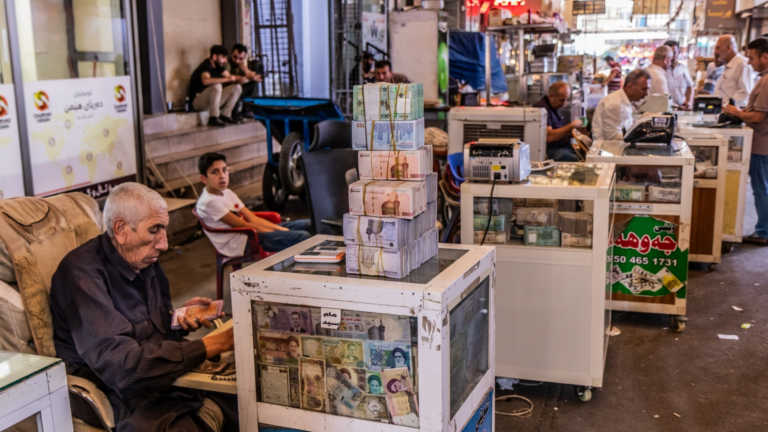
Russia’s Ministry of Finance has proposed granting dictator Vladimir Putin sweeping powers to restrict foreign currency transactions, including limits on individual dollar and euro purchases and new permit requirements for individuals to move money abroad. If passed, the measure would further trap residents within the ruble system, tightening state control over people’s financial independence.
In Freedom Tech news, the ecash wallet Minibits (one of HRF’s “Cashu” Bitcoin Bounty Challenge winners) launched on the iOS App Store. Minibits enables instant, private, and low-cost bitcoin-backed ecash transactions using the Cashu protocol and Lightning Network. By bringing the privacy of physical cash to digital payments, Minibits enables users to transact freely — a principle so powerful that the app was quickly blocked in China.
HRF’s latest round of grants from the Bitcoin Development Fund (BDF) gifted 1 billion satoshis to 20 open-source freedom tech projects advancing Bitcoin privacy, education, and usability for people living under authoritarian rule around the world.
We share the latest episode of the What Bitcoin Did podcast, in which Venezuelan opposition leader and former prisoner of conscience Leopoldo López shares how Bitcoin has become a tool for resisting tyranny and funding pro-democracy movements when dictators weaponize traditional financial systems.
Now, let’s get into it.
Global News
Russia | Kremlin Moves to Restrict Foreign Currency Access
Russia’s finance ministry has proposed granting dictator Vladimir Putin sweeping powers to restrict foreign currency transactions made in Russia. The measure would authorize Putin to limit dollar and euro purchases and require people to obtain permits to transfer money abroad. If passed, the amendments would revive Soviet-era currency controls that punished those seeking economic independence and would further isolate individuals within the ruble system.
In Context: Since the start of its full-scale invasion of Ukraine in 2022, the Kremlin has blocked capital flows, seized and nationalized private assets, labeled independent media and NGOs “foreign agents,” and restricted access to popular messaging apps like Telegram, WhatsApp, and Signal.
Cuba | State Aligned Outlet Admits Price Controls Are Ineffective
Cuban regime-aligned media outlet Cubadebate acknowledged that Havana’s newly imposed price controls have failed to curb inflation. Despite state orders to set fixed prices for basic goods, few markets have complied. Local merchants say production costs far exceed state limits. Many charge double the fixed rates. “Cubans are caught in an impossible dilemma,” notes the translated report, “either comply with regulations that are not fulfilled or pay abusive prices to be able to eat.” Amid a collapsing currency, fuel and electricity shortages, and pervasive corruption, these controls deepen the country’s economic crisis and restrict Cubans’ financial freedom.
Tanzania | Central Bank Denies Printing Money to Finance Elections
Public concern over Tanzania’s monetary credibility grew after online criticism alleged that the central bank was printing money to finance the October general elections. The central bank dismissed the claims as “false and dangerous” and reaffirmed that currency issuance follows legal and economic guidelines. Earlier this year, the Tanzanian shilling was the world’s worst-performing currency, fueling doubts about the government’s fiscal discipline and transparency.
In Context: This controversy unfolds amid a broader climate of political repression in Tanzania. The country’s main opposition party, Chadema, was barred from the polls in April, and prominent opposition leaders have been arrested and charged with treason.
India | Court Upholds State Power to Seize Currency under FERA
The Delhi High Court ruled that Indian currency can be confiscated under the Foreign Exchange Regulation Act (FERA). The decision reaffirms FERA’s broad authority to confiscate “any currency, security or other money or property in respect of which the contravention has taken place.” The decision came in response to an appeal filed in a 1997 case involving the seizure of currency and gold that were allegedly obtained illegally. The ruling reflects India’s continued reliance on financial control laws that allow the state to confiscate private property.
In Context: As India rolls out its central bank digital currency (CBDC), the digital rupee, such precedents raise questions about how state power over money could expand in the digital era.
Recommended Content
Bitcoin vs Dictatorships with Leopoldo López
In the latest episode of the What Bitcoin Did podcast, Venezuelan opposition leader and former prisoner of conscience Leopoldo López recounts his journey from serving as mayor of Caracas to spending four years in solitary confinement under Nicolás Maduro’s dictatorship. Now living in exile, López explains how he uses Bitcoin to fund resistance movements, pay doctors and activists , and sustain pro-democracy networks when national currencies are weaponized by dictators through the World Liberty Congress. His story illustrates Bitcoin’s role as a lifeline for those resisting autocratic regimes.
Bitcoin and Freedom Tech News
Minibits | Ecash Wallet Launches on App Store
Minibits, an open-source ecash wallet and winner of HRF’s “Cashu” Bitcoin Bounty Challenge, is now available on the iOS App Store. Built on the Cashu protocol and Lightning Network, Minibits enables instant, private, and low-cost bitcoin-backed ecash transactions (with the tradeoff of trusting custodial eCash mints). The wallet replicates the privacy of physical cash in digital form and allows users to send and receive funds without revealing their identities.
In Context: The Minibits app was recently blocked from Apple’s App Store in China, a telling sign of ecash’s power as a financial freedom tool for those living under authoritarian regimes.
Ark | Ark Labs Launches Arkade Beta on Bitcoin Mainnet
Ark Labs, a company building instant payments on Bitcoin, released a public beta of Arkade, a new protocol for fast, programmable off-chain Bitcoin transactions. Arkade uses virtual transaction outputs (VTXOs), which are off-chain representations of Bitcoin’s unspent transaction outputs (UTXOs). This allows users to send, lend, or trade funds while maintaining self-custody and the option to move on-chain at any time. However, VTXOs require periodic refreshing to prevent expiration, creating time-bound trust assumptions with the Ark Service Provider. The protocol aims to balance scalability with reduced custodial risk.
In Context: The beta release includes open-source tools for developers, including software development kits (SDKs), an Arkade Wallet reference app, and a BTCPayServer plugin for accepting Arkade bitcoin payments. Ark invites developers and technical users to experiment with the protocol, emphasizing that Arkade remains experimental. Users should only test with small amounts of bitcoin they can afford to lose, as the protocol involves timing requirements and trust assumptions that are still being refined.
Money Badger | Bitcoin Payments Enabled across South Africa
A new partnership between MoneyBadger and Scan to Pay enables bitcoin and stablecoin payments at more than 650,000 merchants across South Africa. The integration connects major exchanges like Binance, Luno, and VALR and allows users to pay directly from their Bitcoin wallets via QR code while merchants receive settlement in local rand currency. The move expands everyday access to bitcoin payments for those excluded from traditional banking systems, including many Zimbabweans who have sought asylum from Emmerson Mnangagwa’s dictatorship and now live without access to formal employment or banking services in South Africa.
Btrust | Btrust Announces Pull Partnership
Btrust, a nonprofit supporting Bitcoin development across Africa, introduced the Pull Partnership, a new program connecting African Bitcoin developers with leading international teams and mentors. The initiative tackles systemic barriers, including visa restrictions and limited access to global conferences, which have kept many African developers on the sidelines of open-source Bitcoin development. Piloted with 2140 in Amsterdam, the program provides logistical, financial, and mentorship support to connect developers with global networks to collaborate on major projects before returning home to strengthen their local Bitcoin ecosystems.
Breez | Breez Announces time2build Developer Challenge
Breez announced the time2build (T2B) Challenge, a global initiative inviting freedom tech developers to integrate bitcoin payments into existing open-source applications using the Breez SDK. With a $25,000 prize pool, the challenge aims to bring Lightning Network payments to everyday software, from messaging platforms to publishing tools, so users can send funds as easily as they send information. By embedding permissionless, censorship-resistant payments into widely used apps, the initiative highlights how open-source innovation will expand financial freedom worldwide.
HRF | HRF Gifts 1 Billion Satoshis to 20 Projects Worldwide
HRF gifted 1 billion satoshis in its 2025 Q3 round of Bitcoin Development Fund (BDF) grants to support 20 open-source freedom tech projects around the world. This round advances Bitcoin privacy, education, usability, and mining decentralization. Grantee initiatives include integrating Silent Payments into the Bitcoin Dev Kit (BDK), expanding Cashu ecash in repressive regimes, and Bitcoin education in India, Lebanon, and Tanzania. By supporting censorship-resistant and permissionless tools like Bitcoin, Nostr, and ecash, these BDF grants will enable activists, journalists, and civil society to organize, transact, and communicate freely under authoritarian rule. Learn more about the grantees and their work here.
Recommended Content
HRF x PubKey: Building Censorship-Resistant Social Media with Will Casarin
In the latest installment of the HRF x PubKey Freedom Tech series, Will Casarin, the creator of the Nostr client Damus, joins HRF’s Zac Guignard for a fireside chat on building censorship-resistant social media. Damus enables dissidents and journalists in repressive political environments to communicate without censorship and includes a native Bitcoin integration for permissionless payments. The conversation explains why the ability to speak and transact freely is so critical for people living under authoritarian regimes.