
Welcome to this week’s Financial Freedom Report.
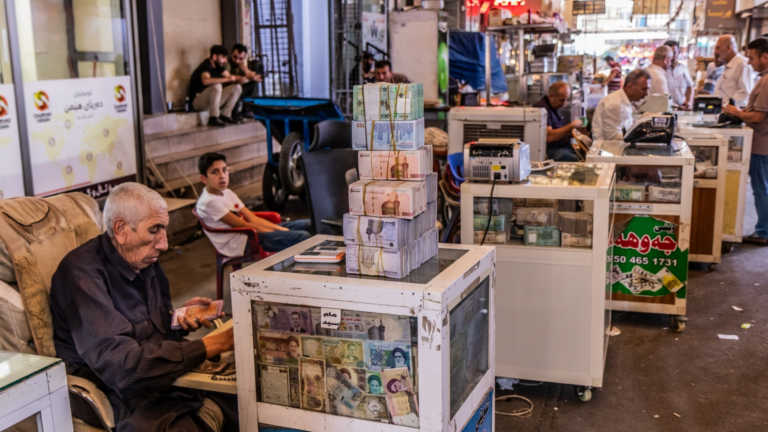
India’s central bank is negotiating with up to five peers to expand its digital rupee, a central bank digital currency (CBDC), for cross-border institutional and retail transactions, urging fellow BRICS nations to connect their respective CBDCs. This group includes Russia, where residents withdrew over 1.6 trillion rubles ($19.7 billion) in January, desperately turning to cash amid increased state controls. After the central bank doubled its suspicious activity indicators, automated red flags blocked up to 3 million accounts and payment cards in one month. These cases demonstrate why Bitcoin is a vital tool for financial sovereignty under authoritarian environments.
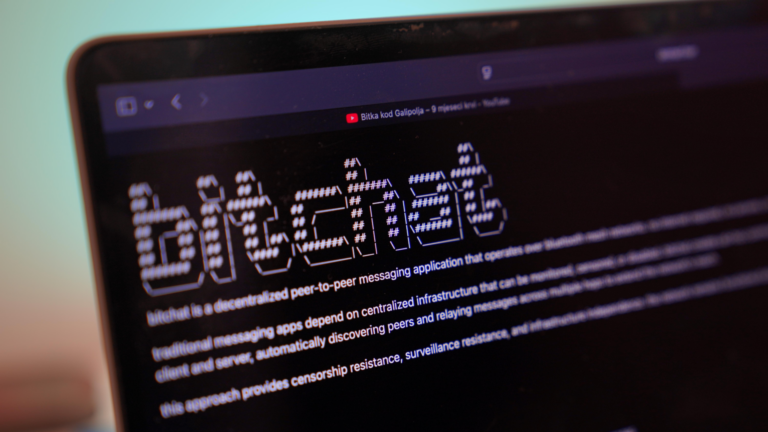
This week, we highlight two new freedom tech solutions. The first is a virtual private network (VPN) built by early Bitcoin developer Martti Malmi. The tool uses Nostr, a decentralized communications protocol, to establish direct, encrypted connections between users’ devices. The second is Blackbox, an experimental system that combines local artificial intelligence (AI), messaging, and Bitcoin payments, while running offline on a small hardware device. These tools give activists sovereign technical stacks to circumvent state surveillance, avoid financial blockades, and maintain operations even during total internet shutdowns.
Lastly, we highlight a recent discussion at PubKey in Washington, DC, where human rights advocates Leopoldo López, Berta Valle, and Anaïse Kanimba discuss opposing authoritarian regimes and the role of freedom tech in aiding their efforts.
Global News
India | Central Bank Pushes International CBDC Expansion
India’s central bank is negotiating with up to five countries to expand its digital rupee CBDC for cross-border institutional and retail transactions. Currently in a pilot phase with 8 million users, the state-controlled currency is being integrated into the Unified Payments Interface to accelerate international transfers and remittances, for which India has been the world’s largest recipient since 2008. To scale this infrastructure, the central bank is adding offline functionality and urging fellow BRICS members to link their CBDCs into a unified network.
Why this matters: India already employs financial repression to assert political control. Officials have frozen the bank accounts of opposition groups ahead of elections, used mandatory Know Your Customer checks to block citizens from accessing funds, and tested a programmable CBDC to limit spending. Exporting this blueprint for repression risks expanding state surveillance to international payments.
Russia | Record Bank Withdrawals as Surveillance and Account Freezes Surge
Russian residents withdrew over 1.6 trillion rubles ($19.7 billion) from banks in January, mainly due to declining trust in the state-controlled financial system. This exodus follows a significant change in banking oversight, as the central bank doubled the number of suspicious activity indicators, the digital signals that automatically trigger account freezes. Allegedly aimed at preventing fraud, these new criteria temporarily blocked as many as three million bank accounts and cards in early January. To tighten its grip, the Interior Ministry proposed capping cash withdrawals at 50,000 rubles ($615) for flagged accounts, while a $10,000 lifetime limit on foreign currency withdrawals was recently extended through Sept. 9. All these regulations reinforce the digital limitations on Russian savers, making physical cash one of their few remaining protections against state overreach.
Hong Kong | Police Granted Powers to Demand Device Passwords
Hong Kong police are now authorized to request individuals to surrender their phone and computer passwords under a new amendment to the national security law. Those who refuse to do so could face up to one year in jail and a fine of up to HK$100,000 ($12,773), while providing false information may result in three years of imprisonment and fines up to HK$500,000 ($63,800). The changes also allow officials to seize devices considered “seditious” without making an arrest. This is especially concerning for activists, opposition groups, and civil society that are more vulnerable to state-sponsored digital targeting and physical retaliation.
Nicaragua | Public Sector Workers Trapped by State Financial Control
In Nicaragua, the state payroll has become a tool for total financial and social control, especially among doctors and teachers. The dictatorship of Daniel Ortega and Rosario Murillo requires public employees to submit detailed asset declarations covering themselves, their spouses, and their children, providing the regime with full insight into household finances. Dissent is met with immediate dismissal, while resignation is a trap for many, as those who quit risk immediate retaliation against family members still on the payroll. Nicaragua has lost over 4,500 teachers since 2018, and healthcare staffing has stagnated as experienced professionals are replaced by political loyalists. By manipulating the state payroll system, the regime has criminalized financial privacy, demonstrating that without financial sovereignty, all other forms of dissent are rendered impossible.
China | CBDC Expansion to be Explored in Hong Kong
China and Hong Kong regulators are considering upgrades to the digital yuan wallet — China’s CBDC — to raise transaction limits and expand its use across borders for wages and supply chain payments. The proposed changes would introduce real-name verification and replace the current system that allows limited anonymity for users who register with just a phone number. By requiring full identity disclosure, authorities would gain greater visibility into transactions as well as the ability to monitor or restrict them. This raises concerns about financial privacy for Hong Kong residents.
Recommended Content
Why Democracy Always Wins In the End with the NED and World Liberty Congress
What does it take to outlast a dictatorship? In a conversation hosted by the National Endowment for Democracy (NED), human rights advocates Leopoldo López, Berta Valle, and Anaïse Kanimba share the realities of resisting authoritarian regimes. They reflect on the challenges of exile and repression, emphasizing and explaining how freedom technologies — such as Bitcoin and encrypted communications — enable activists to operate under state pressure.

Join Us at the 18th Annual Oslo Freedom Forum
Join HRF this year at the 18th annual Oslo Freedom Forum (OFF), hosted in Oslo, Norway, from June 1–3. This year’s OFF theme of “Dismantling Dictatorship” celebrates the activists, thinkers, technologists, and artists who take tyranny apart with ingenuity, creativity, and solidarity. Together, we celebrate stories of courage and explore bold ideas to advance freedom and unleash human potential through innovative solutions, including freedom tech.
Bitcoin and Freedom Tech News
ChapSmart | New Bitcoin-to-Mobile Money Feature
ChapSmart introduced Merchant Pay, a new feature that connects global Bitcoin payments directly to Tanzania’s mobile money system. With a simple link or QR code, individuals and businesses can receive Bitcoin payments from anywhere in the world, automatically converted into Tanzanian shillings and delivered via M-PESA, a widely-used mobile money transfer service. In other words, the sender pays in bitcoin while the recipient receives local currency instantly on their phone.
Why this matters: As the Tanzanian regime tightens restrictions on foreign currency, tools like ChapSmart offer a crucial avenue for activists and nonprofits. By using Bitcoin as a neutral channel for value transfer, these groups can receive international payments without depending on banks or state-controlled financial systems.
Coinswap | Update Integrates Taproot Support and Simplified Interfaces
Coinswap, a decentralized protocol that enables Bitcoin users to gain privacy through collaboration, released a major update. The new version introduces full support for Taproot, a Bitcoin upgrade that introduced Schnorr signatures, improving privacy and other features. It also makes the protocol easier to operate, with a cleaner interface for monitoring swap history and balances, among other improvements. The developers stated that the marketplace where users connect with swap partners is now more stable and reliable. Additionally, Coinswap launched a new public website alongside the update, serving as an entry point for non-technical users approaching the platform for the first time.
Nostr VPN | Encrypted Private Connections Enabled
Early Bitcoin developer Martti Malmi released Nostr VPN, a tool that allows users to manage their own private networks without centralized accounts, centralized servers, or reliance on any single company. Unlike commercial VPN services that handle connections on behalf of their customers, Nostr VPN uses Nostr, an open and decentralized messaging protocol, to coordinate encrypted connections directly between a user’s own devices or trusted servers. This makes it a decentralized alternative to tools like Tailscale. For internet access, users can route their traffic through a paid VPN service of their choice or host their own server, keeping full control over the setup in either case. Malmi, Satoshi Nakamoto’s onetime collaborator, continues to ship innovative freedom tech.
Lightning Network | Splicing Feature to Lower Fees and Improve Access
Developers have officially added the Splicing feature to the technical standards of the Lightning Network, a second layer built on top of Bitcoin for fast, low-cost payments. Previously, to transact over the network, users had to open and close payment channels each time they made a payment, which cost extra time and fees. Splicing allows users to adjust their balances dynamically while keeping a channel active. These payment channels act as digital corridors, enabling the network to settle instant transactions without recording every small move on the main Bitcoin blockchain. By streamlining fund management and slashing fees, Splicing can help transform this infrastructure into a dynamic financial tool capable of scaling for millions of daily users.
Blackbox | An Experimental Kit for Offline AI, Messaging, and Bitcoin
Blackbox is an experimental tool that combines local AI, messaging, and Bitcoin payments into a single system that works offline. It runs on a Raspberry Pi device (a low-cost, portable computer the size of a credit card) and uses long-range radios to send data directly between devices over miles, bypassing cell towers and Wi-Fi. These radios form a mesh network, acting like a digital bucket brigade where messages “hop” from device to device to extend the signal’s reach. By combining an internal AI model for technical queries, a decentralized message relay, and a Cashu ecash wallet for private Bitcoin transactions, the platform ensures that communication and trade remain possible even when internet access is restricted.
Why this matters: In places facing state-imposed internet shutdowns or infrastructure collapse, Blackbox provides a vital alternative to centralized systems. While still experimental, this technology points to a future where essential digital tools remain functional and secure even when the internet is restricted or unavailable.
MIT Bitcoin Expo | 2026 “Freedom for All” Edition
The Massachusetts Institute of Technology (MIT) announced its 2026 Bitcoin Expo, scheduled for April 11–12 at the State Center in Cambridge, MA. Featuring a lineup of developers, privacy advocates, and advocates for freedom, this year’s theme, “Freedom For All,” highlights Bitcoin’s role in defending human rights worldwide. The event features Afghan entrepreneur and human rights activist Roya Mahboob, who is defying the Taliban’s ban on girls’ education by building offline learning apps, encrypted underground study networks, and a global robotics program. Mahboob also teaches women and girls to use Bitcoin as a tool for financial freedom. Her participation highlights how the expo is increasingly focused on real-world use cases where Bitcoin supports education, resilience, and human rights under repression. HRF is proud to support this Bitcoin gathering.
Bitcoin Recommended Content
NumoPay and the Future of Contactless Bitcoin Transactions with Calle
What if paying with Bitcoin were as simple as tapping your phone without giving up your privacy? Bitcoin educator Stephan Livera and privacy software developer Calle recently discussed NumoPay, an open-source Bitcoin payment terminal designed for private, “tap-to-pay” transactions. The tool uses near field communication (NFC) — the same short-range wireless technology used in contactless credit cards — to enable instant Bitcoin transactions by simply tapping a phone or card. The conversation also explores how tools like Cashu ecash enable fast, private payments, and what the future of everyday Bitcoin spending could look like.